Loading...
Qin Shi Huang vs Suleiman the Magnificent
Qin Shi Huang leads by 12.0 pts · 2 figures compared
…
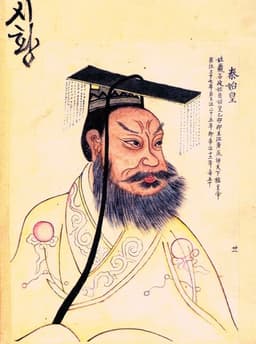
Qin Shi Huang
Emperor · Ancient
85.2Total
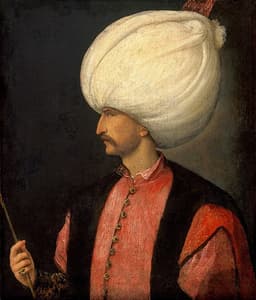
Suleiman the Magnificent
Emperor · Medieval
73.2Total
Basic Information
Born
-259
1494
Died
-210
1566
Era
Ancient
Medieval
Nationality
China
Ottoman Empire
Occupation
Emperor
Emperor
Civilization
Eastern
Middle Eastern
Score Comparison
Military (10%)
80.0
85.0
Political (20%)
90.0
78.0
Influence (20%)
85.0
72.0
Legacy (20%)
90.0
68.0
Leadership (15%)
78.0
72.0
Strategy (15%)
82.0
72.0
TOTAL
85.2
73.2
Qin Shi Huang — Complete Timeline
246 BC
Construction of the Mausoleum and Terracotta ArmyOther◆ Major
Qin Shi Huang commissioned a vast mausoleum complex near Xi'an, guarded by thousands of life-sized terracotta soldiers, horses, and chariots. The project employed hundreds of thousands of workers and reflected his obsession with immortality and imperial power.
Impact: global
230 BC
Conquest of the Six Warring StatesWar
From 230 to 221 BCE, Ying Zheng led the Qin state in a series of campaigns that conquered the Han, Zhao, Wei, Chu, Yan, and Qi states. This unified China under a single ruler for the first time, ending the Warring States period.
Impact: global
221 BC
Standardization of Writing, Currency, and MeasurementsReform◆ Major
Qin Shi Huang ordered the standardization of Chinese script, currency, and weights and measures across the unified empire. This facilitated administration, trade, and cultural integration, laying a foundation for future dynasties.
Impact: globalconstructive
Proclamation of the Qin DynastyPolitical Action
After conquering the last independent state, Ying Zheng declared himself Shi Huangdi (First Emperor), founding the Qin Dynasty. He adopted a new title to signify his supreme authority and initiated centralized imperial rule.
Impact: global
214 BC
Initiation of the Great Wall ConstructionOther◆ Major
Qin Shi Huang ordered the connection and extension of existing northern fortifications to create a unified defensive wall against nomadic Xiongnu raids. This project involved massive conscripted labor and became the precursor to the later Great Wall.
Impact: regional
213 BC
Burning of Books and Burying of ScholarsPolitical Action◆ Major
On the advice of Li Si, Qin Shi Huang ordered the burning of historical records and philosophical texts not aligned with Legalist doctrine. He also had 460 Confucian scholars buried alive to suppress dissent and consolidate ideological control.
Impact: nationaldestructive
Suleiman the Magnificent — Complete Timeline
1522 AD
Siege of RhodesWar◆ Major
Suleiman personally led a massive Ottoman campaign against the Knights Hospitaller on Rhodes. After a six-month siege, the knights surrendered and were allowed to leave. This victory secured Ottoman control over the eastern Mediterranean.
SiegeMediterraneanKnights Hospitaller
Impact: regional
1526 AD
Battle of MohácsWar
Suleiman's Ottoman army defeated the Hungarian forces of King Louis II at Moh
BattleHungaryOttoman expansion
Impact: regional
1529 AD
Siege of ViennaWar◆ Major
Suleiman besieged Vienna, the Habsburg capital, with a large army. The siege failed due to supply issues, disease, and strong defenses. This defeat halted Ottoman expansion into central Europe and marked the empire's furthest advance westward.
SiegeViennaDefeat
Impact: regional
1530 AD
Codification of Ottoman lawReform◆ Major
Suleiman oversaw the compilation and standardization of Ottoman legal codes, known as Kanun. These laws regulated criminal justice, land tenure, and taxation, creating a unified legal system that balanced sharia with secular law. He earned the title 'Kanuni' (the Lawgiver).
Legal reformKanunOttoman Empire
Impact: nationalconstructive
1536 AD
Execution of Ibrahim PashaPolitical Action◆ Major
Suleiman ordered the execution of his grand vizier and close friend Ibrahim Pasha, who had served for 13 years. The reasons remain debated, but likely involved Ibrahim's growing power and conflicts with Suleiman's wife, Hurrem Sultan. This event demonstrated the absolute power of the sultan.
ExecutionCourt politicsPower
Impact: nationaltragic
Expert Analysis
Qin Shi Huang vs Suleiman the Magnificent: Historical Comparison
Qin Shi Huang, the first Emperor of a unified China, and Suleiman the Magnificent, the longest-reigning Sultan of the Ottoman Empire, both forged vast empires through conquest and reform, yet their methods and enduring legacies diverge sharply.
Dimension Analysis
**Military: Qin Shi Huang 80 / Suleiman the Magnificent 85**
Suleiman’s Ottoman army dominated the Mediterranean, Balkans, and Middle East with advanced siege tactics and a powerful navy, whereas Qin Shi Huang’s forces, though effective in unifying warring states, relied on mass infantry and chariots without comparable naval reach.
**Political: Qin Shi Huang 88 / Suleiman the Magnificent 80**
Qin Shi Huang centralized power with ruthless efficiency—standardizing script, currency, and law across China—while Suleiman balanced his authority with a sophisticated legal code (Kanun) but delegated more to viziers and provincial governors.
**Influence: Qin Shi Huang 82 / Suleiman the Magnificent 77**
Qin Shi Huang’s reforms (e.g., the Great Wall’s precursors, standardized roads) shaped Chinese civilization for millennia, whereas Suleiman’s influence, though vast in Europe and the Islamic world, was more regional and less foundational in long-term global structures.
**Legacy: Qin Shi Huang 85 / Suleiman the Magnificent 67**
Qin Shi Huang’s legacy is indelible—his name means “First Emperor” and his Terracotta Army endures as a world wonder; Suleiman’s legacy, while celebrated as a golden age, is often overshadowed by later Ottoman decline and his reforms were partially undone.
**Leadership: Qin Shi Huang 88 / Suleiman the Magnificent 79**
Qin Shi Huang’s iron-willed, visionary leadership enabled the rapid unification and standardization of a vast territory; Suleiman’s more diplomatic and consensus-based rule, though effective, faced internal court intrigues and succession crises that weakened his personal grip.
Verdict
Qin Shi Huang leads decisively, scoring 84 overall to Suleiman’s 75, due to superior political consolidation, lasting influence, and a more transformative legacy that redefined Chinese civilization.
FAQ
Q: Who ranks higher? A: Qin Shi Huang ranks higher with a composite score of 84 versus Suleiman’s 75, excelling in political, influence, legacy, and leadership dimensions.
Rankings
🥇
Qin Shi HuangLeader
Mil: 80.0Pol: 90.0Inf: 85.0
85.2
🥈
Suleiman the Magnificent
Mil: 85.0Pol: 78.0Inf: 72.0
73.2
+12.0 behind
How This Comparison Works
Algorithm
Each figure is scored on 6 dimensions (0—100 scale) based on structured historical data: Military (10%), Political (20%), Influence (20%), Legacy (20%), Leadership (15%), Strategy (15%). The weighted total produces the final ranking.
Data Sources
Scores are computed from structured sub-indicators in the database. Scale factors adjust for era (Ancient ×0.85, Modern ×1.0) and civilization size (Eastern ×1.05, Other ×0.80) to account for differences in population and military scale.
Maximum 3 Figures
Comparisons are limited to 2—3 figures to ensure readability and statistical meaningfulness.
Error Margins
±5 points per dimension — Sub-scores are derived from historical records with inherent uncertainty. Two figures within 5 points on a dimension should be considered roughly equivalent in that area.
Total Score Accuracy
±3 points overall — The weighted combination of 6 dimensions produces a total score with approximately ±3 points of uncertainty. Differences of less than 3 points are not statistically significant— the figures are effectively tied.
Known Limitations
- Historical records are incomplete and uneven across civilizations
- Figures from oral-tradition societies may be underrepresented
- Occupation labels can misclassify multi-role figures
- Scores measure capability and impact, not moral character
- Quantitative scoring is a comparison tool, not absolute truth
Capability Radar
Military (10%) — Battles & Warfare
Battles
85
95
Win Rate
90
90
Expansion
90
95
Political (20%) — Governance & Reform
Reform
95
90
Diplomacy
75
88
Economy
90
85
Influence (20%) — Cultural & Global Reach
Cultural
95
90
Global
85
88
Legacy (20%) — Historical Impact
Historical
95
92
Longevity
95
85
Leadership (15%) — Power & Stability
Tenure
70
95
Stability
65
85
Strategy (15%) — Tactics & Innovation
Strategy
85
92
Tactics
80
85
Reform
95
80
Similar Comparisons
Comments & Discussion
Chronicler18306/16/2026
这个评分体系有点意思,但我觉得军事分给低了。秦始皇统一六国,军队规模超百万,且用弩机、战车等标准化装备,后勤保障靠驰道和灵渠,效率极高。苏莱曼的奥斯曼海军确实强,但陆战主要靠火器,而秦军的弓弩射程和战术纪律在战国末期是顶尖的。政治分我赞同,88分合理,毕竟书同文、车同轨、统一度量衡,这种制度创新在中国持续了两千年。但总影响力82分,我认为可以更高——秦始皇的郡县制直接奠基了中国的中央集权传统,而苏莱曼的卡努尼法典更多是调整,没有这种根本性改造。总体来说,秦始皇的得分应该再往上调3-5分更合理。
ColdChronicler386/16/2026
这个比较很有意思,但我觉得西方视角太重了。苏莱曼被誉为‘大帝’,在奥斯曼巅峰期确实辉煌,但和秦始皇比,根本不是一个量级的文明奠基者。秦始皇是‘千古一帝’,他做的不是简单的统一,而是把一个分崩离析的天下捏合成一个具有共同文字、法律和交通网的帝国——这在世界历史上只有凯撒或汉武帝可比,苏莱曼要低一个层次。再说军事,苏莱曼85分,秦始皇才80分,但秦军在南平百越、北击匈奴,同时修长城、驰道,这种多线作战能力不输给奥斯曼在匈牙利的征服。政治分88比80很公正,但影响力82对77太保守了——秦始皇的法家思想和郡县制影响了整个东亚文明圈,苏莱曼的遗产在奥斯曼解体后就衰退了。我觉得秦始皇总分应该拉到88左右才合理。