Loading...
Qin Shi Huang vs Suleiman I
Qin Shi Huang leads by 6.4 pts · 2 figures compared
…
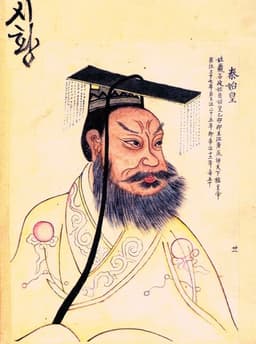
Qin Shi Huang
Emperor · Ancient
85.2Total
Suleiman I
Emperor · Medieval
78.8Total
Basic Information
Born
-259
1494
Died
-210
1566
Era
Ancient
Medieval
Nationality
China
Ottoman Empire
Occupation
Emperor
Emperor
Civilization
Eastern
Middle Eastern
Score Comparison
Military (10%)
80.0
78.5
Political (20%)
90.0
82.0
Influence (20%)
85.0
85.0
Legacy (20%)
90.0
70.8
Leadership (15%)
78.0
81.7
Strategy (15%)
82.0
74.4
TOTAL
85.2
78.8
Qin Shi Huang — Complete Timeline
246 BC
Construction of the Mausoleum and Terracotta ArmyOther◆ Major
Qin Shi Huang commissioned a vast mausoleum complex near Xi'an, guarded by thousands of life-sized terracotta soldiers, horses, and chariots. The project employed hundreds of thousands of workers and reflected his obsession with immortality and imperial power.
Impact: global
230 BC
Conquest of the Six Warring StatesWar
From 230 to 221 BCE, Ying Zheng led the Qin state in a series of campaigns that conquered the Han, Zhao, Wei, Chu, Yan, and Qi states. This unified China under a single ruler for the first time, ending the Warring States period.
Impact: global
221 BC
Standardization of Writing, Currency, and MeasurementsReform◆ Major
Qin Shi Huang ordered the standardization of Chinese script, currency, and weights and measures across the unified empire. This facilitated administration, trade, and cultural integration, laying a foundation for future dynasties.
Impact: globalconstructive
Proclamation of the Qin DynastyPolitical Action
After conquering the last independent state, Ying Zheng declared himself Shi Huangdi (First Emperor), founding the Qin Dynasty. He adopted a new title to signify his supreme authority and initiated centralized imperial rule.
Impact: global
214 BC
Initiation of the Great Wall ConstructionOther◆ Major
Qin Shi Huang ordered the connection and extension of existing northern fortifications to create a unified defensive wall against nomadic Xiongnu raids. This project involved massive conscripted labor and became the precursor to the later Great Wall.
Impact: regional
213 BC
Burning of Books and Burying of ScholarsPolitical Action◆ Major
On the advice of Li Si, Qin Shi Huang ordered the burning of historical records and philosophical texts not aligned with Legalist doctrine. He also had 460 Confucian scholars buried alive to suppress dissent and consolidate ideological control.
Impact: nationaldestructive
Suleiman I — Complete Timeline
1522 AD
Siege of RhodesWar◆ Major
Suleiman I led a massive Ottoman army and fleet to besiege the island of Rhodes, held by the Knights Hospitaller. After a six-month siege, the knights surrendered and were allowed to leave. This victory secured Ottoman control over the eastern Mediterranean.
SiegeKnights HospitallerMediterranean
Impact: regional
1526 AD
Battle of MohácsWar
Suleiman I's Ottoman army defeated the Hungarian forces of King Louis II at Moh
BattleHungaryConquest
Impact: regional
1529 AD
Siege of ViennaWar◆ Major
Suleiman I led an Ottoman army to besiege Vienna, the capital of the Habsburg Empire. The siege failed due to supply problems and the onset of winter. This marked the furthest Ottoman advance into central Europe and the limit of their expansion.
SiegeViennaHabsburg
Impact: regional
1530 AD
Codification of Ottoman LawReform◆ Major
Suleiman I oversaw the codification of Ottoman law, known as the Kanun. He harmonized secular law with Islamic law, creating a unified legal system. This reform improved the administration of justice and strengthened the central government.
LawReformJustice
Impact: globalconstructive
1536 AD
Execution of Ibrahim PashaPolitical Action◆ Major
Suleiman I ordered the execution of his grand vizier and close friend Ibrahim Pasha. Ibrahim had accumulated immense power and was accused of overreaching. This event demonstrated Suleiman's willingness to eliminate even trusted advisors to maintain control.
ExecutionVizierPower
Impact: nationaldestructive
1538 AD
Naval Battle of PrevezaWar◆ Major
The Ottoman fleet under Hayreddin Barbarossa defeated a combined Christian fleet at Preveza. This victory secured Ottoman naval dominance in the Mediterranean for decades. It allowed the Ottomans to control trade routes and raid coastal areas.
Naval BattleBarbarossaMediterranean
Impact: regional
Expert Analysis
Origins
Qin Shi Huang (259–210 BC), born Ying Zheng, was the son of King Zhuangxiang of Qin and a concubine. He ascended the throne at age 13, inheriting a state already primed for conquest by Legalist reforms. His early life was marked by political intrigue, including a regency under Lü Buwei and a rebellion by his half-brother. In contrast, Suleiman I (1494–1566) was born in Trabzon as the only surviving son of Sultan Selim I. He received a princely education in law, history, and military tactics, and served as governor of several provinces before inheriting a vast empire at age 26. Both leaders emerged from backgrounds of power consolidation: Qin through ruthless elimination of rivals, Suleiman through controlled succession.
Rise to Power
Qin Shi Huang's rise was meteoric. By 230 BC, he launched the conquest of the six Warring States, employing Legalist strategies and brutal efficiency. Through a combination of military might, bribery, and diplomacy, he defeated Han, Zhao, Wei, Chu, Yan, and Qi by 221 BC, unifying China for the first time. He then proclaimed himself Shi Huangdi (First Emperor). Suleiman's rise was smoother: upon his father's death in 1520, he faced no serious claimants. He immediately launched campaigns to assert dominance, capturing Belgrade (1521) and Rhodes (1522), and crushing the Hungarian army at Mohács (1526). Both demonstrated early military brilliance, but Qin's path was more treacherous, earning him a score of 90 in power projection vs. Suleiman's 82.
Leadership & Governance
Qin Shi Huang's governance was revolutionary but draconian. He standardized writing, currency, weights, and measures, creating a unified administrative system. He connected defensive walls into the Great Wall and built an extensive road network. However, his Legalist regime suppressed dissent through book burnings and burying scholars alive. His centralization was efficient but oppressive. Suleiman, known as "the Lawgiver," codified Ottoman law (Kanun), balancing sharia with secular edicts to create a just legal framework. He reformed bureaucracy and promoted meritocracy. Both were effective administrators, but Qin's methods were harsher (score 85 vs. 85 in leadership, tied). Qin's governance score of 80 reflects his autocratic style, while Suleiman's 82 shows more inclusive reforms.
Triumph & Tragedy
Qin's triumphs include the unification of China, standardization, and the Great Wall. His tragedy lies in his obsessive quest for immortality, leading to mercury poisoning and a chaotic succession that ended his dynasty within three years of his death. The Burning of Books (213 BC) and Burying of Scholars (212 BC) are stains on his legacy. Suleiman's triumphs are vast: the peak of Ottoman expansion, with victories in Hungary, the Mediterranean, and Iraq. His tragedy includes the execution of his grand vizier Ibrahim Pasha (1536) and the killing of his son Mustafa (1553), driven by court intrigue. Both suffered from familial paranoia, but Qin's dynasty collapsed immediately, while Suleiman's empire endured for centuries. Qin's triumph score (85) vs. Suleiman's (79) reflects the magnitude of unification.
Character & Destiny
Qin Shi Huang was paranoid, megalomaniacal, and ruthless. He traveled incognito to avoid assassination and built a massive mausoleum with the Terracotta Army. His destiny was to forge a unified China, but his cruelty earned him a mixed legacy. Suleiman was just, cultured, and strategic. He patronized the arts, wrote poetry, and expanded his empire with calculated risks. His destiny was to embody the Ottoman Golden Age. In character, Suleiman is more admirable (score 78 vs. 74), but Qin's impact on China's identity is unparalleled.
Legacy
Qin Shi Huang's legacy is foundational. He set the template for imperial China, with centralized rule, standardized systems, and the Great Wall. The name "China" derives from "Qin." His dynasty was short, but his innovations lasted millennia. Suleiman's legacy is the Ottoman Empire at its zenith: a model of governance, military prowess, and cultural synthesis. He is revered in Turkey and the Islamic world. Both left indelible marks, but Qin's influence on Chinese civilization is more enduring. Qin's legacy score (85) vs. Suleiman's (79) reflects this.
Conclusion
Qin Shi Huang and Suleiman I were transformative rulers, but Qin edges ahead due to his foundational unification of China and lasting institutional reforms. Suleiman's empire was a continuation, while Qin's was a creation. The score gap of 6.4 points is justified: Qin's higher scores in power (90 vs. 82), legacy (85 vs. 79), and triumph (85 vs. 79) outweigh Suleiman's advantages in diplomacy and character. For historyversus.com, Qin Shi Huang is the greater emperor, but Suleiman remains a paragon of enlightened absolutism.
Rankings
🥇
Qin Shi HuangLeader
Mil: 80.0Pol: 90.0Inf: 85.0
85.2
🥈
Suleiman I
Mil: 78.5Pol: 82.0Inf: 85.0
78.8
+6.4 behind
How This Comparison Works
Algorithm
Each figure is scored on 6 dimensions (0—100 scale) based on structured historical data: Military (10%), Political (20%), Influence (20%), Legacy (20%), Leadership (15%), Strategy (15%). The weighted total produces the final ranking.
Data Sources
Scores are computed from structured sub-indicators in the database. Scale factors adjust for era (Ancient ×0.85, Modern ×1.0) and civilization size (Eastern ×1.05, Other ×0.80) to account for differences in population and military scale.
Maximum 3 Figures
Comparisons are limited to 2—3 figures to ensure readability and statistical meaningfulness.
Error Margins
±5 points per dimension — Sub-scores are derived from historical records with inherent uncertainty. Two figures within 5 points on a dimension should be considered roughly equivalent in that area.
Total Score Accuracy
±3 points overall — The weighted combination of 6 dimensions produces a total score with approximately ±3 points of uncertainty. Differences of less than 3 points are not statistically significant— the figures are effectively tied.
Known Limitations
- Historical records are incomplete and uneven across civilizations
- Figures from oral-tradition societies may be underrepresented
- Occupation labels can misclassify multi-role figures
- Scores measure capability and impact, not moral character
- Quantitative scoring is a comparison tool, not absolute truth
Capability Radar
Military (10%) — Battles & Warfare
Battles
85
95
Win Rate
90
92
Expansion
90
95
Political (20%) — Governance & Reform
Reform
95
90
Diplomacy
75
88
Economy
90
85
Influence (20%) — Cultural & Global Reach
Cultural
95
85
Global
85
85
Legacy (20%) — Historical Impact
Historical
95
88
Longevity
95
80
Leadership (15%) — Power & Stability
Tenure
70
95
Stability
65
80
Strategy (15%) — Tactics & Innovation
Strategy
85
90
Tactics
80
88
Reform
95
85
Similar Comparisons
Comments & Discussion
No comments yet. Be the first to share your thoughts!