Loading...
Qin Shi Huang vs Smendes I
Qin Shi Huang leads by 44.4 pts · 2 figures compared
…
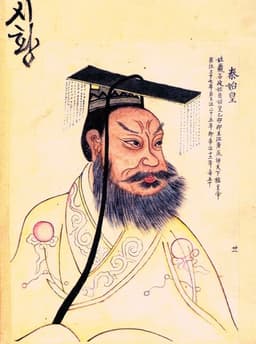
Qin Shi Huang
Emperor · Ancient
85.2Total

Smendes I
Emperor · Ancient
40.8Total
Basic Information
Born
-259
-1077
Died
-210
-1051
Era
Ancient
Ancient
Nationality
China
Third Intermediate Egypt
Occupation
Emperor
Emperor
Civilization
Eastern
Middle Eastern
Score Comparison
Military (10%)
80.0
25.9
Political (20%)
90.0
35.1
Influence (20%)
85.0
45.5
Legacy (20%)
90.0
38.3
Leadership (15%)
78.0
55.3
Strategy (15%)
82.0
36.8
TOTAL
85.2
40.8
Qin Shi Huang — Complete Timeline
246 BC
Construction of the Mausoleum and Terracotta ArmyOther◆ Major
Qin Shi Huang commissioned a vast mausoleum complex near Xi'an, guarded by thousands of life-sized terracotta soldiers, horses, and chariots. The project employed hundreds of thousands of workers and reflected his obsession with immortality and imperial power.
Impact: global
230 BC
Conquest of the Six Warring StatesWar
From 230 to 221 BCE, Ying Zheng led the Qin state in a series of campaigns that conquered the Han, Zhao, Wei, Chu, Yan, and Qi states. This unified China under a single ruler for the first time, ending the Warring States period.
Impact: global
221 BC
Standardization of Writing, Currency, and MeasurementsReform◆ Major
Qin Shi Huang ordered the standardization of Chinese script, currency, and weights and measures across the unified empire. This facilitated administration, trade, and cultural integration, laying a foundation for future dynasties.
Impact: globalconstructive
Proclamation of the Qin DynastyPolitical Action
After conquering the last independent state, Ying Zheng declared himself Shi Huangdi (First Emperor), founding the Qin Dynasty. He adopted a new title to signify his supreme authority and initiated centralized imperial rule.
Impact: global
214 BC
Initiation of the Great Wall ConstructionOther◆ Major
Qin Shi Huang ordered the connection and extension of existing northern fortifications to create a unified defensive wall against nomadic Xiongnu raids. This project involved massive conscripted labor and became the precursor to the later Great Wall.
Impact: regional
213 BC
Burning of Books and Burying of ScholarsPolitical Action◆ Major
On the advice of Li Si, Qin Shi Huang ordered the burning of historical records and philosophical texts not aligned with Legalist doctrine. He also had 460 Confucian scholars buried alive to suppress dissent and consolidate ideological control.
Impact: nationaldestructive
Smendes I — Complete Timeline
1077 BC
Foundation of the 21st DynastyPolitical Action
Smendes I established the 21st Dynasty, ruling from Tanis in the Nile Delta. This marked the beginning of the Third Intermediate Period, with Egypt divided between Tanis and the Theban priesthood, ending the New Kingdom's unified rule.
Dynasty FoundationThird Intermediate PeriodTanis
Impact: national
Transfer of Capital to TanisPolitical Action◆ Major
Smendes I moved the political capital from Pi-Ramesses to Tanis, a city in the eastern Delta. This shift consolidated his power in Lower Egypt and established Tanis as a major center for the 21st Dynasty.
Capital MoveTanisAdministration
Impact: nationalconstructive
1070 BC
Reunification of Egypt under TanisPolitical Action◆ Major
Smendes I successfully asserted authority over Upper Egypt, ending the de facto division between Tanis and Thebes. He installed a loyal High Priest of Amun in Thebes, temporarily reunifying Egypt under his rule.
ReunificationThebesPriesthood
Impact: nationalconstructive
Expert Analysis
qin-shi-huang-vs-smendes-i
# The Emperor and the Pharaoh: Two Founders, Two Fates
On a spring morning in 221 BC, a young king in his thirties stood before the walls of a conquered city, the last independent state to fall to his armies. Ying Zheng of Qin had done what no ruler before him had achieved: he had unified China through war. In a grand proclamation, he renamed himself Shi Huangdi—the First Emperor—and set in motion a revolution that would shape the world’s most enduring civilization. Four centuries earlier, another founder had stood on the banks of the Nile, gazing at the mud-brick walls of a city he would make his capital. Smendes I, a prince from the Delta, had seized power in a divided Egypt and founded the 21st Dynasty. Both men were founders. Both unified fractured lands. But their stories diverged like the rivers that nurtured their civilizations—one a torrent of ambition, the other a quiet tributary soon lost to the sands.
Origins
Qin Shi Huang was born in 259 BC into a world of chaos. The Warring States period had torn China apart for centuries, with seven rival kingdoms locked in a cycle of betrayal and bloodshed. His father, King Zhuangxiang of Qin, was a hostage in the state of Zhao when Ying Zheng was conceived—a fact that marked the boy with the stain of uncertainty. Raised in a court rife with intrigue, the young prince learned early that power was a weapon to be seized, not inherited. The Qin state, meanwhile, was a military machine forged in the harsh terrain of the west, its people hardened by constant warfare and its rulers steeped in Legalist philosophy—a cold doctrine that valued order above all.
Smendes I emerged from a very different Egypt. Born around 1077 BC, he was a native of the Nile Delta, a region of marshlands and trade routes that had long been the seat of power for the 20th Dynasty’s decline. The New Kingdom, once a glorious empire stretching from Syria to Nubia, had crumbled under weak pharaohs, corrupt priests, and foreign invasions. Smendes was no warrior-king born to a royal line; he was a local ruler who saw an opportunity in the chaos. His world was one of fragmentation—the great temple of Amun at Thebes held more power than the throne, and the priesthood had become a state within a state. Where Qin Shi Huang inherited a tradition of conquest, Smendes inherited a tradition of decay.
Rise to Power
The First Emperor’s path was forged in blood. From 230 to 221 BC, he launched a series of campaigns that destroyed the six rival states one by one. The Han fell first, then the Zhao, the Wei, the Chu, the Yan, and finally the Qi. Each victory was a masterpiece of strategy—Qin generals used spies, bribes, and terror as readily as swords and chariots. The conquest of Chu, the largest southern kingdom, required a million men and three years of brutal war. By the end, Ying Zheng had not just won a war; he had erased centuries of history, deposing kings and dissolving their courts. His rise was a testament to cold calculation: he left nothing to chance, nothing to mercy.
Smendes I rose not through conquest but through negotiation. In 1077 BC, Egypt was effectively split between the high priests of Amun in Thebes and the pharaohs in the Delta. Smendes, a courtier under the last 20th Dynasty pharaoh, Ramesses XI, simply stepped into the vacuum when the old king died. He declared himself pharaoh and moved the capital to Tanis, a city in the eastern Delta. Unlike Qin Shi Huang, he did not destroy his rivals; he reached an accommodation with the Theban priesthood, allowing them to rule Upper Egypt in his name. His unification was a matter of paperwork—a treaty, a marriage alliance, a nod to tradition. Where Qin Shi Huang used the sword, Smendes used the pen.
Leadership & Governance
Qin Shi Huang’s rule was a revolution. He standardized writing, currency, and measurements across his empire, creating a unified system that would outlast his dynasty. He ordered the construction of a vast network of roads and canals, linking his realm from the Yellow River to the Yangtze. He began the Great Wall, connecting existing fortifications into a single barrier against northern nomads. His capital, Xianyang, was a city of palaces and offices, the nerve center of a centralized state. But his governance was also a reign of terror. In 213 BC, on the advice of his chancellor Li Si, he ordered the burning of all historical records and philosophical texts not aligned with Legalist doctrine. Scholars who resisted were buried alive. The First Emperor sought not just to unify China but to erase its past and control its future.
Smendes I governed a quieter kingdom. From Tanis, he ruled a Egypt that was smaller and poorer than its New Kingdom glory. He built no walls, standardized no systems, burned no books. Instead, he focused on stability: maintaining trade routes, collecting taxes, and keeping the peace between the Delta and Thebes. His reign saw a modest revival of art and architecture—the temple of Amun at Tanis was expanded, and the dead were buried with traditional rites. But his authority was limited. The high priests of Amun in Thebes minted their own coins, commanded their own armies, and sometimes dated their records by their own years. Smendes was a pharaoh in name, but he ruled a land of two masters.
Triumph & Tragedy
The First Emperor’s greatest triumph was his mausoleum. Beginning in 246 BC, he commissioned a vast underground complex near Xi’an, guarded by thousands of life-sized terracotta soldiers. Each warrior was unique—different faces, different armor, different weapons—a silent army to serve him in the afterlife. The tomb itself, according to ancient records, contained a ceiling of pearls to mimic the stars, rivers of mercury to represent the empire’s waterways, and traps to kill any intruder. It was a monument to his ambition, a world built for one man. But his tragedy was equally grand. In 210 BC, during a tour of his empire, he died suddenly—possibly from mercury poisoning, the very element he used to symbolize his power. His dynasty collapsed within four years, his sons murdered, his capital burned.
Smendes I’s triumph was more modest: he reunited Egypt under a single crown, ending the formal division between north and south. For twenty-six years, he kept the peace, and his capital at Tanis flourished as a center of trade and culture. But his tragedy was that his legacy was fragile. After his death in 1051 BC, his successors struggled to maintain control. The 21st Dynasty lasted only a few generations before giving way to the Libyan pharaohs of the 22nd Dynasty. Egypt slipped back into division, and the Third Intermediate Period continued for centuries. Smendes had built a bridge, not a foundation.
Character & Destiny
Qin Shi Huang was a man of extremes—brilliant, paranoid, ruthless. He believed in his own divinity, seeking immortality through alchemy and sending expeditions for the legendary elixir of life. His paranoia drove him to hide his whereabouts, building a network of secret roads and palaces so that no one could predict his movements. He trusted no one, not even his own sons. His character shaped his destiny: his ambition unified China, but his cruelty sowed the seeds of its collapse. He left a nation that was strong but brittle, a sword that could break under its own weight.
Smendes I was a pragmatist, not a visionary. He accepted the limits of his power and worked within them. He did not seek to transform Egypt; he sought to preserve it. His character was shaped by his era—a time when no single ruler could command the resources or loyalty of a unified state. He was a survivor, not a conqueror. His destiny was to be a footnote, a founder who founded little more than a dynasty that would soon be forgotten.
Legacy
Qin Shi Huang’s legacy is immeasurable. He gave China its name, its administrative structure, and its ideal of unity. The Great Wall, the terracotta army, the standardized script—these are not just artifacts; they are the DNA of Chinese civilization. Even his failures taught lessons: the Qin Dynasty’s fall showed later rulers that tyranny could not sustain an empire. He is remembered as both a monster and a creator, a figure of awe and horror.
Smendes I is remembered, if at all, as the first pharaoh of a troubled age. His tomb at Tanis was discovered in the 1940s, a modest burial compared to the pyramids of the Old Kingdom. He is a figure for specialists, not schoolchildren. His legacy is a cautionary tale: that unity without vision, power without purpose, is like a river without a current—it may flow, but it will not carve a lasting channel.
Conclusion
Two founders, two worlds. Qin Shi Huang built a mountain; Smendes I built a sandcastle. Yet both faced the same challenge: how to hold together what war and time had torn apart. The First Emperor’s answer was force, standardization, and terror—a solution that worked in the short term but ignited rebellion. Smendes’s answer was accommodation, tradition, and patience—a solution that preserved peace but could not resist the tides of history. In the end, their fates remind us that founding an empire is not just about conquest or diplomacy; it is about creating something that can outlast its creator. And that, perhaps, is the rarest achievement of all.
Rankings
🥇
Qin Shi HuangLeader
Mil: 80.0Pol: 90.0Inf: 85.0
85.2
🥈
Smendes I
Mil: 25.9Pol: 35.1Inf: 45.5
40.8
+44.4 behind
How This Comparison Works
Algorithm
Each figure is scored on 6 dimensions (0—100 scale) based on structured historical data: Military (10%), Political (20%), Influence (20%), Legacy (20%), Leadership (15%), Strategy (15%). The weighted total produces the final ranking.
Data Sources
Scores are computed from structured sub-indicators in the database. Scale factors adjust for era (Ancient ×0.85, Modern ×1.0) and civilization size (Eastern ×1.05, Other ×0.80) to account for differences in population and military scale.
Maximum 3 Figures
Comparisons are limited to 2—3 figures to ensure readability and statistical meaningfulness.
Error Margins
±5 points per dimension — Sub-scores are derived from historical records with inherent uncertainty. Two figures within 5 points on a dimension should be considered roughly equivalent in that area.
Total Score Accuracy
±3 points overall — The weighted combination of 6 dimensions produces a total score with approximately ±3 points of uncertainty. Differences of less than 3 points are not statistically significant— the figures are effectively tied.
Known Limitations
- Historical records are incomplete and uneven across civilizations
- Figures from oral-tradition societies may be underrepresented
- Occupation labels can misclassify multi-role figures
- Scores measure capability and impact, not moral character
- Quantitative scoring is a comparison tool, not absolute truth
Capability Radar
Military (10%) — Battles & Warfare
Battles
85
10
Win Rate
90
10
Expansion
90
10
Political (20%) — Governance & Reform
Reform
95
30
Diplomacy
75
30
Economy
90
30
Influence (20%) — Cultural & Global Reach
Cultural
95
20
Global
85
10
Legacy (20%) — Historical Impact
Historical
95
30
Longevity
95
20
Leadership (15%) — Power & Stability
Tenure
70
40
Stability
65
30
Strategy (15%) — Tactics & Innovation
Strategy
85
10
Tactics
80
10
Reform
95
10
Similar Comparisons
Comments & Discussion
QinOverlord6/17/2026
Smendes? More like "Smendes Who?" Qin Shi Huang had the stones to invent an entire political system from scratch, burning books and burying scholars alive to enforce ideological unity. Smendes won a power vacuum in a broken Egypt and built... what exactly? Tanis? A few mud-brick temples while the real power brokers in Thebes laughed behind his back. The First Emperor built walls visible from space (debatable but the spirit's there), a terra-cotta army of 8,000 warriors, and a unified script that
辽东铁骑6/17/2026
拿铁腕统一六国的秦始皇跟尼罗河三角洲的军阀头子比?这不是碰瓷是啥。斯门德斯趁拉美西斯王朝倒塌时捡漏,统治期间上埃及祭司集团根本不鸟他。秦始皇九年就除掉了嫪毐和吕不韦两大毒瘤,二十六岁完成灭六国伟业。斯门德斯当法老十四年,连个像样的金字塔或神庙都留不下,最著名的遗产是:他的名字出现在温阿蒙报告里当背景板。王者遇见青铜。
ScriptScholar6/17/2026
The real comparison isn't about military conquest—it's about script. Qin standardized the Small Seal script across all his territories, giving China a written language that could survive a thousand political splits. Smendes inherited Egyptian hieratic but presided over a period where cursive scripts degenerated into local variants, effectively accelerating Egypt's fragmentation. When you control writing, you control history. The First Emperor understood that; Smendes couldn't even control the Am
史学老饕6/17/2026
你们仔细看数据分析:秦始皇在位37年,行政文书出土量是斯门德斯时期的二十倍不止。睡虎地秦简记载的司法案例比整个埃及第三中间期留下的纸莎草文献都多。这不是个人能力问题,是制度碾压。秦有商鞅设计的廿等爵制、上计制度、兵符制度,斯门德斯除了利用塔尼斯的地理优势切断了底比斯的补给线,还有什么政治创新?一个靠继承制度惯性延续的短命王朝,拿什么跟彻底重塑文明的政治强人比?
RevisionistHawk6/17/2026
Hold on—this is a false binary. Smendes made the smartest play any Egyptian ruler could make: he didn't fight Thebes. He let the fractured state breathe, kept trade flowing through Tanis, and avoided the catastrophic overcentralization that killed Qin's dynasty within four years of the First Emperor's death. Who's the better founder? The one whose system collapsed immediately, or the one who kept Egypt stable for 150 years? Smendes's 21st Dynasty outlasted the Qin by three decades. Longevity bea