Loading...
This comparison has not been analyzed yet.
One-time AI generation (~1 minute). Scores and timeline are already available below.
Qiao Shi vs S. Rajaratnam
S. Rajaratnam leads by 4.2 pts · 2 figures compared
…

Qiao Shi
Politician · Modern
49.5Total
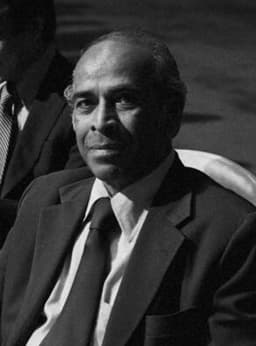
S. Rajaratnam
Politician · Modern
53.7Total
Basic Information
Born
1924
1915
Died
—
2006
Era
Modern
Modern
Nationality
China
Singapore
Occupation
Politician
Politician
Civilization
Eastern
Eastern
Score Comparison
Military (10%)
16.4
15.5
Political (20%)
53.8
70.0
Influence (20%)
53.3
55.0
Legacy (20%)
45.0
50.0
Leadership (15%)
77.2
78.0
Strategy (15%)
36.8
37.4
TOTAL
49.5
53.7
Qiao Shi — Complete Timeline
1987 AD
Head of the Central Commission for Discipline InspectionPolitical Action◆ Major
Qiao Shi served as head of the Central Commission for Discipline Inspection, overseeing anti-corruption efforts within the Communist Party. He investigated and punished numerous officials for corruption, strengthening Party discipline.
Anti-CorruptionParty DisciplineCCDI
Impact: nationalconstructive
1992 AD
Member of the Politburo Standing CommitteePolitical Action◆ Major
Qiao Shi was elected to the Politburo Standing Committee, the top decision-making body of the Communist Party. He was a key figure in the post-Tiananmen leadership, advocating for institutional stability and gradual political reform.
PolitburoLeadershipPolitical Reform
Impact: national
1993 AD
Chairman of the National People's CongressPolitical Action◆ Major
Qiao Shi was elected Chairman of the National People's Congress. He promoted the concept of 'rule of law' and pushed for legal reforms, including the revision of the criminal procedure law and the establishment of a more independent judiciary.
NPCLegal ReformRule of Law
Impact: nationalconstructive
S. Rajaratnam — Complete Timeline
1965 AD
Became Singapore's First Foreign MinisterPolitical Action◆ Major
S. Rajaratnam was appointed Singapore's first Minister for Foreign Affairs after independence. He established diplomatic relations with over 50 countries and articulated Singapore's policy of non-alignment and regional cooperation.
Foreign PolicyDiplomacyIndependence
Impact: globalconstructive
1966 AD
Drafted the Singapore National PledgeCultural◆ Major
S. Rajaratnam authored the Singapore National Pledge, which emphasizes unity, democracy, and equality. The pledge is recited daily in schools and at national events, becoming a foundational text of Singaporean identity.
National IdentityEducationCivic Values
Impact: nationalconstructive
1967 AD
Co-founded the Association of Southeast Asian Nations (ASEAN)Political Action◆ Major
S. Rajaratnam was a founding signatory of the ASEAN Declaration in Bangkok. He played a key role in shaping the organization's principles of non-interference and regional stability, which became central to Southeast Asian diplomacy.
ASEANRegional CooperationDiplomacy
Impact: regionalconstructive
1968 AD
Served as Minister for LabourReform◆ Major
S. Rajaratnam served as Minister for Labour, implementing policies to improve industrial relations and worker welfare. He helped establish the National Wages Council and promoted tripartite cooperation between unions, employers, and government.
Labour PolicyIndustrial RelationsTripartism
Impact: nationalconstructive
1987 AD
Published 'The Prophetic and the Political'Cultural
S. Rajaratnam published a collection of his speeches and writings. The book articulated his vision of a multiracial, meritocratic Singapore and his critique of Western liberal democracy in the Asian context.
Political ThoughtPublicationAsian Values
Impact: nationalconstructive
This comparison has not been analyzed yet.
One-time AI generation (~1 minute). Scores and timeline are already available below.
Rankings
🥇
S. RajaratnamLeader
Mil: 15.5Pol: 70.0Inf: 55.0
53.7
🥈
Qiao Shi
Mil: 16.4Pol: 53.8Inf: 53.3
49.5
+4.2 behind
How This Comparison Works
Algorithm
Each figure is scored on 6 dimensions (0—100 scale) based on structured historical data: Military (10%), Political (20%), Influence (20%), Legacy (20%), Leadership (15%), Strategy (15%). The weighted total produces the final ranking.
Data Sources
Scores are computed from structured sub-indicators in the database. Scale factors adjust for era (Ancient ×0.85, Modern ×1.0) and civilization size (Eastern ×1.05, Other ×0.80) to account for differences in population and military scale.
Maximum 3 Figures
Comparisons are limited to 2—3 figures to ensure readability and statistical meaningfulness.
Error Margins
±5 points per dimension — Sub-scores are derived from historical records with inherent uncertainty. Two figures within 5 points on a dimension should be considered roughly equivalent in that area.
Total Score Accuracy
±3 points overall — The weighted combination of 6 dimensions produces a total score with approximately ±3 points of uncertainty. Differences of less than 3 points are not statistically significant— the figures are effectively tied.
Known Limitations
- Historical records are incomplete and uneven across civilizations
- Figures from oral-tradition societies may be underrepresented
- Occupation labels can misclassify multi-role figures
- Scores measure capability and impact, not moral character
- Quantitative scoring is a comparison tool, not absolute truth
Capability Radar
Military (10%) — Battles & Warfare
Battles
12
12
Win Rate
18
15
Expansion
19
22
Political (20%) — Governance & Reform
Reform
55
70
Diplomacy
50
85
Economy
40
60
Influence (20%) — Cultural & Global Reach
Cultural
30
60
Global
30
55
Legacy (20%) — Historical Impact
Historical
40
55
Longevity
30
50
Leadership (15%) — Power & Stability
Tenure
60
65
Stability
55
75
Strategy (15%) — Tactics & Innovation
Strategy
22
22
Tactics
24
26
Reform
29
26
Similar Comparisons
Comments & Discussion
No comments yet. Be the first to share your thoughts!