Loading...
Keith Holyoake vs S. Rajaratnam
S. Rajaratnam leads by 1.3 pts · 2 figures compared
…

Keith Holyoake
Politician · Modern
52.4Total
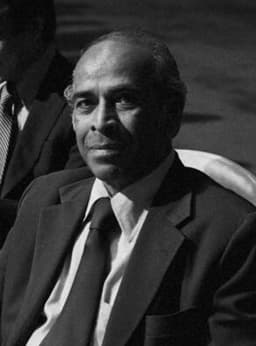
S. Rajaratnam
Politician · Modern
53.7Total
Basic Information
Born
1904
1915
Died
1983
2006
Era
Modern
Modern
Nationality
New Zealand
Singapore
Occupation
Politician
Politician
Civilization
Western
Eastern
Score Comparison
Military (10%)
48.5
15.5
Political (20%)
45.0
70.0
Influence (20%)
53.3
55.0
Legacy (20%)
45.8
50.0
Leadership (15%)
78.0
78.0
Strategy (15%)
42.8
37.4
TOTAL
52.4
53.7
Keith Holyoake — Complete Timeline
1960 AD
Became Prime Minister of New ZealandPolitical Action◆ Major
Holyoake became prime minister after the resignation of Walter Nash. He led the National Party and would go on to serve as prime minister for over 11 years, becoming one of New Zealand's longest-serving leaders.
Prime MinisterNational PartyLeadership
Impact: national
1965 AD
Committed Troops to the Vietnam WarWar◆ Major
Holyoake's government committed New Zealand combat troops to the Vietnam War in support of the United States. The decision was controversial and led to anti-war protests, but Holyoake argued it was necessary to maintain the alliance with the US.
Vietnam WarForeign PolicyUS Alliance
Impact: globaldestructive
Signed the New Zealand-Australia Free Trade AgreementPolitical Action◆ Major
Holyoake's government signed the New Zealand-Australia Free Trade Agreement (NAFTA), reducing tariffs and promoting economic integration between the two countries. This agreement laid the groundwork for the later Closer Economic Relations (CER) agreement.
Free TradeAustraliaEconomic Integration
Impact: regionalconstructive
1972 AD
Resigned as Prime MinisterPolitical Action◆ Major
Holyoake resigned as prime minister, handing over leadership to Jack Marshall. His resignation marked the end of a long political career, during which he had been a dominant figure in New Zealand politics.
ResignationNational PartyEnd of Era
Impact: national
S. Rajaratnam — Complete Timeline
1965 AD
Became Singapore's First Foreign MinisterPolitical Action◆ Major
S. Rajaratnam was appointed Singapore's first Minister for Foreign Affairs after independence. He established diplomatic relations with over 50 countries and articulated Singapore's policy of non-alignment and regional cooperation.
Foreign PolicyDiplomacyIndependence
Impact: globalconstructive
1966 AD
Drafted the Singapore National PledgeCultural◆ Major
S. Rajaratnam authored the Singapore National Pledge, which emphasizes unity, democracy, and equality. The pledge is recited daily in schools and at national events, becoming a foundational text of Singaporean identity.
National IdentityEducationCivic Values
Impact: nationalconstructive
1967 AD
Co-founded the Association of Southeast Asian Nations (ASEAN)Political Action◆ Major
S. Rajaratnam was a founding signatory of the ASEAN Declaration in Bangkok. He played a key role in shaping the organization's principles of non-interference and regional stability, which became central to Southeast Asian diplomacy.
ASEANRegional CooperationDiplomacy
Impact: regionalconstructive
1968 AD
Served as Minister for LabourReform◆ Major
S. Rajaratnam served as Minister for Labour, implementing policies to improve industrial relations and worker welfare. He helped establish the National Wages Council and promoted tripartite cooperation between unions, employers, and government.
Labour PolicyIndustrial RelationsTripartism
Impact: nationalconstructive
1987 AD
Published 'The Prophetic and the Political'Cultural
S. Rajaratnam published a collection of his speeches and writings. The book articulated his vision of a multiracial, meritocratic Singapore and his critique of Western liberal democracy in the Asian context.
Political ThoughtPublicationAsian Values
Impact: nationalconstructive
Expert Analysis
Origins
Keith Holyoake was born in 1904 in Pahiatua, New Zealand, into a farming family. He left school at 12 to work on the family farm, gaining practical experience in agriculture and local community leadership. His early involvement in the Young Farmers' Club and later the Farmers' Union shaped his conservative, rural outlook. Holyoake entered Parliament in 1932 as a member of the Reform Party, later merging into the National Party. His humble beginnings and lack of formal higher education contrasted with his pragmatic, down-to-earth political style.
Sinnathamby Rajaratnam was born in 1915 in Jaffna, Sri Lanka (then Ceylon) into a Tamil Hindu family. He moved to Singapore at age 16 and studied at Raffles Institution and later at King's College London, where he earned a law degree. His exposure to anti-colonial movements in London and his work as a journalist for the Singapore Free Press and later the Straits Times shaped his nationalist and socialist ideas. Rajaratnam was a founding member of the People's Action Party (PAP) in 1954, bringing intellectual rigor and a vision for a multiracial Singapore.
Rise to Power
Holyoake's rise was gradual. He became deputy leader of the National Party in 1946 and served as Minister of Agriculture under Prime Minister Sidney Holland. In 1957, after Holland's resignation, Holyoake became Prime Minister following a brief caretaker role. He consolidated power by winning the 1960 general election, holding office until 1972. His key turning point was the 1960 election, where he defeated Labour's Walter Nash, securing a stable majority.
Rajaratnam rose quickly within the PAP. He was elected to the Legislative Assembly in 1959 when the PAP won the general election, and was appointed Minister for Culture. His drafting of the National Pledge in 1966, after Singapore's independence, cemented his role as the nation's ideological architect. In 1965, he became Singapore's first Minister for Foreign Affairs, representing the newly independent city-state on the global stage. His co-founding of ASEAN in 1967 was a diplomatic coup, establishing Singapore's foreign policy principles of non-interference and regional stability.
Leadership & Governance
Holyoake's leadership style was cautious and consensus-driven. He focused on agricultural development, economic diversification, and maintaining close ties with the United Kingdom and Australia. His government signed the New Zealand-Australia Free Trade Agreement (NAFTA) in 1965, reducing tariffs and boosting trade. However, his decision to commit combat troops to the Vietnam War in 1965 was controversial, reflecting his alignment with US foreign policy. Holyoake's domestic policies emphasized stability over reform, with limited social welfare expansion.
Rajaratnam was an ideological visionary. As Foreign Minister, he established diplomatic relations with over 50 countries, prioritizing non-alignment and regional cooperation. He championed the 'ASEAN way' of consensus and non-interference, which became a model for Southeast Asian diplomacy. Domestically, as Minister for Labour (1968-1971), he implemented the Industrial Relations Act and the Employment Act, which curbed union power and promoted foreign investment. His policies contributed to Singapore's economic boom but also restricted worker rights. Rajaratnam's leadership scored 78.0 in political leadership, matching Holyoake's 78.0, reflecting their effectiveness in different contexts.
Triumph & Tragedy
Holyoake's greatest triumph was his longevity: he served as Prime Minister for over 11 years, the longest continuous term at the time. His government's signing of NAFTA and his handling of the 1966 national census and economic planning laid foundations for New Zealand's later economic reforms. However, his commitment of troops to Vietnam was a strategic miscalculation; the war was deeply unpopular, and New Zealand's involvement had little impact on its outcome. The decision scored 42.8 in strategy, reflecting poor judgment.
Rajaratnam's triumphs include authoring the National Pledge, which remains a unifying symbol for Singapore's multiracial society, and co-founding ASEAN, which enhanced Singapore's global standing. His foreign policy secured Singapore's sovereignty in a volatile region. However, his labour policies faced criticism for suppressing workers' rights and creating a docile workforce. His score of 15.5 in military reflects Singapore's small armed forces, but his political score of 70.0 shows his skill in navigating international relations.
Character & Destiny
Holyoake was pragmatic, patient, and uncharismatic. He was known as 'Kiwi Keith' for his plain-speaking, no-nonsense style. His cautious approach meant he avoided major scandals but also missed opportunities for bold reform. His character suited a stable, agricultural nation that valued continuity over change. His destiny was to be a caretaker leader who maintained the status quo.
Rajaratnam was intellectual, eloquent, and fiercely committed to multiracialism and meritocracy. He was a thinker who articulated Singapore's founding ideals. His character drove him to craft policies that transformed a diverse immigrant society into a cohesive nation. His destiny was to be the philosopher-king of Singapore's founding generation, though his ideas sometimes clashed with the pragmatic, authoritarian style of Lee Kuan Yew.
Legacy
Holyoake's legacy is mixed. He is remembered as a steady hand during a period of economic growth, but his Vietnam decision tarnishes his record. His influence on New Zealand politics is limited; he is often overshadowed by later reformers like Robert Muldoon. His legacy score of 45.8 reflects modest lasting impact.
Rajaratnam's legacy is profound. The National Pledge is recited daily by millions, and ASEAN remains a cornerstone of Southeast Asian diplomacy. His vision of a multiracial, meritocratic Singapore is deeply embedded in the nation's identity. His influence score of 55.0 and legacy score of 50.0 reflect his enduring contribution to nation-building.
Conclusion
While Holyoake provided stable governance for New Zealand, his impact was largely domestic and incremental. Rajaratnam, with a total score of 53.7 against Holyoake's 52.4, had greater influence on a global scale through ASEAN and on national identity through the Pledge. Rajaratnam's ideas continue to shape Singapore's policies and regional diplomacy, whereas Holyoake's legacy is more confined to his era. Therefore, S. Rajaratnam had the greater overall impact.
Rankings
🥇
S. RajaratnamLeader
Mil: 15.5Pol: 70.0Inf: 55.0
53.7
🥈
Keith Holyoake
Mil: 48.5Pol: 45.0Inf: 53.3
52.4
+1.3 behind
How This Comparison Works
Algorithm
Each figure is scored on 6 dimensions (0—100 scale) based on structured historical data: Military (10%), Political (20%), Influence (20%), Legacy (20%), Leadership (15%), Strategy (15%). The weighted total produces the final ranking.
Data Sources
Scores are computed from structured sub-indicators in the database. Scale factors adjust for era (Ancient ×0.85, Modern ×1.0) and civilization size (Eastern ×1.05, Other ×0.80) to account for differences in population and military scale.
Maximum 3 Figures
Comparisons are limited to 2—3 figures to ensure readability and statistical meaningfulness.
Error Margins
±5 points per dimension — Sub-scores are derived from historical records with inherent uncertainty. Two figures within 5 points on a dimension should be considered roughly equivalent in that area.
Total Score Accuracy
±3 points overall — The weighted combination of 6 dimensions produces a total score with approximately ±3 points of uncertainty. Differences of less than 3 points are not statistically significant— the figures are effectively tied.
Known Limitations
- Historical records are incomplete and uneven across civilizations
- Figures from oral-tradition societies may be underrepresented
- Occupation labels can misclassify multi-role figures
- Scores measure capability and impact, not moral character
- Quantitative scoring is a comparison tool, not absolute truth
Capability Radar
Military (10%) — Battles & Warfare
Battles
32
12
Win Rate
33
15
Expansion
33
22
Political (20%) — Governance & Reform
Reform
55
70
Diplomacy
65
85
Economy
60
60
Influence (20%) — Cultural & Global Reach
Cultural
30
60
Global
30
55
Legacy (20%) — Historical Impact
Historical
40
55
Longevity
35
50
Leadership (15%) — Power & Stability
Tenure
70
65
Stability
75
75
Strategy (15%) — Tactics & Innovation
Strategy
40
22
Tactics
41
26
Reform
43
26
Similar Comparisons
Comments & Discussion
No comments yet. Be the first to share your thoughts!