Loading...
Pyrrhus of Epirus vs Wen Yang
Pyrrhus of Epirus leads by 18.7 pts · 2 figures compared
…

Pyrrhus of Epirus
General · Ancient
60.1Total
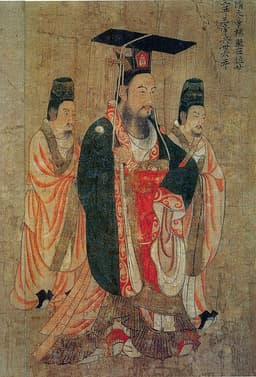
Wen Yang
General · Ancient
41.4Total
Basic Information
Born
-319
238
Died
-272
291
Era
Ancient
Ancient
Nationality
Greece
China
Occupation
General
General
Civilization
Western
Eastern
Score Comparison
Military (10%)
72.0
40.0
Political (20%)
42.3
39.4
Influence (20%)
72.0
44.8
Legacy (20%)
55.0
35.8
Leadership (15%)
50.7
35.4
Strategy (15%)
72.0
60.0
TOTAL
60.1
41.4
Pyrrhus of Epirus — Complete Timeline
280 BC
Battle of HeracleaWar◆ Major
Pyrrhus defeated a Roman army at Heraclea in southern Italy. He used war elephants to break the Roman lines. The victory was costly, with heavy losses to his own forces, establishing the pattern of Pyrrhic victories.
Pyrrhic WarRoman RepublicWar Elephants
Impact: regional
279 BC
Battle of AsculumWar◆ Major
Pyrrhus again defeated the Romans at Asculum, but suffered such heavy casualties that he reportedly said 'Another such victory and we are lost.' This battle gave rise to the term 'Pyrrhic victory.'
Pyrrhic VictoryRoman RepublicCostly Battle
Impact: regional
278 BC
Invasion of SicilyWar◆ Major
Pyrrhus crossed to Sicily to aid the Greek city-states against Carthage. He captured several Carthaginian strongholds, including Eryx, and nearly drove the Carthaginians from the island. However, he failed to capture Lilybaeum.
SicilyCarthageGreek Colonies
Impact: regional
275 BC
Battle of BeneventumWar◆ Major
Pyrrhus fought his final battle in Italy against the Romans at Beneventum. The battle was indecisive, but Pyrrhus's losses forced him to abandon Italy and return to Epirus. This ended his Italian campaign.
Pyrrhic WarRoman RepublicWithdrawal
Impact: regional
272 BC
Death of Pyrrhus at ArgosWar◆ Major
Pyrrhus was killed during street fighting in Argos, Greece, while attempting to capture the city. An old woman threw a roof tile at him, stunning him, allowing an Argive soldier to kill him. His death ended his ambitions.
DeathArgosGreek Warfare
Impact: regionaltragic
Wen Yang — Complete Timeline
255 AD
Single-Handed Charge at Sima Shi's CampWar◆ Major
During the rebellion of Guanqiu Jian and Wen Qin, Wen Yang, then a young officer, charged alone into Sima Shi's camp, causing chaos and nearly capturing the Wei commander. The feat demonstrated his personal bravery but did not change the battle's outcome.
BattlePersonal ValorThree Kingdoms
Impact: regional
265 AD
Defected to Jin DynastyPolitical Action
After the fall of Wei, Wen Yang surrendered to the Jin dynasty and was given a military post. He later served under Emperor Wu of Jin.
DefectionJin DynastyPolitical Transition
Impact: national
291 AD
Executed by Sima LiangPolitical Action◆ Major
During the War of the Eight Princes, Wen Yang was executed by Sima Liang, who feared his military prowess. His death removed a capable general from the Jin court.
ExecutionWar of the Eight PrincesJin Dynasty
Impact: nationaltragic
Expert Analysis
Origins
**Pyrrhus of Epirus** was born in 319 BC into the royal Aeacid dynasty of Epirus, a mountainous kingdom in northwestern Greece. His father, King Aeacides, was overthrown when Pyrrhus was an infant, forcing him into exile. He grew up in the court of King Glaucias of the Taulantians, where he received a Hellenistic education. At age 12, he was restored to the throne but was deposed again at 17, fleeing to the court of his brother-in-law Demetrius Poliorcetes. He later fought in the Wars of the Diadochi, gaining military experience under Demetrius and Ptolemy I. His formative years were shaped by the volatile politics of the Successor kingdoms.
**Wen Yang** (also known as Wen Shu) was born around 238 AD during the Three Kingdoms period of China. His father, Wen Qin, was a general under the Wei dynasty. Little is recorded of his early life, but he likely trained in martial arts and military tactics from a young age. The Wei state was plagued by internal power struggles, and the Sima clan was consolidating control over the imperial court. Wen Yang emerged during the rebellion led by Guanqiu Jian and his father in 255 AD, when he was about 17 years old.
Rise to Power
Pyrrhus rose to prominence through his participation in the Wars of the Diadochi. After being restored to the Epirote throne in 297 BC with Ptolemy's support, he expanded his kingdom by conquering Corcyra and portions of Macedonia. In 280 BC, he was invited by the Greek city of Tarentum to aid them against Roman expansion in southern Italy. This launched his Italian campaign, where he won the Battle of Heraclea (280 BC) using war elephants. His reputation as a formidable general grew, leading to his involvement in Sicilian affairs against Carthage.
Wen Yang's rise was sudden and dramatic. In 255 AD, during the rebellion against Sima Shi (the regent of Wei), Wen Yang, then a young officer, made a name for himself by charging alone into Sima Shi's camp. According to records, he killed several soldiers and caused such chaos that Sima Shi was terrified; the camp fell into disarray, and Wen Yang nearly captured Sima Shi. This single-handed feat earned him immediate fame as a fearless warrior. However, the rebellion ultimately failed, and his father defected to Wu. Wen Yang later surrendered to the Jin dynasty (which succeeded Wei) and was given a military post, serving under Emperor Wu of Jin.
Leadership & Governance
Pyrrhus was a charismatic and energetic leader who inspired loyalty among his troops. He led from the front, often personally engaging in battle. However, his governance style was erratic; he frequently abandoned his kingdom for extended campaigns, leaving Epirus vulnerable. For example, after his Italian campaign, he spent years in Sicily, neglecting his home base. He attempted to forge alliances through marriage, such as marrying Lanassa, daughter of the Syracusan tyrant Agathocles, but these were often short-lived. His political score of 42.3 reflects his inability to maintain stable governance.
Wen Yang was primarily a warrior, not a governor. He rose through military prowess rather than administrative skill. After defecting to Jin, he served as a general but had limited political influence. His leadership was characterized by personal bravery rather than strategic command. He was executed by Sima Liang during the War of the Eight Princes in 291 AD, as Sima Liang feared his military capabilities. Wen Yang's political score of 39.4 indicates his lack of political acumen.
Triumph & Tragedy
Pyrrhus's greatest success was his string of victories against Rome at Heraclea (280 BC) and Asculum (279 BC), where he demonstrated innovative tactics with war elephants. He also nearly drove the Carthaginians out of Sicily. However, his greatest failure was the cost of these victories. At Asculum, his losses were so severe that he reportedly said, 'Another such victory and we are lost.' The term 'Pyrrhic victory' originates from this. He ultimately failed to secure a lasting foothold in Italy or Sicily. His death in 272 BC was inglorious: he was killed in street fighting in Argos when an old woman threw a roof tile at him, stunning him for a fatal blow.
Wen Yang's triumph was his single-handed charge at Sima Shi's camp, which demonstrated extraordinary courage and skill. This act became legendary in Chinese folklore. However, his tragedy was that his bravery did not translate into strategic success. The rebellion he fought for failed, and he later died as a political pawn, executed by Sima Liang. His military score of 40.0 reflects limited impact beyond a single feat.
Character & Destiny
Pyrrhus was restless and ambitious, always seeking new conquests. He was a capable tactician but lacked strategic patience. His character—adventurous, impulsive, and unwilling to consolidate gains—led to his ultimate failure. Ancient historians like Plutarch describe him as a king who 'squandered his opportunities.' His destiny was to be remembered as a cautionary tale about the cost of victory.
Wen Yang was fearless and impulsive, as shown by his solo charge. However, he was politically naive, failing to navigate the treacherous court politics of the Jin dynasty. His execution was a direct result of his reputation as a potential threat. His destiny was to be a short-lived hero, celebrated for one bold act but unable to shape events.
Legacy
Pyrrhus left a lasting linguistic legacy: the term 'Pyrrhic victory.' His military campaigns influenced later Hellenistic warfare and demonstrated the effectiveness of war elephants in Europe. He is remembered as a brilliant but flawed general, with a total score of 60.1. His influence score of 72.0 reflects his enduring fame.
Wen Yang's legacy is more localized. He is remembered in Chinese history as a symbol of individual bravery, but his overall impact is minor. His total score of 41.4 places him far below Pyrrhus. He appears in historical novels like the Romance of the Three Kingdoms, but his strategic influence was negligible.
Conclusion
Pyrrhus of Epirus had a greater impact on history than Wen Yang. Despite his ultimate failures, Pyrrhus's campaigns against Rome shaped the course of Mediterranean history, and his name entered the lexicon. Wen Yang's single act of bravery, while remarkable, did not alter the trajectory of Chinese history. Pyrrhus's total score of 60.1 versus Wen Yang's 41.4 reflects this disparity. Pyrrhus's military score of 72.0 far exceeds Wen Yang's 40.0, and his influence score of 72.0 dwarfs Wen Yang's 44.8. While both were courageous, Pyrrhus's scale of operations and lasting linguistic legacy give him a clear edge. The data shows that Pyrrhus's campaigns had broader historical consequences, making him the more significant figure.
Rankings
🥇
Pyrrhus of EpirusLeader
Mil: 72.0Pol: 42.3Inf: 72.0
60.1
🥈
Wen Yang
Mil: 40.0Pol: 39.4Inf: 44.8
41.4
+18.7 behind
How This Comparison Works
Algorithm
Each figure is scored on 6 dimensions (0—100 scale) based on structured historical data: Military (10%), Political (20%), Influence (20%), Legacy (20%), Leadership (15%), Strategy (15%). The weighted total produces the final ranking.
Data Sources
Scores are computed from structured sub-indicators in the database. Scale factors adjust for era (Ancient ×0.85, Modern ×1.0) and civilization size (Eastern ×1.05, Other ×0.80) to account for differences in population and military scale.
Maximum 3 Figures
Comparisons are limited to 2—3 figures to ensure readability and statistical meaningfulness.
Error Margins
±5 points per dimension — Sub-scores are derived from historical records with inherent uncertainty. Two figures within 5 points on a dimension should be considered roughly equivalent in that area.
Total Score Accuracy
±3 points overall — The weighted combination of 6 dimensions produces a total score with approximately ±3 points of uncertainty. Differences of less than 3 points are not statistically significant— the figures are effectively tied.
Known Limitations
- Historical records are incomplete and uneven across civilizations
- Figures from oral-tradition societies may be underrepresented
- Occupation labels can misclassify multi-role figures
- Scores measure capability and impact, not moral character
- Quantitative scoring is a comparison tool, not absolute truth
Capability Radar
Military (10%) — Battles & Warfare
Battles
75
15
Win Rate
60
20
Expansion
65
0
Political (20%) — Governance & Reform
Reform
40
0
Diplomacy
60
0
Economy
45
0
Influence (20%) — Cultural & Global Reach
Cultural
70
10
Global
65
5
Legacy (20%) — Historical Impact
Historical
75
15
Longevity
80
10
Leadership (15%) — Power & Stability
Tenure
55
5
Stability
35
0
Strategy (15%) — Tactics & Innovation
Strategy
70
10
Tactics
85
25
Reform
50
0
Similar Comparisons
Comments & Discussion
No comments yet. Be the first to share your thoughts!