Loading...
This comparison has not been analyzed yet.
One-time AI generation (~1 minute). Scores and timeline are already available below.
Ptolemy XIII vs Ramesses V
Ptolemy XIII leads by 3.9 pts · 2 figures compared
…
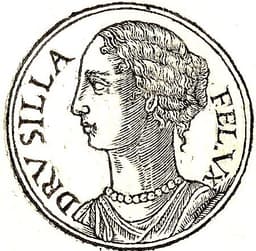
Ptolemy XIII
Emperor · Ancient
39.0Total

Ramesses V
Emperor · Ancient
35.1Total
Basic Information
Born
-62
-1149
Died
-47
-1145
Era
Ancient
Ancient
Nationality
Egypt
New Kingdom Egypt
Occupation
Emperor
Emperor
Civilization
Middle Eastern
Middle Eastern
Score Comparison
Military (10%)
47.5
10.2
Political (20%)
27.9
32.1
Influence (20%)
42.4
41.6
Legacy (20%)
32.5
34.2
Leadership (15%)
49.9
39.0
Strategy (15%)
38.6
45.0
TOTAL
39.0
35.1
Ptolemy XIII — Complete Timeline
51 BC
Accession as Co-Ruler of EgyptPolitical Action◆ Major
Ptolemy XIII became co-ruler of Egypt with his older sister Cleopatra VII after the death of their father Ptolemy XII. He was about 11 years old, and his advisors quickly marginalized Cleopatra. This led to a power struggle between the siblings.
AccessionCo-RulershipPower Struggle
Impact: regional
48 BC
Involvement in the Alexandrian WarWar◆ Major
Ptolemy XIII's forces besieged Julius Caesar and Cleopatra VII in the royal palace of Alexandria. The conflict, known as the Alexandrian War, lasted several months. Ptolemy's army was eventually defeated by Roman reinforcements.
SiegeAlexandrian WarCaesar
Impact: regionaldestructive
Expulsion of Cleopatra VIIPolitical Action◆ Major
Ptolemy XIII's advisors, led by the eunuch Pothinus, expelled Cleopatra VII from Alexandria. She fled to Syria and raised an army to reclaim the throne. This act triggered a civil war in Egypt and drew the attention of Julius Caesar.
ExpulsionCivil WarRoman Intervention
Impact: regionaldestructive
47 BC
Death at the Battle of the NileWar◆ Major
Ptolemy XIII drowned in the Nile River while attempting to flee after his defeat at the Battle of the Nile. His death ended the civil war and allowed Cleopatra VII to become sole ruler of Egypt, with Caesar's support.
BattleDeathCleopatra VII
Impact: regionaltragic
Ramesses V — Complete Timeline
1149 BC
Accession and Short ReignPolitical Action◆ Major
Ramesses V succeeded his father Ramesses IV but reigned only about four years. His reign was marked by economic difficulties and the growing power of the Amun priesthood at Thebes. The brevity of his rule limited his ability to undertake major projects.
SuccessionShort ReignEconomic Decline
Impact: national
1147 BC
Turmoil in ThebesPolitical Action
During Ramesses V's reign, the High Priest of Amun, Ramessesnakht, gained significant power, effectively controlling Thebes. This shift marked the beginning of the decline of royal authority in Upper Egypt. The king was unable to curb the priestly influence.
PriesthoodPower ShiftThebes
Impact: nationaldestructive
1145 BC
Evidence of Smallpox on MummyOther◆ Major
The mummy of Ramesses V shows distinct pustular lesions on the face and body, consistent with smallpox. This is one of the earliest known physical evidence of the disease. His death may have been caused by smallpox, which contributed to the instability of his reign.
DiseaseSmallpoxMummy
Impact: globaltragic
This comparison has not been analyzed yet.
One-time AI generation (~1 minute). Scores and timeline are already available below.
Rankings
🥇
Ptolemy XIIILeader
Mil: 47.5Pol: 27.9Inf: 42.4
39.0
🥈
Ramesses V
Mil: 10.2Pol: 32.1Inf: 41.6
35.1
+3.9 behind
How This Comparison Works
Algorithm
Each figure is scored on 6 dimensions (0—100 scale) based on structured historical data: Military (10%), Political (20%), Influence (20%), Legacy (20%), Leadership (15%), Strategy (15%). The weighted total produces the final ranking.
Data Sources
Scores are computed from structured sub-indicators in the database. Scale factors adjust for era (Ancient ×0.85, Modern ×1.0) and civilization size (Eastern ×1.05, Other ×0.80) to account for differences in population and military scale.
Maximum 3 Figures
Comparisons are limited to 2—3 figures to ensure readability and statistical meaningfulness.
Error Margins
±5 points per dimension — Sub-scores are derived from historical records with inherent uncertainty. Two figures within 5 points on a dimension should be considered roughly equivalent in that area.
Total Score Accuracy
±3 points overall — The weighted combination of 6 dimensions produces a total score with approximately ±3 points of uncertainty. Differences of less than 3 points are not statistically significant— the figures are effectively tied.
Known Limitations
- Historical records are incomplete and uneven across civilizations
- Figures from oral-tradition societies may be underrepresented
- Occupation labels can misclassify multi-role figures
- Scores measure capability and impact, not moral character
- Quantitative scoring is a comparison tool, not absolute truth
Capability Radar
Military (10%) — Battles & Warfare
Battles
5
5
Win Rate
5
5
Expansion
0
5
Political (20%) — Governance & Reform
Reform
0
10
Diplomacy
10
10
Economy
5
10
Influence (20%) — Cultural & Global Reach
Cultural
5
10
Global
5
5
Legacy (20%) — Historical Impact
Historical
10
15
Longevity
5
10
Leadership (15%) — Power & Stability
Tenure
10
15
Stability
5
10
Strategy (15%) — Tactics & Innovation
Strategy
5
5
Tactics
5
5
Reform
0
5
Similar Comparisons
Comments & Discussion
No comments yet. Be the first to share your thoughts!