Loading...
Arnuwanda I vs Ptolemy XIII
Arnuwanda I leads by 5.2 pts · 2 figures compared
…

Arnuwanda I
Emperor · Ancient
44.2Total
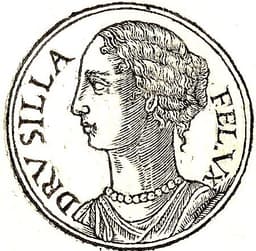
Ptolemy XIII
Emperor · Ancient
39.0Total
Basic Information
Born
-1400
-62
Died
-1380
-47
Era
Ancient
Ancient
Nationality
Hittite Empire
Egypt
Occupation
Emperor
Emperor
Civilization
Middle Eastern
Middle Eastern
Score Comparison
Military (10%)
55.0
47.5
Political (20%)
36.5
27.9
Influence (20%)
45.5
42.4
Legacy (20%)
38.3
32.5
Leadership (15%)
51.9
49.9
Strategy (15%)
45.0
38.6
TOTAL
44.2
39.0
Arnuwanda I — Complete Timeline
1395 BC
Treaty with the KaskaPolitical Action
Arnuwanda I negotiated a treaty with the Kaska tribes of the Pontic mountains. The treaty aimed to secure the northern border of the Hittite heartland, but proved temporary as Kaska raids resumed.
Hittite EmpireKaskaDiplomacy
Impact: regional
1390 BC
War with ArzawaWar◆ Major
Arnuwanda I fought a prolonged war against the Arzawa states in western Anatolia. The conflict strained Hittite resources and resulted in territorial losses, weakening the empire's western frontier.
Hittite EmpireArzawaWar
Impact: regionaldestructive
Ptolemy XIII — Complete Timeline
51 BC
Accession as Co-Ruler of EgyptPolitical Action◆ Major
Ptolemy XIII became co-ruler of Egypt with his older sister Cleopatra VII after the death of their father Ptolemy XII. He was about 11 years old, and his advisors quickly marginalized Cleopatra. This led to a power struggle between the siblings.
AccessionCo-RulershipPower Struggle
Impact: regional
48 BC
Involvement in the Alexandrian WarWar◆ Major
Ptolemy XIII's forces besieged Julius Caesar and Cleopatra VII in the royal palace of Alexandria. The conflict, known as the Alexandrian War, lasted several months. Ptolemy's army was eventually defeated by Roman reinforcements.
SiegeAlexandrian WarCaesar
Impact: regionaldestructive
Expulsion of Cleopatra VIIPolitical Action◆ Major
Ptolemy XIII's advisors, led by the eunuch Pothinus, expelled Cleopatra VII from Alexandria. She fled to Syria and raised an army to reclaim the throne. This act triggered a civil war in Egypt and drew the attention of Julius Caesar.
ExpulsionCivil WarRoman Intervention
Impact: regionaldestructive
47 BC
Death at the Battle of the NileWar◆ Major
Ptolemy XIII drowned in the Nile River while attempting to flee after his defeat at the Battle of the Nile. His death ended the civil war and allowed Cleopatra VII to become sole ruler of Egypt, with Caesar's support.
BattleDeathCleopatra VII
Impact: regionaltragic
Expert Analysis
Origins
Arnuwanda I was a Hittite king who reigned in the early 14th century BCE, likely the son of Tudhaliya I/II. He inherited a kingdom facing multiple threats, particularly from the Arzawa states in western Anatolia and the Kaska tribes in the north. His early life is poorly documented, but he was trained for kingship and faced military challenges from the start.
Ptolemy XIII was born around 62 BCE, the younger brother of Cleopatra VII. He was a son of Ptolemy XII Auletes, a weak pharaoh who relied on Rome. Ptolemy XIII became co-ruler of Egypt at about age 11 after his father's death in 51 BCE, sharing the throne with his sister Cleopatra. His upbringing was steeped in court intrigue and the influence of powerful advisors like the eunuch Pothinus.
Rise to Power
Arnuwanda I ascended to the Hittite throne around 1400 BCE, during a period of decline after the early empire. His reign was marked by continuous wars. He faced a major uprising from the Arzawa states, which had formed a coalition under a leader named Madduwatta. Arnuwanda's military campaigns were largely defensive, aimed at holding the Hittite heartland. He also dealt with the Kaska tribes, who raided from the north. His rise was not dramatic but a matter of dynastic succession.
Ptolemy XIII became co-ruler as a child, with real power held by his regents. His rise was engineered by court factions opposed to Cleopatra. In 49 BCE, his advisors, led by Pothinus and the general Achillas, expelled Cleopatra from Alexandria. Ptolemy then became the sole ruler in name, but his reign was dominated by the Roman civil war. His rise to prominence came through his conflict with Cleopatra and his involvement with Julius Caesar.
Leadership & Governance
Arnuwanda I's leadership was focused on military defense and diplomacy. He negotiated a treaty with the Kaska tribes to secure the northern border, scoring 45.0 in strategy. His governance was typical of Hittite kings: he relied on vassal treaties and local governors. However, his military score of 55.0 reflects his inability to decisively defeat Arzawa, leading to a gradual loss of territory. He was a capable administrator but lacked the aggressive expansion of his predecessors.
Ptolemy XIII, with a leadership score of 49.9, was a puppet ruler controlled by his advisors. He made no significant policy decisions; his reign was defined by the actions of Pothinus and Achillas. His political score of 27.9 is the lowest, highlighting his complete lack of independent governance. His involvement in the Alexandrian War was nominal, as his forces besieged Caesar and Cleopatra in the palace for six months. His leadership was reactive and dominated by others.
Triumph & Tragedy
Arnuwanda I's greatest success was maintaining Hittite sovereignty despite multiple threats. He managed to keep the kingdom intact through diplomacy and defensive wars. His treaty with the Kaska, though temporary, was a pragmatic achievement. His tragedy was the steady erosion of Hittite power; the Arzawa states gained independence and even raided Hittite territory. He died leaving a weakened kingdom to his successor, Tudhaliya II.
Ptolemy XIII's triumph was his temporary expulsion of Cleopatra and his role in the Alexandrian War, which made him a player in Roman politics. His tragedy was his complete dependence on others and his untimely death at age 15. He drowned in the Nile after the Battle of the Nile in 47 BCE, where Caesar's forces defeated his army. His death ended the Ptolemaic civil war and allowed Cleopatra to become sole ruler. He failed to secure his throne and left no lasting impact.
Character & Destiny
Arnuwanda I appears as a cautious, defensive king, unlike his more aggressive ancestors. His character was shaped by the need to preserve the Hittite state. He scored 51.9 in leadership, indicating competence but not brilliance. His destiny was to oversee a period of decline, which his successors could not reverse. Historical assessments view him as a transitional figure, overshadowed by the earlier conquerors.
Ptolemy XIII was a young boy caught in a power struggle. His character is difficult to assess, as he was a pawn. His destiny was sealed by the arrival of Caesar, who chose Cleopatra. His advisors' miscalculations led to his death. He is remembered as a minor figure, a footnote to the Cleopatra-Caesar story. His influence score of 42.4 reflects his brief role in a major historical event.
Legacy
Arnuwanda I's legacy is mixed. He held the Hittite kingdom together during a crisis, but his failure against Arzawa contributed to the empire's later collapse. His treaty with the Kaska is one of the earliest known diplomatic documents. He is remembered primarily in Hittite records and modern scholarship. His legacy score of 38.3 reflects his limited long-term impact.
Ptolemy XIII's legacy is minimal. He is known mainly for his conflict with Cleopatra and his death. His reign had no enduring achievements. The Ptolemaic dynasty continued under Cleopatra until the Roman conquest. He is a cautionary tale of youthful rulers controlled by regents. His legacy score of 32.5 is the lowest of the two.
Conclusion
Arnuwanda I had a greater impact than Ptolemy XIII, as reflected in his higher total score of 44.2 vs 39.0. Arnuwanda, despite his defensive posture, kept a major empire from collapsing during his reign, while Ptolemy XIII was a passive figure whose brief rule ended in disaster. Arnuwanda's diplomatic and military efforts, though imperfect, shaped Hittite history for decades. Ptolemy XIII's involvement in the Alexandrian War was significant, but he was a pawn, not a leader. Arnuwanda I's legacy, while modest, outweighs Ptolemy's, who is remembered only as an obstacle to Cleopatra and Caesar.
Rankings
🥇
Arnuwanda ILeader
Mil: 55.0Pol: 36.5Inf: 45.5
44.2
🥈
Ptolemy XIII
Mil: 47.5Pol: 27.9Inf: 42.4
39.0
+5.2 behind
How This Comparison Works
Algorithm
Each figure is scored on 6 dimensions (0—100 scale) based on structured historical data: Military (10%), Political (20%), Influence (20%), Legacy (20%), Leadership (15%), Strategy (15%). The weighted total produces the final ranking.
Data Sources
Scores are computed from structured sub-indicators in the database. Scale factors adjust for era (Ancient ×0.85, Modern ×1.0) and civilization size (Eastern ×1.05, Other ×0.80) to account for differences in population and military scale.
Maximum 3 Figures
Comparisons are limited to 2—3 figures to ensure readability and statistical meaningfulness.
Error Margins
±5 points per dimension — Sub-scores are derived from historical records with inherent uncertainty. Two figures within 5 points on a dimension should be considered roughly equivalent in that area.
Total Score Accuracy
±3 points overall — The weighted combination of 6 dimensions produces a total score with approximately ±3 points of uncertainty. Differences of less than 3 points are not statistically significant— the figures are effectively tied.
Known Limitations
- Historical records are incomplete and uneven across civilizations
- Figures from oral-tradition societies may be underrepresented
- Occupation labels can misclassify multi-role figures
- Scores measure capability and impact, not moral character
- Quantitative scoring is a comparison tool, not absolute truth
Capability Radar
Military (10%) — Battles & Warfare
Battles
30
5
Win Rate
25
5
Expansion
25
0
Political (20%) — Governance & Reform
Reform
30
0
Diplomacy
35
10
Economy
30
5
Influence (20%) — Cultural & Global Reach
Cultural
20
5
Global
10
5
Legacy (20%) — Historical Impact
Historical
25
10
Longevity
15
5
Leadership (15%) — Power & Stability
Tenure
40
10
Stability
25
5
Strategy (15%) — Tactics & Innovation
Strategy
35
5
Tactics
30
5
Reform
20
0
Similar Comparisons
Comments & Discussion
No comments yet. Be the first to share your thoughts!