Loading...
Prataparudra II vs William of Holland
Prataparudra II leads by 10.6 pts · 2 figures compared
…

Prataparudra II
Emperor · Medieval
50.5Total
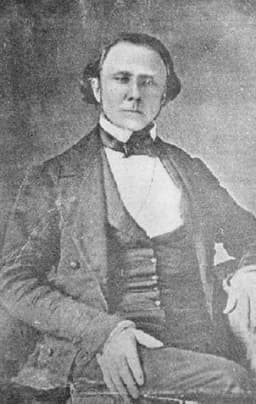
William of Holland
Emperor · Medieval
39.9Total
Basic Information
Born
1289
1227
Died
1323
1256
Era
Medieval
Medieval
Nationality
India
Holy Roman Empire
Occupation
Emperor
Emperor
Civilization
Indian
Western
Score Comparison
Military (10%)
38.3
50.0
Political (20%)
43.7
30.7
Influence (20%)
53.3
46.3
Legacy (20%)
45.8
36.7
Leadership (15%)
62.2
39.0
Strategy (15%)
60.0
36.8
TOTAL
50.5
39.9
Prataparudra II — Complete Timeline
1289 AD
Accession as Kakatiya kingPolitical Action◆ Major
Prataparudra II succeeded his grandmother Rudrama Devi as the Kakatiya king. He inherited a kingdom weakened by wars but still powerful.
KakatiyaSuccessionKingdom
Impact: regional
1303 AD
First invasion by the Delhi SultanateWar◆ Major
The Delhi Sultanate under Alauddin Khalji sent an army led by Malik Kafur to invade the Kakatiya kingdom. Prataparudra II was forced to pay a large tribute to avoid destruction.
Delhi SultanateInvasionTribute
Impact: regionaldestructive
1323 AD
Second invasion and defeat by the Delhi SultanateWar
The Delhi Sultanate under Muhammad bin Tughluq launched a second invasion of the Kakatiya kingdom. Prataparudra II was defeated, captured, and taken to Delhi, ending the Kakatiya dynasty.
Delhi SultanateDefeatEnd of Dynasty
Impact: regionaltragic
William of Holland — Complete Timeline
1247 AD
Elected Anti-King of GermanyPolitical Action◆ Major
William of Holland was elected anti-king of Germany by the papal faction opposing Conrad IV. This election was part of the conflict between the Hohenstaufen dynasty and the Papacy, with William serving as a rival claimant to the German throne.
ElectionAnti-kingPapal Conflict
Impact: regional
1248 AD
Crowned King of GermanyPolitical Action◆ Major
William of Holland was crowned King of Germany in Aachen by the Archbishop of Cologne. This coronation solidified his position as the papal-backed rival to Conrad IV, though his authority was limited to parts of western Germany.
CoronationAnti-kingGermany
Impact: regional
1256 AD
Drowned in a Frozen LakeOther◆ Major
William of Holland drowned after falling through ice on a frozen lake near Hoogwoud in the Netherlands. His death ended his reign as anti-king and contributed to the ongoing instability of the Great Interregnum.
DeathAccidentGreat Interregnum
Impact: regionaltragic
Expert Analysis
Origins
Prataparudra II (r. 1295–1323) was the last ruler of the Kakatiya dynasty in the Deccan region of India. Born in 1294, he succeeded his grandmother Rudrama Devi, who had strengthened the kingdom through military campaigns and administrative reforms. He inherited a realm that had withstood invasions from the Delhi Sultanate but was financially drained from tribute payments. His early education included training in statecraft and warfare under the guidance of his grandmother.
William of Holland (r. 1247–1256) was born in 1227 as the son of Count Floris IV of Holland and Matilda of Brabant. He belonged to the House of Holland, a minor noble family in the Holy Roman Empire. His early life was shaped by the power struggles between the Hohenstaufen dynasty and the Papacy, which would later propel him to the throne as an anti-king.
Rise to Power
Prataparudra II ascended the Kakatiya throne in 1295 after the death of Rudrama Devi. His early reign focused on consolidating control over vassal chiefs and expanding trade revenues. However, in 1303, the Delhi Sultanate under Alauddin Khalji launched a massive invasion led by Malik Kafur. Prataparudra II was defeated and forced to pay a huge tribute of elephants, treasure, and territory. This event marked a turning point, as the Kakatiya kingdom became a tributary state.
William of Holland was elected anti-king of Germany in 1247 by the papal faction opposed to the Hohenstaufen Conrad IV. The election was orchestrated by Pope Innocent IV, who sought to weaken the Hohenstaufen hold on the Holy Roman Empire. William was crowned King of Germany in Aachen by the Archbishop of Cologne in 1248. His position was weak; he controlled only parts of the Rhineland and the Low Countries, while Conrad IV held most of Germany.
Leadership & Governance
Prataparudra II governed through a feudal system, relying on loyal nobles and a centralized bureaucracy. He invested in irrigation projects and fortifications, but his military reforms were insufficient to counter the Delhi Sultanate's superior cavalry and siege tactics. His political score of 43.7 reflects his inability to maintain independence. In contrast, his leadership score of 62.2 indicates some effectiveness in managing internal affairs.
William of Holland's governance was constrained by his role as a papal puppet. He issued charters to gain support from bishops and cities, but his actual authority was limited. His political score of 30.7 is among the lowest, as he never achieved widespread recognition. His military score of 50.0 is modest, reflecting his inability to decisively defeat Conrad IV.
Triumph & Tragedy
Prataparudra II's greatest triumph was maintaining Kakatiya independence for two decades after the 1303 invasion, despite continuous pressure. He successfully repelled smaller raids and kept the kingdom intact. His tragedy came in 1323 when the Delhi Sultanate under Muhammad bin Tughluq launched a second invasion. Prataparudra II was defeated, captured, and likely died on the way to Delhi. His kingdom was annexed, ending the Kakatiya dynasty.
William of Holland's triumph was his coronation as king, which gave the papal faction a figurehead. He also secured the support of the County of Holland and several Rhineland archbishops. His tragedy was his death in 1256 when he fell through ice on a frozen lake near Hoogwoud and drowned. This ended his reign, and the anti-king movement collapsed shortly after.
Character & Destiny
Prataparudra II was a determined ruler who resisted the Delhi Sultanate despite overwhelming odds. His strategy score of 60.0 indicates competent planning, but his military score of 38.3 shows he lacked the resources to match the sultanate's might. His character was shaped by a sense of duty to his dynasty, which led him to fight until the end.
William of Holland was a pawn in larger conflicts. His leadership score of 39.0 suggests he was ineffective as a ruler. He relied on papal support rather than building his own power base. His death by drowning symbolizes the futility of his reign—an accidental end to a reign that never achieved its goals.
Legacy
Prataparudra II is remembered as the last Kakatiya king, a symbol of resistance against the Delhi Sultanate. His defeat marked the expansion of Islamic rule into the Deccan, leading to the rise of the Bahmani Sultanate. His legacy score of 45.8 reflects his role in a pivotal historical transition.
William of Holland is a footnote in history. His legacy score of 36.7 is low, as his reign had no lasting impact. The Hohenstaufen dynasty eventually fell, but William's role was minor. He is remembered primarily for his unusual death.
Conclusion
Prataparudra II had a greater impact than William of Holland, with a total score of 50.5 compared to William's 39.9, a gap of 10.6 points. While both were ultimately unsuccessful, Prataparudra II's resistance delayed the Delhi Sultanate's expansion and shaped the Deccan's history. William of Holland's reign was a failed enterprise that did not alter the course of the Holy Roman Empire. The data clearly supports Prataparudra II as the more significant figure.
Rankings
🥇
Prataparudra IILeader
Mil: 38.3Pol: 43.7Inf: 53.3
50.5
🥈
William of Holland
Mil: 50.0Pol: 30.7Inf: 46.3
39.9
+10.6 behind
How This Comparison Works
Algorithm
Each figure is scored on 6 dimensions (0—100 scale) based on structured historical data: Military (10%), Political (20%), Influence (20%), Legacy (20%), Leadership (15%), Strategy (15%). The weighted total produces the final ranking.
Data Sources
Scores are computed from structured sub-indicators in the database. Scale factors adjust for era (Ancient ×0.85, Modern ×1.0) and civilization size (Eastern ×1.05, Other ×0.80) to account for differences in population and military scale.
Maximum 3 Figures
Comparisons are limited to 2—3 figures to ensure readability and statistical meaningfulness.
Error Margins
±5 points per dimension — Sub-scores are derived from historical records with inherent uncertainty. Two figures within 5 points on a dimension should be considered roughly equivalent in that area.
Total Score Accuracy
±3 points overall — The weighted combination of 6 dimensions produces a total score with approximately ±3 points of uncertainty. Differences of less than 3 points are not statistically significant— the figures are effectively tied.
Known Limitations
- Historical records are incomplete and uneven across civilizations
- Figures from oral-tradition societies may be underrepresented
- Occupation labels can misclassify multi-role figures
- Scores measure capability and impact, not moral character
- Quantitative scoring is a comparison tool, not absolute truth
Capability Radar
Military (10%) — Battles & Warfare
Battles
40
15
Win Rate
30
20
Expansion
30
10
Political (20%) — Governance & Reform
Reform
40
10
Diplomacy
35
15
Economy
45
10
Influence (20%) — Cultural & Global Reach
Cultural
40
10
Global
20
5
Legacy (20%) — Historical Impact
Historical
45
15
Longevity
30
5
Leadership (15%) — Power & Stability
Tenure
50
20
Stability
30
5
Strategy (15%) — Tactics & Innovation
Strategy
40
15
Tactics
45
10
Reform
35
5
Similar Comparisons
Comments & Discussion
No comments yet. Be the first to share your thoughts!