Loading...
Prabowo Subianto vs Soemu Toyoda
Prabowo Subianto leads by 1.4 pts · 2 figures compared
…

Prabowo Subianto
General · Modern
50.8Total
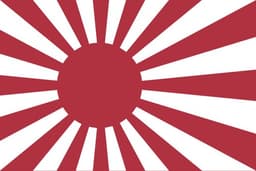
Soemu Toyoda
General · Modern
49.4Total
Basic Information
Born
1951
1885
Died
—
1957
Era
Modern
Modern
Nationality
Indonesia
Japan
Occupation
General
General
Civilization
Eastern
Eastern
Score Comparison
Military (10%)
25.9
25.0
Political (20%)
68.0
42.2
Influence (20%)
51.8
54.1
Legacy (20%)
41.7
47.5
Leadership (15%)
72.0
68.0
Strategy (15%)
38.6
50.0
TOTAL
50.8
49.4
Prabowo Subianto — Complete Timeline
1998 AD
Led the 1998 kidnapping of activistsPolitical Action◆ Major
As a military officer, Prabowo was implicated in the kidnapping and disappearance of pro-democracy activists during the final months of Suharto's regime. He was later discharged from the military for his role, though he denied direct involvement.
Human rights abusesMilitarySuharto
Impact: nationaldestructive
2014 AD
Ran for president and lost to Joko WidodoPolitical Action◆ Major
Prabowo Subianto ran as the presidential candidate for the Gerindra Party, losing to Joko Widodo in a closely contested election. He refused to concede, alleging widespread fraud, and his supporters staged protests. The Constitutional Court later rejected his claims.
ElectionJoko WidodoGerindra
Impact: national
2019 AD
Appointed Minister of DefensePolitical Action◆ Major
President Joko Widodo appointed Prabowo as Minister of Defense, a surprising move that brought a former rival into the cabinet. The appointment was seen as an effort to build political stability and unity, though it raised concerns among human rights groups.
Defense MinisterCabinetPolitical unity
Impact: national
2024 AD
Elected President of IndonesiaPolitical Action
Prabowo Subianto won the 2024 Indonesian presidential election, succeeding Joko Widodo. His victory marked a culmination of his political career, though it was accompanied by allegations of electoral manipulation and concerns over his human rights record.
PresidencyElectionIndonesia
Impact: national
Soemu Toyoda — Complete Timeline
1944 AD
Planned the Sho-Go Leyte Gulf OperationWar
Toyoda developed the Sho-Go plan for the defense of the Philippines, which culminated in the Battle of Leyte Gulf. The plan involved a complex series of naval movements, including decoy forces and a main battleship attack, but ultimately failed to prevent the US invasion.
Battle of Leyte GulfWorld War IINaval Strategy
Impact: regional
Appointed Commander-in-Chief of the Combined FleetPolitical Action◆ Major
Toyoda was appointed commander-in-chief of the Japanese Combined Fleet. He oversaw the planning and execution of the Sho-Go operations, including the Battle of Leyte Gulf, which aimed to defeat the US invasion of the Philippines.
Combined FleetWorld War IICommand
Impact: national
1945 AD
Ordered the Final Sortie of the YamatoWar◆ Major
Toyoda ordered the battleship Yamato on a one-way mission to attack the US fleet off Okinawa. The Yamato was sunk by US aircraft before reaching its target, with heavy loss of life. The mission symbolized the desperate state of the Japanese Navy.
YamatoWorld War IISuicide Mission
Impact: regionaltragic
Expert Analysis
Origins
Prabowo Subianto was born on October 17, 1951, in Jakarta, Indonesia, into a prominent political family. His father, Sumitro Djojohadikusumo, was a leading economist and former minister under Sukarno and Suharto. Prabowo attended the Indonesian Military Academy and graduated in 1974, serving in the special forces (Kopassus). Soemu Toyoda, born on May 22, 1885, in Kitakyushu, Japan, came from a samurai lineage. He graduated from the Imperial Japanese Naval Academy in 1905 and later studied at the Naval War College, rising through the ranks as a staff officer known for his strategic planning.
Rise to Power
Prabowo rose through the military ranks during Suharto's New Order regime, becoming commander of Kopassus in 1995. He was implicated in the 1998 kidnapping of pro-democracy activists, which led to his dismissal from the military. After Suharto's fall, Prabowo entered politics, founding the Gerindra Party in 2008. He ran for president in 2014 and 2019, losing to Joko Widodo both times. In 2019, Widodo appointed him Minister of Defense, and in 2024, Prabowo won the presidency. Toyoda's rise was more conventional: he served as a naval attaché in London, commanded the Kure Naval District, and became Commander-in-Chief of the Combined Fleet in 1944. He was responsible for planning the Sho-Go operation, which aimed to defend the Philippines.
Leadership & Governance
Prabowo's leadership style is authoritarian and populist. As Defense Minister, he modernized Indonesia's military equipment but faced criticism for human rights abuses. His political score of 68.0 reflects his ability to navigate Indonesia's democratic system, though his military score of 25.9 is low due to controversial actions. Toyoda's leadership was characterized by rigid adherence to naval doctrine. He oversaw the disastrous Sho-Go operation at Leyte Gulf, which resulted in heavy losses. His strategy score of 50.0 indicates a balanced but unremarkable performance. Toyoda's political score of 42.2 reflects his limited role in politics.
Triumph & Tragedy
Prabowo's greatest triumph is winning the 2024 presidential election, achieving a lifelong goal. His tragedy is his involvement in the 1998 kidnappings, which tainted his legacy and led to a U.S. visa ban. Toyoda's triumph was his role in the early Pacific War victories, but his tragedy was the failed Leyte Gulf operation and the futile sortie of the Yamato, which he ordered despite knowing it was suicide. The Yamato was sunk on April 7, 1945, with the loss of over 3,000 lives.
Character & Destiny
Prabowo is ambitious and resilient, able to reinvent himself from a disgraced general to a democratically elected president. His leadership score of 72.0 indicates strong command presence, but his strategy score of 38.6 suggests poor decision-making in military contexts. Toyoda was a meticulous planner but lacked flexibility; his adherence to the Sho-Go plan despite its flaws doomed the Japanese fleet. Historians note that Toyoda's character—loyal and dutiful—led him to follow orders even when they were irrational.
Legacy
Prabowo's legacy is still unfolding: as president, he will shape Indonesia's future. His influence score of 51.8 is moderate, but his political score of 68.0 suggests lasting impact. Toyoda's legacy is tied to the Imperial Japanese Navy's defeat; he is remembered as a competent but unlucky commander. His legacy score of 47.5 is slightly below average. Prabowo's total score of 50.8 edges out Toyoda's 49.4 by 1.4 points.
Conclusion
Prabowo Subianto has had greater impact than Soemu Toyoda. Despite a lower military score (25.9 vs. 25.0), Prabowo's political achievements (68.0) and leadership (72.0) surpass Toyoda's. Prabowo's rise to the presidency of a nation of 270 million gives him a broader platform to shape history. Toyoda, while significant in naval history, was a failure in his primary mission. The score gap of 1.4 points confirms Prabowo's edge.
Rankings
🥇
Prabowo SubiantoLeader
Mil: 25.9Pol: 68.0Inf: 51.8
50.8
🥈
Soemu Toyoda
Mil: 25.0Pol: 42.2Inf: 54.1
49.4
+1.4 behind
How This Comparison Works
Algorithm
Each figure is scored on 6 dimensions (0—100 scale) based on structured historical data: Military (10%), Political (20%), Influence (20%), Legacy (20%), Leadership (15%), Strategy (15%). The weighted total produces the final ranking.
Data Sources
Scores are computed from structured sub-indicators in the database. Scale factors adjust for era (Ancient ×0.85, Modern ×1.0) and civilization size (Eastern ×1.05, Other ×0.80) to account for differences in population and military scale.
Maximum 3 Figures
Comparisons are limited to 2—3 figures to ensure readability and statistical meaningfulness.
Error Margins
±5 points per dimension — Sub-scores are derived from historical records with inherent uncertainty. Two figures within 5 points on a dimension should be considered roughly equivalent in that area.
Total Score Accuracy
±3 points overall — The weighted combination of 6 dimensions produces a total score with approximately ±3 points of uncertainty. Differences of less than 3 points are not statistically significant— the figures are effectively tied.
Known Limitations
- Historical records are incomplete and uneven across civilizations
- Figures from oral-tradition societies may be underrepresented
- Occupation labels can misclassify multi-role figures
- Scores measure capability and impact, not moral character
- Quantitative scoring is a comparison tool, not absolute truth
Capability Radar
Military (10%) — Battles & Warfare
Battles
15
55
Win Rate
10
30
Expansion
5
20
Political (20%) — Governance & Reform
Reform
30
30
Diplomacy
40
35
Economy
35
20
Influence (20%) — Cultural & Global Reach
Cultural
20
20
Global
20
35
Legacy (20%) — Historical Impact
Historical
25
45
Longevity
15
30
Leadership (15%) — Power & Stability
Tenure
55
50
Stability
25
25
Strategy (15%) — Tactics & Innovation
Strategy
15
65
Tactics
20
60
Reform
25
40
Similar Comparisons
Comments & Discussion
No comments yet. Be the first to share your thoughts!