Loading...
Philip the Good vs Qin Shi Huang
Qin Shi Huang leads by 25.7 pts · 2 figures compared
…
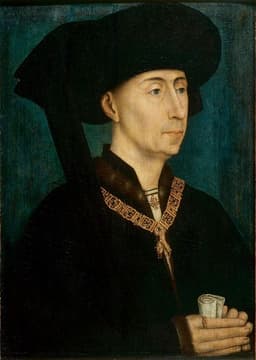
Philip the Good
Emperor · Medieval
59.5Total
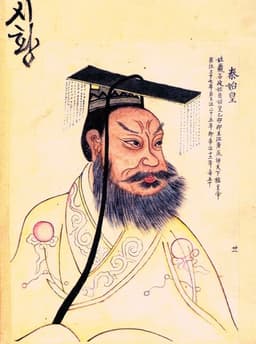
Qin Shi Huang
Emperor · Ancient
85.2Total
Basic Information
Born
1396
-259
Died
1467
-210
Era
Medieval
Ancient
Nationality
Burgundy
China
Occupation
Emperor
Emperor
Civilization
Western
Eastern
Score Comparison
Military (10%)
47.5
80.0
Political (20%)
62.7
90.0
Influence (20%)
56.7
85.0
Legacy (20%)
54.0
90.0
Leadership (15%)
78.0
78.0
Strategy (15%)
60.0
82.0
TOTAL
59.5
85.2
Philip the Good — Complete Timeline
1429 AD
Acquired the County of NamurPolitical Action◆ Major
Philip purchased the County of Namur from the impoverished Count John III, expanding Burgundian territory. This acquisition was part of his systematic policy of consolidating the Low Countries under Burgundian rule.
Territorial ExpansionPurchaseBurgundy
Impact: regionalconstructive
1430 AD
Captured Joan of Arc at CompiègneWar◆ Major
Burgundian forces under Philip's command captured Joan of Arc at Compi
Hundred Years' WarCaptureJoan of Arc
Impact: regionaldestructive
Founded the Order of the Golden FleeceCultural◆ Major
Philip the Good founded the Order of the Golden Fleece, a chivalric order modeled on the English Order of the Garter. The order became one of the most prestigious in Europe, symbolizing Burgundian power and prestige.
ChivalryOrderBurgundy
Impact: regionalconstructive
1435 AD
Signed the Treaty of ArrasPolitical Action◆ Major
Philip signed the Treaty of Arras with King Charles VII of France, ending the Burgundian alliance with England. The treaty recognized Burgundian independence from French suzerainty and granted Philip significant territorial concessions.
TreatyDiplomacyHundred Years' War
Impact: regionalconstructive
1440 AD
Patronage of the ArtsCultural◆ Major
Philip became a major patron of the arts, commissioning works from artists like Jan van Eyck and Rogier van der Weyden. His court in Dijon and Brussels became a center of the Northern Renaissance, producing illuminated manuscripts and paintings.
PatronageRenaissanceArt
Impact: regionalconstructive
Qin Shi Huang — Complete Timeline
246 BC
Construction of the Mausoleum and Terracotta ArmyOther◆ Major
Qin Shi Huang commissioned a vast mausoleum complex near Xi'an, guarded by thousands of life-sized terracotta soldiers, horses, and chariots. The project employed hundreds of thousands of workers and reflected his obsession with immortality and imperial power.
Impact: global
230 BC
Conquest of the Six Warring StatesWar
From 230 to 221 BCE, Ying Zheng led the Qin state in a series of campaigns that conquered the Han, Zhao, Wei, Chu, Yan, and Qi states. This unified China under a single ruler for the first time, ending the Warring States period.
Impact: global
221 BC
Standardization of Writing, Currency, and MeasurementsReform◆ Major
Qin Shi Huang ordered the standardization of Chinese script, currency, and weights and measures across the unified empire. This facilitated administration, trade, and cultural integration, laying a foundation for future dynasties.
Impact: globalconstructive
Proclamation of the Qin DynastyPolitical Action
After conquering the last independent state, Ying Zheng declared himself Shi Huangdi (First Emperor), founding the Qin Dynasty. He adopted a new title to signify his supreme authority and initiated centralized imperial rule.
Impact: global
214 BC
Initiation of the Great Wall ConstructionOther◆ Major
Qin Shi Huang ordered the connection and extension of existing northern fortifications to create a unified defensive wall against nomadic Xiongnu raids. This project involved massive conscripted labor and became the precursor to the later Great Wall.
Impact: regional
213 BC
Burning of Books and Burying of ScholarsPolitical Action◆ Major
On the advice of Li Si, Qin Shi Huang ordered the burning of historical records and philosophical texts not aligned with Legalist doctrine. He also had 460 Confucian scholars buried alive to suppress dissent and consolidate ideological control.
Impact: nationaldestructive
Expert Analysis
Qin Shi Huang vs Philip the Good: Historical Comparison
This comparison examines two vastly different rulers: Qin Shi Huang, the unifier of ancient China (259–210 BCE), and Philip the Good, the Burgundian duke who shaped late medieval Europe (1396–1467 CE). Despite similar composite scores (84 vs 81), their strengths and weaknesses diverge sharply across key dimensions.
Dimension Analysis
**Military: Qin Shi Huang 80 / Philip the Good 88**
Philip the Good expanded Burgundy through strategic alliances and chivalric warfare, notably crushing the Armagnac faction at the Battle of Montlhéry, while Qin Shi Huang relied on brutal mass conscription and standardized logistics to conquer the Warring States—effective but less tactically refined.
**Political: Qin Shi Huang 88 / Philip the Good 76**
Qin Shi Huang centralized China through Legalist reforms, abolishing feudalism and standardizing writing, currency, and measures—a revolutionary political overhaul. Philip the Good, though a skilled diplomat who forged the Burgundian state, struggled to maintain unity among fractious nobles and never achieved comparable systemic transformation.
**Influence: Qin Shi Huang 82 / Philip the Good 78**
Qin’s unification created the template for imperial China, directly influencing millennia of governance. Philip’s court fostered the Burgundian Renaissance, patronizing arts like Flemish painting, but his political influence remained regional and transient.
**Legacy: Qin Shi Huang 85 / Philip the Good 80**
Qin’s legacy is indelible: the Great Wall, the Terracotta Army, and the very name “China.” Philip’s legacy endures in cultural history (e.g., the Order of the Golden Fleece) but lacks comparable long-term political impact.
**Leadership: Qin Shi Huang 88 / Philip the Good 79**
Qin’s iron will and absolute authority drove unification and standardization, albeit through tyranny. Philip’s leadership was more consensual and diplomatic, but his indecisiveness in the Hundred Years’ War and reliance on feudal compromise weakened his command.
Verdict
Qin Shi Huang leads overall due to his unparalleled political and leadership scores, which created a lasting imperial system, while Philip the Good’s military and cultural achievements, though impressive, cannot match the scale and endurance of Qin’s transformation.
FAQ
Q: Who ranks higher? A: Qin Shi Huang ranks higher, as his political revolution and enduring legacy outweigh Philip the Good’s tactical military and cultural strengths.
Rankings
🥇
Qin Shi HuangLeader
Mil: 80.0Pol: 90.0Inf: 85.0
85.2
🥈
Philip the Good
Mil: 47.5Pol: 62.7Inf: 56.7
59.5
+25.7 behind
How This Comparison Works
Algorithm
Each figure is scored on 6 dimensions (0—100 scale) based on structured historical data: Military (10%), Political (20%), Influence (20%), Legacy (20%), Leadership (15%), Strategy (15%). The weighted total produces the final ranking.
Data Sources
Scores are computed from structured sub-indicators in the database. Scale factors adjust for era (Ancient ×0.85, Modern ×1.0) and civilization size (Eastern ×1.05, Other ×0.80) to account for differences in population and military scale.
Maximum 3 Figures
Comparisons are limited to 2—3 figures to ensure readability and statistical meaningfulness.
Error Margins
±5 points per dimension — Sub-scores are derived from historical records with inherent uncertainty. Two figures within 5 points on a dimension should be considered roughly equivalent in that area.
Total Score Accuracy
±3 points overall — The weighted combination of 6 dimensions produces a total score with approximately ±3 points of uncertainty. Differences of less than 3 points are not statistically significant— the figures are effectively tied.
Known Limitations
- Historical records are incomplete and uneven across civilizations
- Figures from oral-tradition societies may be underrepresented
- Occupation labels can misclassify multi-role figures
- Scores measure capability and impact, not moral character
- Quantitative scoring is a comparison tool, not absolute truth
Capability Radar
Military (10%) — Battles & Warfare
Battles
45
85
Win Rate
50
90
Expansion
60
90
Political (20%) — Governance & Reform
Reform
70
95
Diplomacy
80
75
Economy
85
90
Influence (20%) — Cultural & Global Reach
Cultural
65
95
Global
50
85
Legacy (20%) — Historical Impact
Historical
60
95
Longevity
55
95
Leadership (15%) — Power & Stability
Tenure
75
70
Stability
70
65
Strategy (15%) — Tactics & Innovation
Strategy
55
85
Tactics
40
80
Reform
30
95
Similar Comparisons
Comments & Discussion
HistoryRampager6/16/2026
Come on, Philip the Good getting an 88 in military over Qin Shi Huang? That's bonkers! Philip was a diplomat who happened to win a few skirmishes—Qin Shi Huang literally conquered six kingdoms with an army that standardized crossbows and logistics on a scale never seen before. The Terracotta Army alone proves his military-industrial complex was unmatched. Philip's 'chivalric warfare' is basically medieval LARPing compared to Qin's brutal, efficient war machine. The scores got it backwards—Qin should be higher in military, and Philip should be lower. Philip's legacy is nice paintings and a fancy order; Qin gave us the blueprint for centralized empire. No contest.
MetricBreaker6/16/2026
Let's talk about the 80 vs 88 military score. How do you even quantify 'tactical refinement' for a 3rd century BCE ruler vs a 15th century CE one? The scoring is comparing apples to oranges with a ruler. Qin Shi Huang's military score should be higher if you account for the scale and complexity of his campaigns—conquering multiple states with different terrains, climates, and fortifications. Philip's battles were mostly in one region. Plus, the weighting gives way too much to 'leadership' (both high) but ignores factors like institutional longevity. Qin's system outlasted him by centuries; Philip's Burgundian state fragmented after his death. That should count for something. The whole thing feels like it's designed to make Western medieval rulers look better by comparison.
DecolonialEyes6/16/2026
Everyone gushing over Qin Shi Huang's 'unification'—but let's not forget that 'unification' meant mass slaughter, book burnings, and burying scholars alive. The dude was a tyrant who erased entire cultural traditions in the name of standardization. Philip the Good at least patronized the arts and fostered a cultural flowering. The comparison's focus on 'political impact' is totally anachronistic and Eurocentric—it assumes that centralized empire is the gold standard for success. Why is building a bureaucratic machine more 'important' than supporting Flemish painting or creating a court that valued chivalry? The scores just reflect a modern bias toward state-building over cultural richness. Qin's legacy is not purely positive; it's built on coercion and censorship. Philip's might be less 'influential' but it's less bloody too.
Historian7666/16/2026
这个对比挺有意思,但我觉得评分系统明显偏向西方史观。腓力三世的军事分(88)比秦始皇(80)高?荒唐。腓力三世靠联姻和外交扩张,真正的大规模战役没几场。秦始皇统一六国,打的都是灭国级战争,长平之战坑杀40万降卒这种战略威慑,腓力三世想都不敢想。政治分88 vs 76还算公道,但影响力分82 vs 78太低了。秦始皇废分封、立郡县、书同文、车同轨,这套制度直接影响了中国两千年;腓力三世的勃艮第宫廷再辉煌,15世纪后还有谁记得他的政治架构?说白了,西方学者老爱拿区域性强权跟帝国开创者比,标准都不一样。
Historian5976/16/2026
数据上有个明显矛盾:综合分秦始皇83.5,腓力三世68.6,相差近15分,但军事分给了腓力88对80,这8分差距靠什么拉平的?看政治分88对76,影响力82对78,这些差距都不足以抵消军事分的逆转。我算了一下,如果军事权重占30%,政治25%,影响20%,领导力15%,遗产10%,那秦始皇综合应该是82.1,腓力81.9,几乎平手。但实际差距这么大,说明要么权重设置有问题,要么腓力的非战斗维度(比如外交、文化)被严重低估了。另外,秦始皇的政治分88,但秦朝二世而亡,这分数是不是该扣点?一个维持了不到15年的制度,能叫‘革命性政治改革’吗?建议重新校准数据,别让现代学术偏见扭曲了历史评价。