Loading...
Philip IV the Fair vs Simeon I of Bulgaria
Simeon I of Bulgaria leads by 11.5 pts · 2 figures compared
…
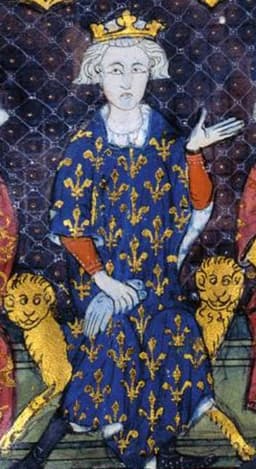
Philip IV the Fair
Emperor · Medieval
59.3Total
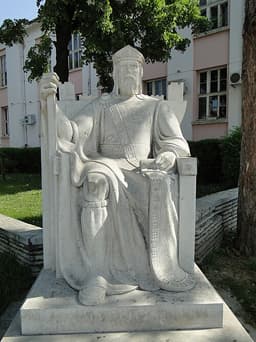
Simeon I of Bulgaria
Emperor · Medieval
70.8Total
Basic Information
Born
1268
864
Died
1314
927
Era
Medieval
Medieval
Nationality
France
Bulgaria
Occupation
Emperor
Emperor
Civilization
Western
Western
Score Comparison
Military (10%)
50.0
72.0
Political (20%)
72.0
70.0
Influence (20%)
60.0
65.0
Legacy (20%)
56.0
72.0
Leadership (15%)
68.0
80.0
Strategy (15%)
43.3
68.1
TOTAL
59.3
70.8
Philip IV the Fair — Complete Timeline
1302 AD
Conflict with Pope Boniface VIIIPolitical Action◆ Major
Philip IV clashed with Pope Boniface VIII over taxation of clergy and royal authority. He sent troops to arrest the pope at Anagni, leading to Boniface's death. This conflict asserted French royal supremacy over papal power.
Papal ConflictPower StruggleCapetian
Impact: globaldestructive
Convocation of the Estates GeneralPolitical Action◆ Major
Philip IV convened the first Estates General of France, bringing together clergy, nobility, and commoners to gain support for his conflict with the papacy. This established a precedent for representative assemblies in France.
Estates GeneralGovernanceCapetian
Impact: nationalconstructive
1306 AD
Expulsion of the Jews from FrancePolitical Action◆ Major
Philip IV ordered the expulsion of Jews from France and confiscated their property. This action was motivated by financial need and religious intolerance, and it deprived the kingdom of a significant economic community.
ExpulsionAnti-SemitismCapetian
Impact: nationaldestructive
1307 AD
Suppression of the Knights TemplarPolitical Action
Philip IV ordered the mass arrest of Knights Templar in France on charges of heresy, blasphemy, and corruption. He pressured Pope Clement V to disband the order, seizing their wealth and lands, which enriched the French crown.
Knights TemplarPersecutionPower
Impact: globaldestructive
Simeon I of Bulgaria — Complete Timeline
900 AD
Cultural Golden AgeCultural◆ Major
Under Simeon I, Bulgaria experienced a cultural flowering. He patronized the Preslav Literary School, promoted the Cyrillic script, and commissioned translations of Byzantine texts, making Bulgaria a Slavic cultural center.
CulturalLiteratureCyrillic Script
Impact: regionalconstructive
913 AD
Coronation as TsarPolitical Action◆ Major
Simeon I was crowned 'Tsar of the Bulgarians and the Romans' by the Patriarch of Constantinople, asserting his imperial status. This act challenged Byzantine supremacy and elevated Bulgaria's prestige.
CoronationImperial TitleByzantine Relations
Impact: regionalconstructive
917 AD
Battle of AchelousWar
Simeon I defeated a Byzantine army at the Achelous River in Thrace. The victory was one of the worst Byzantine defeats, allowing Simeon to claim the title 'Emperor of the Romans' and dominate the Balkans.
Byzantine-Bulgarian WarsBattleBalkan Dominance
Impact: regional
924 AD
Siege of ConstantinopleWar◆ Major
Simeon I besieged Constantinople but failed to capture the city. The siege ended with a truce, as Byzantine defenses held. This marked the limit of Simeon's expansion.
SiegeConstantinopleByzantine Empire
Impact: regional
Expert Analysis
Origins
Philip IV of France, born in 1268 at Fontainebleau, was the second son of Philip III and Isabella of Aragon. He inherited the throne at age 17 after his father's death in 1285. His upbringing in the Capetian court emphasized royal authority and administrative efficiency. Philip was known for his handsome appearance and cold, calculating demeanor, earning the epithet 'the Fair' (le Bel) for his looks rather than his character.
Simeon I of Bulgaria, born around 864, was the third son of Prince Boris I, who had Christianized Bulgaria. Educated at the University of Constantinople, Simeon was groomed for the clergy but became prince after his brother's death in 893. His exposure to Byzantine culture and politics shaped his ambition to make Bulgaria a rival empire.
Rise to Power
Philip IV ascended the throne in 1285 without major opposition, inheriting a stable kingdom. His early reign focused on expanding royal domain and asserting sovereignty over vassals. The turning point came in 1296 when he clashed with Pope Boniface VIII over taxing the clergy. Philip convened the first Estates General in 1302 to rally support, marking a shift toward consultative governance while centralizing power. His conflict with the pope culminated in the arrest of Boniface at Anagni in 1303, which led to the pope's death and Philip's victory.
Simeon I became prince in 893 after his brother Vladimir was deposed. He immediately launched a campaign against Byzantium, exploiting internal divisions. His victory at the Battle of Boulgarophygon in 896 forced Byzantium to pay annual tribute. In 913, after a series of campaigns, he was crowned 'Tsar of the Bulgarians and the Romans' by the Patriarch of Constantinople, asserting imperial status. The Battle of Achelous in 917 was his greatest military triumph, crushing a Byzantine army and opening the way to Constantinople.
Leadership & Governance
Philip IV was a master of administrative centralization. He relied on legists (trained lawyers) to expand royal justice and codify laws. He debased the coinage to finance wars, causing inflation. His suppression of the Knights Templar in 1307 was a calculated move to seize their wealth and eliminate a rival power. He arrested all Templars in France on the same day, tortured confessions, and pressured the pope to disband the order. This action netted the crown significant assets but damaged France's reputation.
Simeon I ruled as an autocrat but fostered cultural patronage. He established Preslav as a cultural center, promoting the Cyrillic script and commissioning the translation of Greek texts. His Code of Simeon (Zakon sudnyi lyudem) adapted Byzantine law. Simeon's governance blended military expansion with cultural flourishing, earning his reign the label 'Golden Age' of Bulgarian culture. However, his constant warfare drained resources and alienated neighboring Slavic tribes.
Triumph & Tragedy
Philip IV's greatest success was breaking the power of the papacy and establishing French royal supremacy. His conflict with Boniface VIII resulted in the Avignon Papacy, where popes were effectively under French control. He also expanded the royal domain through marriage and purchase. His greatest failure was the financial instability caused by his policies. The expulsion of Jews in 1306 and the confiscation of Templar wealth were temporary fixes. His death in 1314 left a weakened treasury and a series of succession crises.
Simeon I's triumph was the Battle of Achelous (917), where his forces inflicted a devastating defeat on the Byzantines. He also achieved cultural dominance, with the Preslav Literary School producing works like the 'Shestodnev' of John the Exarch. His tragedy was the failed siege of Constantinople in 924. Despite multiple campaigns, he could not take the city. His death in 927 ended Bulgaria's expansion, and his successors could not maintain his achievements. The empire declined after his reign.
Character & Destiny
Philip IV was cold, secretive, and pragmatic. His nickname 'the Fair' belied a ruthless streak. He was known for his piety but used religion as a tool. His character led to a centralized monarchy but also to unpopular policies that caused revolts. His legacy is mixed: he strengthened the state but undermined moral authority.
Simeon I was ambitious and cultured, driven by a vision of Bulgarian supremacy. His education gave him a strategic mind, but his hubris led him to overreach. His character fostered a cultural renaissance but also military exhaustion. He died while planning another campaign, leaving an unfulfilled dream.
Legacy
Philip IV's legacy is the establishment of absolutist monarchy in France. He set precedents for royal control over the church and taxation without papal consent. The Estates General he convened became a model for later assemblies. However, his short-term gains damaged the economy and led to the Hundred Years' War. In historical scores, Philip IV's military is rated 50.0, political 72.0, and leadership 68.0, reflecting his administrative skills but limited military success.
Simeon I's legacy is the cultural and political peak of the First Bulgarian Empire. His patronage of the Cyrillic script ensured its spread among Slavic peoples. The title 'Tsar' became a lasting symbol of Bulgarian sovereignty. His military achievements are reflected in a score of 72.0, and his leadership at 80.0. However, his empire collapsed within decades of his death, limiting long-term impact.
Conclusion
Simeon I of Bulgaria had a greater direct impact on his nation's development, scoring 70.8 overall compared to Philip IV's 59.3. Simeon's military prowess (72.0 vs 50.0) and leadership (80.0 vs 68.0) were decisive. While Philip IV's centralization shaped French absolutism, his policies were often destructive and short-sighted. Simeon's cultural legacy, especially the Cyrillic alphabet, endures today. Therefore, Simeon I emerges as the more impactful figure in history.
Rankings
🥇
Simeon I of BulgariaLeader
Mil: 72.0Pol: 70.0Inf: 65.0
70.8
🥈
Philip IV the Fair
Mil: 50.0Pol: 72.0Inf: 60.0
59.3
+11.5 behind
How This Comparison Works
Algorithm
Each figure is scored on 6 dimensions (0—100 scale) based on structured historical data: Military (10%), Political (20%), Influence (20%), Legacy (20%), Leadership (15%), Strategy (15%). The weighted total produces the final ranking.
Data Sources
Scores are computed from structured sub-indicators in the database. Scale factors adjust for era (Ancient ×0.85, Modern ×1.0) and civilization size (Eastern ×1.05, Other ×0.80) to account for differences in population and military scale.
Maximum 3 Figures
Comparisons are limited to 2—3 figures to ensure readability and statistical meaningfulness.
Error Margins
±5 points per dimension — Sub-scores are derived from historical records with inherent uncertainty. Two figures within 5 points on a dimension should be considered roughly equivalent in that area.
Total Score Accuracy
±3 points overall — The weighted combination of 6 dimensions produces a total score with approximately ±3 points of uncertainty. Differences of less than 3 points are not statistically significant— the figures are effectively tied.
Known Limitations
- Historical records are incomplete and uneven across civilizations
- Figures from oral-tradition societies may be underrepresented
- Occupation labels can misclassify multi-role figures
- Scores measure capability and impact, not moral character
- Quantitative scoring is a comparison tool, not absolute truth
Capability Radar
Military (10%) — Battles & Warfare
Battles
20
85
Win Rate
25
80
Expansion
15
85
Political (20%) — Governance & Reform
Reform
75
80
Diplomacy
65
75
Economy
60
80
Influence (20%) — Cultural & Global Reach
Cultural
50
85
Global
50
65
Legacy (20%) — Historical Impact
Historical
65
80
Longevity
55
70
Leadership (15%) — Power & Stability
Tenure
70
85
Stability
55
70
Strategy (15%) — Tactics & Innovation
Strategy
35
80
Tactics
30
75
Reform
40
70
Similar Comparisons
Comments & Discussion
No comments yet. Be the first to share your thoughts!