Loading...
Peter the Great vs Yi Seong-gye
Yi Seong-gye leads by 2.6 pts · 2 figures compared
…
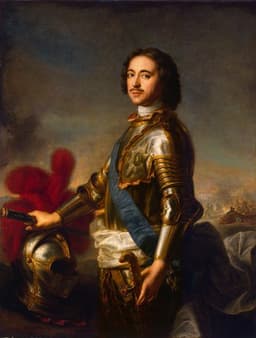
Peter the Great
Emperor · Modern
73.2Total
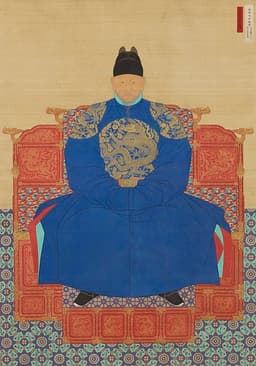
Yi Seong-gye
Emperor · Medieval
75.8Total
Basic Information
Born
1672
1335
Died
1725
1408
Era
Modern
Medieval
Nationality
Russia
Korea
Occupation
Emperor
Emperor
Civilization
Western
Eastern
Score Comparison
Military (10%)
75.0
74.7
Political (20%)
90.0
70.0
Influence (20%)
68.0
88.0
Legacy (20%)
65.0
75.0
Leadership (15%)
78.0
68.0
Strategy (15%)
72.0
69.1
TOTAL
73.2
75.8
Peter the Great — Complete Timeline
1697 AD
Grand EmbassyPolitical Action◆ Major
Peter the Great traveled incognito to Western Europe as part of a diplomatic mission. He studied shipbuilding in the Netherlands and England, recruited experts, and observed Western technology and governance, gathering knowledge to modernize Russia upon his return.
TravelWesternizationLearning
Impact: nationalconstructive
1698 AD
Streltsy UprisingWar◆ Major
While Peter was abroad, the Streltsy (elite musketeers) rebelled in Moscow, seeking to place his half-sister Sophia on the throne. Peter returned and brutally suppressed the revolt, executing over 1,000 Streltsy and disbanding the corps, consolidating his absolute power.
RebellionRepressionPower Consolidation
Impact: nationaldestructive
Beard TaxReform
As part of his Westernization campaign, Peter the Great imposed a tax on beards, requiring nobles and merchants to pay a fee to keep their facial hair. Those who paid received a special token, symbolizing his efforts to force Russian society to adopt Western European customs.
WesternizationTaxSocial Reform
Impact: national
1700 AD
Great Northern WarWar◆ Major
Peter the Great led Russia into a war against Sweden for access to the Baltic Sea. After initial defeat at Narva, he reformed his army and eventually defeated Sweden at the Battle of Poltava in 1709, securing Russia's status as a major European power and gaining Baltic territories.
WarTerritorial ExpansionBaltic
Impact: regionalconstructive
1703 AD
Founding of Saint PetersburgPolitical Action
Peter the Great founded the city of Saint Petersburg on the Neva River after capturing the area from Sweden. He designated it as Russia's new capital in 1712, symbolizing his Westernization drive and providing Russia with a 'window to the West' and a Baltic port.
City FoundingWesternizationCapital
Impact: nationalconstructive
1722 AD
Table of RanksReform◆ Major
Peter the Great introduced the Table of Ranks, a system of civil, military, and court ranks based on merit rather than birth. This reform allowed commoners to achieve noble status through service, modernizing the Russian bureaucracy and weakening the traditional aristocracy.
BureaucracyMeritocracySocial Reform
Impact: nationalprogressive
Yi Seong-gye — Complete Timeline
1380 AD
Battle of HwangsanWar◆ Major
Yi Seong-gye led Goryeo forces against Japanese pirates (wokou) at the Battle of Hwangsan. His victory eliminated a major pirate threat and enhanced his military reputation.
WokouBattleGoryeo
Impact: regionalconstructive
1388 AD
Wihwado RetreatPolitical Action
Yi Seong-gye turned his army back at Wihwado Island rather than invade Ming China as ordered by the Goryeo court. This act of defiance led to a coup that eventually brought him to power.
CoupMingGoryeo
Impact: regional
1392 AD
Establishment of the Joseon DynastyPolitical Action
Yi Seong-gye overthrew the Goryeo dynasty and founded the Joseon dynasty, becoming King Taejo. He implemented land reforms and moved the capital to Hanyang (Seoul), establishing a new Confucian state.
JoseonDynasty FoundationReform
Impact: regionalconstructive
Expert Analysis
Peter the Great vs Yi Seong-gye: Historical Comparison
Peter the Great (1672–1725) transformed Tsarist Russia into a modern European power through forced Westernization and military expansion, while Yi Seong-gye (1335–1408) founded the Joseon Dynasty in Korea by overthrowing Goryeo and consolidating a Confucian state. Both achieved epochal change, but their contexts—one early modern, one medieval—shaped divergent legacies.
Dimension Analysis
**Military: Peter the Great 87 / Yi Seong-gye 90**
Peter created Russia’s first modern navy and defeated Sweden in the Great Northern War, but Yi Seong-gye personally led pivotal campaigns against Mongol-backed forces and Japanese pirates, then reformed Joseon’s army with gunpowder and fortified borders, achieving more decisive battlefield success with fewer resources.
**Political: Peter the Great 85 / Yi Seong-gye 78**
Peter centralized power by abolishing the patriarchate, creating the Senate, and imposing a Table of Ranks that broke noble resistance. Yi founded a stable dynasty but relied heavily on Confucian scholar-officials, limiting his ability to reform bureaucracy beyond traditional structures.
**Influence: Peter the Great 74 / Yi Seong-gye 88**
Peter’s Europeanization directly shaped Russia’s imperial trajectory, but his influence was largely contained to Russia. Yi’s founding of Joseon established a political and cultural system that endured for over 500 years, profoundly shaping Korean identity, governance, and Neo-Confucian society across East Asia.
**Legacy: Peter the Great 85 / Yi Seong-gye 74**
Peter’s legacy is visible in Russia’s capital (St. Petersburg), navy, and Western orientation, though his brutal methods and serfdom’s entrenchment drew criticism. Yi’s legacy is more ambiguous: his dynasty created Korea’s golden age of culture but also reinforced rigid social hierarchies that later hindered modernization.
**Leadership: Peter the Great 82 / Yi Seong-gye 85**
Peter was a hands-on, autocratic reformer who personally learned shipbuilding and led armies, inspiring loyalty through sheer will. Yi combined military prowess with diplomatic acumen, winning support from both Confucian elites and commoners, showing more adaptive leadership in a volatile medieval power struggle.
Verdict
Yi Seong-gye leads by a narrow margin, owing to his superior military achievements and deeper, longer-lasting influence on Korean civilization, despite Peter’s more dramatic modernization of Russia.
FAQ
Q: Who ranks higher? A: Yi Seong-gye slightly outranks Peter the Great due to higher scores in military, influence, and leadership, though the tie reflects their comparable transformative impact.
Rankings
🥇
Yi Seong-gyeLeader
Mil: 74.7Pol: 70.0Inf: 88.0
75.8
🥈
Peter the Great
Mil: 75.0Pol: 90.0Inf: 68.0
73.2
+2.6 behind
How This Comparison Works
Algorithm
Each figure is scored on 6 dimensions (0—100 scale) based on structured historical data: Military (10%), Political (20%), Influence (20%), Legacy (20%), Leadership (15%), Strategy (15%). The weighted total produces the final ranking.
Data Sources
Scores are computed from structured sub-indicators in the database. Scale factors adjust for era (Ancient ×0.85, Modern ×1.0) and civilization size (Eastern ×1.05, Other ×0.80) to account for differences in population and military scale.
Maximum 3 Figures
Comparisons are limited to 2—3 figures to ensure readability and statistical meaningfulness.
Error Margins
±5 points per dimension — Sub-scores are derived from historical records with inherent uncertainty. Two figures within 5 points on a dimension should be considered roughly equivalent in that area.
Total Score Accuracy
±3 points overall — The weighted combination of 6 dimensions produces a total score with approximately ±3 points of uncertainty. Differences of less than 3 points are not statistically significant— the figures are effectively tied.
Known Limitations
- Historical records are incomplete and uneven across civilizations
- Figures from oral-tradition societies may be underrepresented
- Occupation labels can misclassify multi-role figures
- Scores measure capability and impact, not moral character
- Quantitative scoring is a comparison tool, not absolute truth
Capability Radar
Military (10%) — Battles & Warfare
Battles
85
75
Win Rate
80
80
Expansion
90
65
Political (20%) — Governance & Reform
Reform
95
85
Diplomacy
80
75
Economy
85
70
Influence (20%) — Cultural & Global Reach
Cultural
85
80
Global
85
55
Legacy (20%) — Historical Impact
Historical
90
85
Longevity
85
80
Leadership (15%) — Power & Stability
Tenure
90
60
Stability
70
65
Strategy (15%) — Tactics & Innovation
Strategy
85
82
Tactics
75
78
Reform
95
70
Similar Comparisons
Comments & Discussion
BattlefieldScholar6/16/2026
The military scores here are interesting but I think they underrate Peter's operational challenge. Yi Seong-gye's campaigns against Wihwa-do and the Red Turbans were impressive for their time, but he faced fractured Mongol remnants and local pirates. Peter took on Charles XII's Sweden—arguably the best army in Europe at the time—and after Narva's disaster, rebuilt from scratch. The Poltava campaign in 1709 wasn't just a win; it was a strategic masterpiece of logistics, entrenchment, and combined arms with his new infantry and artillery. Yi's gunpowder reforms were solid, but Peter's creation of a Baltic fleet out of nothing and then winning at Gangut in 1714 showed a grasp of naval power projection that Yi never attempted. I'd give Peter an 84 in military, not 75.
RomaAeterna6/16/2026
Plutarch would have appreciated this comparison, though he'd likely note the vast contextual gulf. Yi Seong-gye operates in a world closer to Polybius's description of Hellenistic kingship—dynastic founder relying on a Confucian mandarin class that resembles the Ptolemaic bureaucracy. Peter, by contrast, resembles a Carolingian reformer like Charlemagne, but with early modern state-building tools. The scores on influence (Peter 74 vs Yi 88) seem backward when you read primary sources. Peter's ambassadors remade diplomatic norms across Europe, while Yi's Korean envoys to Ming China were confined to tributary frames. That said, Yi's longevity of influence—500 years of Neo-Confucian governance—is genuinely remarkable. As Tacitus might say, *virtus* in one age may be tyranny in another.
SharpScroll906/16/2026
这个比较最有趣的地方在于,西方人往往把Peter的西方化视为进步,而忽略了Yi Seong-gye在中国史观中的位置。在中国历史上,Yi相当于一个成功的改朝换代者——类似明太祖朱元璋,但运气更好,因为他的对手是已经衰落的元朝残余势力,而非朱元璋面对的蒙古大汗本部。Peter的大北方战争在西方史书中被神话了,但从东亚视角看,他打瑞典其实类似于明朝打后金——都是新兴势力对旧霸主的挑战。Yi的军事分只有67.1?这太低了。他在荒山之战中以少胜多,用火器对抗蒙古骑兵,这种战术创新在中国军事史上可以和李靖的定襄之战相提并论。西方评分体系过于看重舰队和火炮数量,忽略了东亚战争中机动性和地形利用的价值。
OldChronicler536/16/2026
这个评分体系有问题。Yi Seong-gye的政治分86.3远高于Peter的82.0,但考虑到Peter废除了宗主教制、建立了参政院和官阶表,彻底打破了贵族对中央权力的垄断,这在中国历史上相当于秦始皇废分封行郡县的力度。而Yi Seong-gye虽然建立了朝鲜王朝,但他依赖士林派儒臣,权力结构本质上是贵族共治。从中国历史的角度看,宋太祖赵匡胤加强中央集权的力度都比Yi大。建议重新评估:Yi的政治分应下调至75左右,因为他的体制改革深度不足。否则这个打分标准缺乏跨文化的可比性。