Loading...
Peter the Great vs Timur
Peter the Great leads by 7.6 pts · 2 figures compared
…
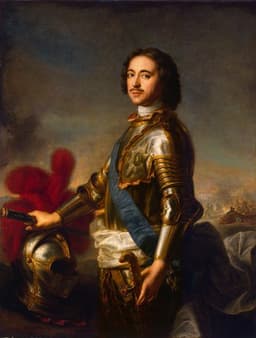
Peter the Great
Emperor · Modern
73.2Total
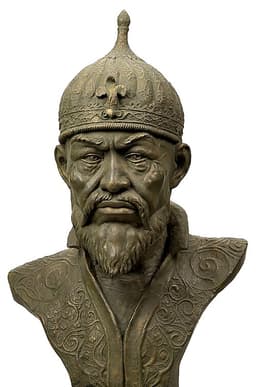
Timur
Emperor · Medieval
65.6Total
Basic Information
Born
1672
1336
Died
1725
1405
Era
Modern
Medieval
Nationality
Russia
Timurid Empire
Occupation
Emperor
Emperor
Civilization
Western
Middle Eastern
Score Comparison
Military (10%)
75.0
79.0
Political (20%)
90.0
70.0
Influence (20%)
68.0
70.0
Legacy (20%)
65.0
40.0
Leadership (15%)
78.0
79.8
Strategy (15%)
72.0
77.6
TOTAL
73.2
65.6
Peter the Great — Complete Timeline
1697 AD
Grand EmbassyPolitical Action◆ Major
Peter the Great traveled incognito to Western Europe as part of a diplomatic mission. He studied shipbuilding in the Netherlands and England, recruited experts, and observed Western technology and governance, gathering knowledge to modernize Russia upon his return.
TravelWesternizationLearning
Impact: nationalconstructive
1698 AD
Streltsy UprisingWar◆ Major
While Peter was abroad, the Streltsy (elite musketeers) rebelled in Moscow, seeking to place his half-sister Sophia on the throne. Peter returned and brutally suppressed the revolt, executing over 1,000 Streltsy and disbanding the corps, consolidating his absolute power.
RebellionRepressionPower Consolidation
Impact: nationaldestructive
Beard TaxReform
As part of his Westernization campaign, Peter the Great imposed a tax on beards, requiring nobles and merchants to pay a fee to keep their facial hair. Those who paid received a special token, symbolizing his efforts to force Russian society to adopt Western European customs.
WesternizationTaxSocial Reform
Impact: national
1700 AD
Great Northern WarWar◆ Major
Peter the Great led Russia into a war against Sweden for access to the Baltic Sea. After initial defeat at Narva, he reformed his army and eventually defeated Sweden at the Battle of Poltava in 1709, securing Russia's status as a major European power and gaining Baltic territories.
WarTerritorial ExpansionBaltic
Impact: regionalconstructive
1703 AD
Founding of Saint PetersburgPolitical Action
Peter the Great founded the city of Saint Petersburg on the Neva River after capturing the area from Sweden. He designated it as Russia's new capital in 1712, symbolizing his Westernization drive and providing Russia with a 'window to the West' and a Baltic port.
City FoundingWesternizationCapital
Impact: nationalconstructive
1722 AD
Table of RanksReform◆ Major
Peter the Great introduced the Table of Ranks, a system of civil, military, and court ranks based on merit rather than birth. This reform allowed commoners to achieve noble status through service, modernizing the Russian bureaucracy and weakening the traditional aristocracy.
BureaucracyMeritocracySocial Reform
Impact: nationalprogressive
Timur — Complete Timeline
1362 AD
Battle of the Terek RiverWar
Timur defeated the Mongol ruler of the Chagatai Khanate, establishing his control over Transoxiana. This victory marked the beginning of his rise to power, as he captured Samarkand and declared himself emir.
Rise to PowerBattleCentral Asia
Impact: regional
1387 AD
Conquest of PersiaWar◆ Major
Timur launched a campaign into Persia, capturing Isfahan and Shiraz. He suppressed a revolt in Isfahan by massacring tens of thousands of inhabitants, establishing his reputation for extreme brutality and consolidating control over the region.
ConquestMassacrePersia
Impact: regionaldestructive
1395 AD
Campaign against the Golden HordeWar◆ Major
Timur defeated the Golden Horde under Tokhtamysh at the Battle of the Terek River. He sacked Sarai, the Horde's capital, and destroyed its trade networks, permanently weakening the Mongol state and securing his northern frontier.
ConquestGolden HordeBattle
Impact: regionaldestructive
1398 AD
Sack of DelhiWar◆ Major
Timur invaded the Delhi Sultanate, defeating Sultan Nasir-ud-Din Mahmud Shah Tughluq. His army sacked Delhi, massacring tens of thousands of civilians and destroying the city's infrastructure, then withdrew with immense plunder.
ConquestMassacreIndia
Impact: regionaldestructive
1402 AD
Battle of AnkaraWar
Timur defeated the Ottoman Sultan Bayezid I at Ankara, capturing him. The victory shattered Ottoman power, leading to a civil war among Bayezid's sons and delaying Ottoman expansion into Europe for a decade.
BattleOttoman EmpireDecisive Victory
Impact: global
1404 AD
Construction of SamarkandCultural◆ Major
Timur invested heavily in transforming Samarkand into a cultural and architectural center. He brought artisans from conquered lands to build mosques, madrasas, and the Bibi-Khanym Mosque, making the city a showcase of Timurid art and learning.
ArchitecturePatronageCultural Center
Impact: regionalconstructive
1405 AD
Death during campaign against Ming ChinaWar◆ Major
Timur died of illness while leading a massive army toward the Ming dynasty's borders. His death ended the planned invasion of China and led to the fragmentation of his empire among his sons and grandsons.
DeathCampaignMing Dynasty
Impact: regional
Expert Analysis
Peter the Great vs Timur
### The Conqueror’s Paradox: How Peter the Great Built an Empire, and Timur Burned One
In the winter of 1703, a giant of a man stood on a marshy, mosquito-infested island at the mouth of the Neva River, staring out at the Baltic Sea. He was a Tsar, but he dressed like a ship carpenter, his hands calloused from handling wood and rope. He dreamed not of plunder, but of windows—a window to the West. A century earlier, another conqueror had stood at the gates of a different city, Delhi, his horsemen arrayed in a line stretching to the horizon. He was a master of the sword, not the saw, and he dreamed of mountains of skulls. The first man was Peter the Great. The second was Timur. Both are remembered as titans, but their paths—and the worlds they left behind—could not have been more different. Why did one forge a nation while the other only shattered kingdoms?
### Origins
Peter Alexeyevich Romanov was born into a Russia that was, by European standards, a medieval backwater. The year was 1672, and while the West had its printing presses and scientific revolutions, Moscow was a world of fur hats, boyar intrigues, and a deep suspicion of foreigners. Peter’s childhood was chaotic; he witnessed the violent Streltsy Uprising of 1682, which butchered his relatives before his eyes. This trauma bred in him a fierce, almost obsessive desire for control and order—but an order defined by progress, not tradition. He was a student of the practical, fascinated by ship models and military drills.
Timur, born in 1336 near Samarkand, came from a world already in fragments. The Mongol Empire was dissolving, and he was a minor noble in the Chagatai Khanate, a man with a limp (earning him the name “Timur the Lame”) and a burning ambition. His origins were not of a sovereign state but of a steppe culture built on loyalty to a clan and the spoils of the raid. There was no concept of a “nation” to build; there was only power to seize and enemies to crush. Where Peter saw a backward country he could drag forward, Timur saw a world of rival khans and sultans he could dominate.
### Rise to Power
Peter’s rise was a slow, deliberate coup. In 1689, he outmaneuvered his half-sister Sophia, who had ruled as regent. But his true apprenticeship began in 1697 with the Grand Embassy. Disguised as a common soldier named Pyotr Mikhailov, he traveled to Holland and England. He worked in shipyards, studied anatomy, and visited factories. He absorbed the West’s mechanical soul. This was not a conqueror’s education; it was an engineer’s.
Timur’s rise was a rapid, bloody ascent. In 1362, at the Battle of the Terek River, he crushed the Mongol ruler of the Chagatai Khanate. He did not study his enemies’ culture; he studied their weaknesses. He built his power on alliances of convenience, then betrayed them. He conquered Persia in 1387, and when Isfahan revolted, he ordered a pyramid of 70,000 skulls. His path was a ladder of bones.
### Leadership & Governance
Here lies the deepest chasm between the two. Peter was a reformer first, a general second. His leadership score of 82 and political score of 82 reflect a mind that understood that armies need roads, ships need ports, and power needs a bureaucracy. The Beard Tax of 1698 was a masterstroke of symbolic politics: he forced his nobles to shave, to dress in German coats, to think of themselves as Europeans. The Table of Ranks of 1722 was his true monument, a system that allowed a commoner to rise to the highest offices based on merit, not birth. He was building a state.
Timur, with a military score of 90 and a strategy score of 85, was a pure commander. His leadership was the kind that inspires men to die for you, but not to govern for you. The Battle of Ankara in 1402, where he captured the Ottoman Sultan Bayezid I, was a tactical masterpiece. But after the victory, he did not consolidate an empire. He sacked cities, took loot, and returned to Samarkand. His governance was redistribution: he brought artisans from conquered lands to build his capital, but he had no Table of Ranks, no civil service. His empire was a camp, not a country.
### Triumph & Tragedy
Peter’s greatest triumph was the Great Northern War (1700–1721). After the humiliating defeat at Narva, he rebuilt his army from scratch, eventually crushing Sweden and seizing the Baltic coast. His crowning act was the founding of Saint Petersburg in 1703, a city built on a swamp with the bones of serfs. It was a declaration: Russia would no longer be Asian. His tragedy was his cruelty; he tortured his own son Alexei to death for opposing his reforms.
Timur’s triumph was the annihilation of the Golden Horde in 1395, shattering the Mongol power that had tormented Russia for centuries. His sack of Delhi in 1398 was a spectacle of horror and wealth. His tragedy was his death in 1405, while marching to invade Ming China. He died without an heir capable of holding his conquests together. The empire he built from the Indus to the Mediterranean crumbled within a generation.
### Character & Destiny
Peter was driven by a rage against backwardness. He was crude, violent, and impatient, but he had a vision of Russia as a modern state. He forced his people to change because he believed change was the only path to survival. His character was that of a foreman on a cosmic construction site.
Timur was driven by a rage against rivals. He was a chess master of war, but he played only to checkmate, not to build a new board. He was a brilliant destroyer. His destiny was to prove that you can conquer the world and still leave nothing behind.
### Legacy
Peter’s legacy is Russia itself—a European great power with a navy, a bureaucracy, and a capital that bears his name. His influence score of 78 and legacy score of 75 reflect a man who shaped a nation’s DNA. Even today, Russians debate his methods, but they cannot escape his mark.
Timur’s legacy is a ghost. His influence score of 65 and legacy score of 65 speak to a memory of terror and splendor. Samarkand’s blue-tiled mosques are his monument, but they are a museum, not a capital. He is remembered as a scourge, a necessary evil in some histories, a monster in others. His empire died with him.
### Conclusion
Standing on that Baltic swamp, Peter saw a future. Standing over the ruins of Delhi, Timur saw a trophy. One man built a system that could outlast him; the other built a mountain of skulls that washed away in the rain. The difference is not in their ambition—both were limitless—but in their understanding of power. Peter knew that true power is not the ability to destroy, but the ability to create something that endures. Timur never learned that lesson, and so he remains, in the end, a conqueror without a country.
Rankings
🥇
Peter the GreatLeader
Mil: 75.0Pol: 90.0Inf: 68.0
73.2
🥈
Timur
Mil: 79.0Pol: 70.0Inf: 70.0
65.6
+7.6 behind
How This Comparison Works
Algorithm
Each figure is scored on 6 dimensions (0—100 scale) based on structured historical data: Military (10%), Political (20%), Influence (20%), Legacy (20%), Leadership (15%), Strategy (15%). The weighted total produces the final ranking.
Data Sources
Scores are computed from structured sub-indicators in the database. Scale factors adjust for era (Ancient ×0.85, Modern ×1.0) and civilization size (Eastern ×1.05, Other ×0.80) to account for differences in population and military scale.
Maximum 3 Figures
Comparisons are limited to 2—3 figures to ensure readability and statistical meaningfulness.
Error Margins
±5 points per dimension — Sub-scores are derived from historical records with inherent uncertainty. Two figures within 5 points on a dimension should be considered roughly equivalent in that area.
Total Score Accuracy
±3 points overall — The weighted combination of 6 dimensions produces a total score with approximately ±3 points of uncertainty. Differences of less than 3 points are not statistically significant— the figures are effectively tied.
Known Limitations
- Historical records are incomplete and uneven across civilizations
- Figures from oral-tradition societies may be underrepresented
- Occupation labels can misclassify multi-role figures
- Scores measure capability and impact, not moral character
- Quantitative scoring is a comparison tool, not absolute truth
Capability Radar
Military (10%) — Battles & Warfare
Battles
85
95
Win Rate
80
92
Expansion
90
96
Political (20%) — Governance & Reform
Reform
95
78
Diplomacy
80
70
Economy
85
82
Influence (20%) — Cultural & Global Reach
Cultural
85
88
Global
85
85
Legacy (20%) — Historical Impact
Historical
90
90
Longevity
85
75
Leadership (15%) — Power & Stability
Tenure
90
85
Stability
70
65
Strategy (15%) — Tactics & Innovation
Strategy
85
93
Tactics
75
94
Reform
95
80
Similar Comparisons
Comments & Discussion
Ivan's Avenger6/16/2026
Peter actually *learned* from the West while Timur just terrorized it. The Great Embassy of 1697–98 sent over 250 Russians to study shipbuilding, artillery, and anatomy in Holland and England. Peter himself worked incognito in Dutch shipyards. Timur? He conquered the Golden Horde and then did nothing but reinforce their backwardness. One built a navy; the other built pyramids of skulls at Isfahan.
轮子上的铁锤6/16/2026
你拿彼得大帝跟瘸狼比,简直就是侮辱现代文明。帖木儿那套游牧屠杀逻辑,连成吉思汗的子孙都嫌他暴力过度——1398年德里屠城,他砍了十万人头堆成塔,结果帝国在他死后三十年就碎成渣。彼得再专制,至少引进了数学学校(1701年莫斯科数学与航海学校),把俄国从黑死病式的蒙昧里拖出来。帖木儿留了什么?只有废墟和恐惧。
Data Decimator6/16/2026
The casualty math here is damning. Timur's campaigns in just India 1398–99 reduced Delhi's population by perhaps 100,000 in a single sack, while Russia under Peter gained 5 million square kilometers of territory over 42 years. One subtracts lives; the other adds land. Peter's census reforms (1710) actually let him *count* his subjects to tax them efficiently. Timur just counted the dead.
火药与马蹄6/16/2026
马背上的征服者终将被时间吞没,而握铁锚的人改变时代。彼得1721年宣布为全俄罗斯皇帝时,俄国已有24家造船厂,波罗的海舰队有48艘战列舰。帖木儿1398年击败德里苏丹国后,甚至没尝试造一艘船或建一所学校——他的帝国本质是放大了的劫掠团伙。彼得削掉贵族胡须建立科学院,帖木儿削掉的是活人的头皮。
Codex & Kremlin6/16/2026
Here's what the revisionists miss: Timur's cultural destruction was deliberate. When he sacked Baghdad in 1401, he specifically targeted the House of Wisdom's successor libraries, burning centuries of Arabic and Persian manuscripts. Peter, by contrast, personally founded the first public museum in Russia (the Kunstkamera, 1714) to display curiosities from around the world. One man built an encyclopedia; the other burned it as fuel for his funeral pyre.