Loading...
Peter the Cruel vs Philip of Swabia
Philip of Swabia leads by 1.9 pts · 2 figures compared
…
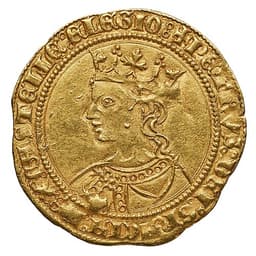
Peter the Cruel
Emperor · Medieval
42.3Total
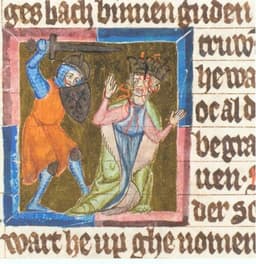
Philip of Swabia
Emperor · Medieval
44.2Total
Basic Information
Born
1334
1177
Died
1369
1208
Era
Medieval
Medieval
Nationality
Castile
Holy Roman Empire
Occupation
Emperor
Emperor
Civilization
Western
Western
Score Comparison
Military (10%)
40.0
50.0
Political (20%)
30.7
36.5
Influence (20%)
47.9
50.2
Legacy (20%)
41.7
42.5
Leadership (15%)
45.0
41.5
Strategy (15%)
45.0
43.3
TOTAL
42.3
44.2
Peter the Cruel — Complete Timeline
1351 AD
First Castilian Civil War BeginsWar◆ Major
Peter I's conflict with his half-brother Henry of Trastamara escalated into a full-scale civil war. The war divided Castile between supporters of Peter and Henry, with involvement from France and England as part of the Hundred Years' War.
Civil WarCastileTrastamara
Impact: nationaldestructive
1366 AD
Alliance with Edward the Black PrincePolitical Action◆ Major
Peter I formed an alliance with Edward the Black Prince of England, who led an army into Castile to restore Peter to the throne after he was deposed by Henry. The alliance brought English military support but at a high financial cost.
AllianceEnglandCastile
Impact: regional
1367 AD
Battle of NájeraWar◆ Major
Peter I and Edward the Black Prince defeated Henry of Trastamara's Franco-Castilian army at the Battle of N
BattleCivil WarCastile
Impact: regional
1369 AD
Murder by Henry of TrastamaraPolitical Action◆ Major
Peter I was captured and killed by his half-brother Henry of Trastamara after the Battle of Montiel. Henry personally stabbed Peter to death, ending the civil war and establishing the Trastamara dynasty in Castile.
MurderCivil WarTrastamara
Impact: nationaltragic
Philip of Swabia — Complete Timeline
1198 AD
Conflict with Otto IVWar◆ Major
Philip of Swabia fought a civil war against Otto IV from 1198 to 1208 for control of the German throne. Philip gained the upper hand by 1206, controlling most of Germany, but was assassinated before final victory.
Civil WarHohenstaufen-Welf Conflict
Impact: regionaldestructive
Election as King of GermanyPolitical Action◆ Major
Philip of Swabia was elected King of Germany in March 1198 by Hohenstaufen supporters, following the death of Henry VI. His election was contested by Otto IV, leading to a civil war.
SuccessionCivil War
Impact: regional
1208 AD
Assassination at BambergPolitical Action◆ Major
Philip of Swabia was assassinated on June 21, 1208, in Bamberg by Otto of Wittelsbach, a personal enemy. His death ended the Hohenstaufen claim to the throne and allowed Otto IV to become undisputed king.
AssassinationHohenstaufen
Impact: regionaltragic
Expert Analysis
Origins
Peter I of Castile, known as Peter the Cruel, was born in 1334 to King Alfonso XI of Castile and Maria of Portugal. His father died in 1350, leaving Peter as king at age 16. His mother was from the Portuguese royal house, but his father's mistress, Eleanor de Guzmán, wielded significant influence and bore several half-brothers, including Henry of Trastamara. Peter was educated in the courtly traditions but showed early signs of a volatile temperament. His half-brothers, especially Henry, were favored by the nobility, creating a deep rift.
Philip of Swabia was born around 1177, the fifth son of Holy Roman Emperor Frederick Barbarossa and Beatrice of Burgundy. As a member of the Hohenstaufen dynasty, Philip was destined for ecclesiastical roles, becoming Bishop of Würzburg in 1190. However, after the death of his brother Emperor Henry VI in 1197, he was drawn into secular politics. He was elected King of Germany in 1198 by Hohenstaufen supporters, but his young nephew Frederick II was the rightful heir, leading to a contested succession.
Rise to Power
Peter I ascended peacefully in 1350 but soon faced opposition from his half-brothers. His reign was marked by a struggle to centralize power against the nobility, who supported Henry. In 1354, Peter married Blanche of Bourbon for diplomatic reasons but abandoned her for his mistress, María de Padilla, alienating the French. By 1366, Henry, with French and Aragonese support, invaded Castile, forcing Peter to flee. Peter allied with Edward the Black Prince, who led an English army into Spain. At the Battle of Nájera on April 3, 1367, Peter and Edward defeated Henry's forces, restoring Peter to the throne. However, Peter's failure to pay Edward led to the English withdrawal, leaving him vulnerable.
Philip of Swabia was elected King of Germany in March 1198 by Hohenstaufen loyalists, while his rival Otto IV was elected by the Guelph faction in June 1198. Philip's claim was based on his brother Henry VI's authority, but his nephew Frederick II was the legitimate heir. Philip initially struggled, but by 1206 he had gained the upper hand, controlling most of Germany. He was crowned King of the Romans at Aachen in 1205. His reign was defined by the civil war against Otto, who was supported by Pope Innocent III. In 1208, Philip's position seemed secure, but he was assassinated before he could be crowned emperor.
Leadership & Governance
Peter's leadership was characterized by brutality and favoritism. He executed many nobles, including his half-brother's supporters, and confiscated lands. His reign saw the First Castilian Civil War, which devastated the kingdom. He relied heavily on Jewish and Muslim officials, which angered the clergy. His military score of 40.0 reflects his reliance on allies like the Black Prince rather than his own strategic acumen. Politically, he scored 30.7, indicating his failure to secure lasting alliances or internal stability.
Philip of Swabia was a more moderate ruler. He sought to consolidate Hohenstaufen power through diplomacy and military campaigns. His leadership score of 41.5 reflects his ability to build a coalition of princes. He was known for his piety and generosity, but his assassination cut short his reforms. His political score of 36.5 shows that while he was effective in rallying support, he could not overcome the papal opposition. Philip's governance emphasized the traditional rights of the monarchy, but his death prevented any lasting administrative changes.
Triumph & Tragedy
Peter's greatest triumph was his restoration after the Battle of Nájera, which demonstrated his ability to secure foreign aid. However, his greatest tragedy was his inability to maintain that support. He was killed by his half-brother Henry on March 23, 1369, after being captured following the Battle of Montiel. Henry personally stabbed him, ending the civil war and the reign of the House of Burgundy. Peter's legacy is tainted by his cruelty, but he is also remembered for building the Alcázar of Seville.
Philip's triumph was his near-victory in the civil war against Otto IV. By 1208, he controlled most of Germany and was on the verge of imperial coronation. However, his assassination on June 21, 1208, by Otto of Wittelsbach, a personal enemy, was a tragedy for the Hohenstaufen dynasty. His death led to the eventual rise of Otto IV and then Frederick II. Philip's legacy is overshadowed by his untimely death; he never achieved the imperial crown. His assassination also removed a stabilizing force in German politics.
Character & Destiny
Peter's character was ruthless and paranoid. He ordered the execution of many nobles and even his own wife's relatives. His cruelty earned him the epithet "the Cruel," though some historians argue it was exaggerated. His temperament alienated allies and led to his downfall. His destiny was sealed by his inability to compromise, leading to his murder.
Philip was described as handsome, generous, and pious. He was a capable military leader and diplomat. His assassination was a result of personal vendetta rather than political conspiracy. His character was less controversial than Peter's, but his fate was equally tragic. His death prevented the Hohenstaufen from consolidating power, leading to the Interregnum.
Legacy
Peter's legacy is mixed. In Castile, he is remembered as a tyrant, but also as a patron of the arts. His reign contributed to the centralization of power in the monarchy, though at great cost. His conflict with Henry intensified the influence of the nobility. His total score of 42.3 reflects his limited long-term impact.
Philip's legacy is more significant. His struggle against Otto IV weakened the Guelph faction and paved the way for Frederick II. His death created a power vacuum that led to the Great Interregnum (1254–1273), a period of chaos in the Holy Roman Empire. His influence score of 50.2 and legacy score of 42.5 indicate his importance in German history. However, his early death meant his potential was unfulfilled.
Conclusion
While Peter the Cruel and Philip of Swabia both died violently, their impacts differ. Peter's reign was a destructive civil war that weakened Castile, and his cruelty left a negative legacy. Philip, despite his assassination, had a more enduring influence on the Holy Roman Empire. His conflict with Otto IV shaped German politics for decades. With a total score of 44.2 compared to Peter's 42.3, Philip had a greater impact. He was a more effective leader and his death changed the course of imperial history. Therefore, Philip of Swabia had a greater historical significance than Peter the Cruel.
Rankings
🥇
Philip of SwabiaLeader
Mil: 50.0Pol: 36.5Inf: 50.2
44.2
🥈
Peter the Cruel
Mil: 40.0Pol: 30.7Inf: 47.9
42.3
+1.9 behind
How This Comparison Works
Algorithm
Each figure is scored on 6 dimensions (0—100 scale) based on structured historical data: Military (10%), Political (20%), Influence (20%), Legacy (20%), Leadership (15%), Strategy (15%). The weighted total produces the final ranking.
Data Sources
Scores are computed from structured sub-indicators in the database. Scale factors adjust for era (Ancient ×0.85, Modern ×1.0) and civilization size (Eastern ×1.05, Other ×0.80) to account for differences in population and military scale.
Maximum 3 Figures
Comparisons are limited to 2—3 figures to ensure readability and statistical meaningfulness.
Error Margins
±5 points per dimension — Sub-scores are derived from historical records with inherent uncertainty. Two figures within 5 points on a dimension should be considered roughly equivalent in that area.
Total Score Accuracy
±3 points overall — The weighted combination of 6 dimensions produces a total score with approximately ±3 points of uncertainty. Differences of less than 3 points are not statistically significant— the figures are effectively tied.
Known Limitations
- Historical records are incomplete and uneven across civilizations
- Figures from oral-tradition societies may be underrepresented
- Occupation labels can misclassify multi-role figures
- Scores measure capability and impact, not moral character
- Quantitative scoring is a comparison tool, not absolute truth
Capability Radar
Military (10%) — Battles & Warfare
Battles
45
20
Win Rate
40
25
Expansion
25
20
Political (20%) — Governance & Reform
Reform
15
25
Diplomacy
10
40
Economy
10
30
Influence (20%) — Cultural & Global Reach
Cultural
15
25
Global
10
15
Legacy (20%) — Historical Impact
Historical
30
35
Longevity
20
20
Leadership (15%) — Power & Stability
Tenure
50
30
Stability
5
20
Strategy (15%) — Tactics & Innovation
Strategy
30
35
Tactics
35
30
Reform
20
15
Similar Comparisons
Comments & Discussion
No comments yet. Be the first to share your thoughts!