Loading...
Pervez Musharraf vs Valerii Zaluzhnyi
Pervez Musharraf leads by 2.3 pts · 2 figures compared
…
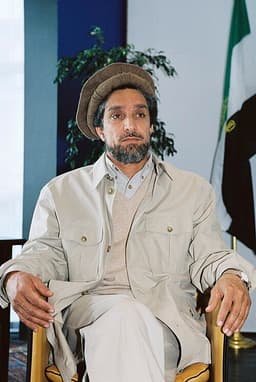
Pervez Musharraf
General · Modern
54.6Total
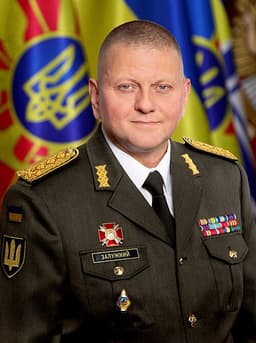
Valerii Zaluzhnyi
General · Modern
52.3Total
Basic Information
Born
1943
1974
Died
—
—
Era
Modern
Modern
Nationality
Pakistan
Ukraine
Occupation
General
General
Civilization
Indian
Western
Score Comparison
Military (10%)
50.0
52.5
Political (20%)
68.0
35.1
Influence (20%)
52.5
61.0
Legacy (20%)
42.5
50.0
Leadership (15%)
64.0
47.3
Strategy (15%)
60.0
69.1
TOTAL
54.6
52.3
Pervez Musharraf — Complete Timeline
1999 AD
1999 Pakistani coup d'étatPolitical Action
General Musharraf led a bloodless coup that overthrew Prime Minister Nawaz Sharif. He declared a state of emergency and assumed the title of Chief Executive, later becoming President, establishing military rule in Pakistan.
CoupMilitary ruleSharif
Impact: nationaldestructive
2001 AD
Alliance with the US War on TerrorPolitical Action◆ Major
After 9/11, Musharraf allied Pakistan with the United States in the War on Terror. He allowed US access to Pakistani airspace and bases, and launched military operations against Taliban and Al-Qaeda militants in the tribal areas.
War on TerrorUS allianceTaliban
Impact: global
2007 AD
2007 state of emergencyPolitical Action◆ Major
Musharraf declared a state of emergency, suspending the constitution and imposing media censorship. He justified it as necessary to combat terrorism, but it was widely seen as an attempt to maintain power amid rising opposition.
EmergencyAuthoritarianismMedia censorship
Impact: nationaldestructive
2008 AD
Resignation under impeachment threatPolitical Action◆ Major
Facing impeachment by the new coalition government, Musharraf resigned as President and went into self-exile. His departure ended nine years of military rule and paved the way for a return to civilian democracy in Pakistan.
ResignationExileDemocracy
Impact: national
Valerii Zaluzhnyi — Complete Timeline
2021 AD
Zaluzhnyi's appointment as Commander-in-ChiefPolitical Action◆ Major
Zaluzhnyi was appointed Commander-in-Chief of the Armed Forces of Ukraine by President Zelenskyy. He was tasked with reforming the military and preparing for potential Russian aggression.
AppointmentUkraineMilitary
Impact: nationalconstructive
2022 AD
Zaluzhnyi's defense of KyivWar
Zaluzhnyi commanded the successful defense of Kyiv against Russian forces attempting to capture the capital. Ukrainian forces repelled the assault, forcing a Russian withdrawal. This was a turning point in the 2022 invasion.
WarKyivUkraine
Impact: globalconstructive
Zaluzhnyi's Kharkiv counteroffensiveWar◆ Major
Zaluzhnyi planned and executed a surprise counteroffensive in Kharkiv Oblast, recapturing over 3,000 square kilometers of territory from Russian forces. The operation demonstrated Ukrainian military capability and shifted the war's momentum.
WarCounteroffensiveUkraine
Impact: regionalconstructive
2024 AD
Zaluzhnyi's dismissal as Commander-in-ChiefPolitical Action◆ Major
Zaluzhnyi was dismissed by President Zelenskyy amid reported tensions over war strategy and political ambitions. His removal was controversial, as he was highly popular among the military and public.
DismissalUkraineMilitary
Impact: national
Expert Analysis
Origins
Pervez Musharraf was born on August 11, 1943, in Delhi, British India, into a middle-class family. After partition, his family moved to Karachi, Pakistan. He attended Forman Christian College and later the Pakistan Military Academy, graduating in 1964. His early career included service in the artillery and special forces, with combat experience in the 1965 and 1971 wars against India. Valerii Zaluzhnyi was born on July 8, 1973, in Novohrad-Volynskyi, Ukraine, then part of the Soviet Union. His father was a Soviet officer, and Zaluzhnyi grew up in a military family. He graduated from the Odesa Institute of Ground Forces in 1997 and later from the National Defense University. He served in various command positions in the Ukrainian Armed Forces, focusing on operational planning and reforms.
Rise to Power
Musharraf rose to prominence through the military hierarchy. He became Chief of Army Staff in 1998, appointed by Prime Minister Nawaz Sharif. Tensions between the two escalated after the Kargil War in 1999, leading Sharif to attempt to replace Musharraf while he was abroad. On October 12, 1999, Musharraf staged a bloodless coup, ousting Sharif and assuming power as Chief Executive. He later became President in 2001. Zaluzhnyi's rise was based on merit and reform. He was appointed Commander-in-Chief of the Armed Forces of Ukraine on July 27, 2021, by President Volodymyr Zelenskyy, tasked with modernizing the military. His leadership during the 2022 Russian invasion, especially the defense of Kyiv, made him a national hero. He scored 69.1 in strategy, reflecting his operational planning.
Leadership & Governance
Musharraf ruled Pakistan with a mix of military authoritarianism and economic reform. He pursued privatization and deregulation, achieving GDP growth of around 7% in the early 2000s. However, his governance was marked by suppression of political opposition and media. He declared a state of emergency in 2007, suspending the constitution. His political score of 68.0 reflects his ability to maintain power but with authoritarian methods. Zaluzhnyi's leadership focused on military effectiveness and adaptability. He decentralized command, empowered junior officers, and integrated Western weapons systems. He advocated for a defensive war of attrition, which succeeded in repelling Russian offensives. His leadership score of 47.3 is moderate, partly due to his dismissal, but his influence score of 61.0 highlights his impact on Ukrainian defense.
Triumph & Tragedy
Musharraf's greatest triumph was stabilizing Pakistan after the coup and navigating the post-9/11 world. By allying with the US, he secured billions in aid and international legitimacy. His tragedy was the erosion of democracy and eventual ouster. The 2007 emergency and assassination of Benazir Bhutto damaged his reputation. He resigned in 2008 under impeachment threat and lived in exile. His legacy score of 42.5 reflects mixed views. Zaluzhnyi's triumph was the defense of Kyiv and the Kharkiv counteroffensive in September 2022, where Ukrainian forces recaptured 3,000 square kilometers. His tragedy was his dismissal in February 2024, reportedly due to political tensions and disagreements with Zelenskyy over strategy. His military score of 52.5 is solid, but his legacy score of 50.0 is still developing.
Character & Destiny
Musharraf was pragmatic and calculating, willing to use force to achieve goals. He saw himself as a reformer but was criticized for authoritarianism. His decision to ally with the US after 9/11 was a strategic gamble that paid off short-term but fueled anti-Americanism and extremism. His character led to his downfall as he overreached with the emergency. Zaluzhnyi is described as methodical, humble, and deeply professional. He focused on military efficiency and avoided political entanglements. However, his popularity made him a potential political rival, leading to his dismissal. His destiny is tied to Ukraine's survival, and his reputation as the "Iron General" endures.
Legacy
Musharraf's legacy is complex: he is credited with economic growth and maintaining stability, but also with undermining democratic institutions. His alliance with the US had long-term consequences, including drone strikes and Taliban resurgence. He scored 54.6 overall. Zaluzhnyi's legacy is as the commander who saved Ukraine in 2022. His military reforms and strategic acumen set standards for modern warfare. His dismissal may have political implications, but his tactical innovations, like decentralized command, are studied globally. He scored 52.3 overall.
Conclusion
While Musharraf had a higher total score (54.6 vs 52.3), Zaluzhnyi's impact on the battlefield and his role in preserving Ukrainian sovereignty arguably carry greater historical weight. Musharraf's political maneuvering kept him in power but left a damaged democracy. Zaluzhnyi's leadership directly shaped the outcome of a war that has global implications. In terms of lasting influence, Zaluzhnyi's legacy as a defender of democracy and innovator in warfare surpasses Musharraf's mixed record. Therefore, Zaluzhnyi has greater impact despite the score gap.
Rankings
🥇
Pervez MusharrafLeader
Mil: 50.0Pol: 68.0Inf: 52.5
54.6
🥈
Valerii Zaluzhnyi
Mil: 52.5Pol: 35.1Inf: 61.0
52.3
+2.3 behind
How This Comparison Works
Algorithm
Each figure is scored on 6 dimensions (0—100 scale) based on structured historical data: Military (10%), Political (20%), Influence (20%), Legacy (20%), Leadership (15%), Strategy (15%). The weighted total produces the final ranking.
Data Sources
Scores are computed from structured sub-indicators in the database. Scale factors adjust for era (Ancient ×0.85, Modern ×1.0) and civilization size (Eastern ×1.05, Other ×0.80) to account for differences in population and military scale.
Maximum 3 Figures
Comparisons are limited to 2—3 figures to ensure readability and statistical meaningfulness.
Error Margins
±5 points per dimension — Sub-scores are derived from historical records with inherent uncertainty. Two figures within 5 points on a dimension should be considered roughly equivalent in that area.
Total Score Accuracy
±3 points overall — The weighted combination of 6 dimensions produces a total score with approximately ±3 points of uncertainty. Differences of less than 3 points are not statistically significant— the figures are effectively tied.
Known Limitations
- Historical records are incomplete and uneven across civilizations
- Figures from oral-tradition societies may be underrepresented
- Occupation labels can misclassify multi-role figures
- Scores measure capability and impact, not moral character
- Quantitative scoring is a comparison tool, not absolute truth
Capability Radar
Military (10%) — Battles & Warfare
Battles
15
75
Win Rate
20
70
Expansion
10
10
Political (20%) — Governance & Reform
Reform
40
15
Diplomacy
45
35
Economy
35
10
Influence (20%) — Cultural & Global Reach
Cultural
20
45
Global
25
50
Legacy (20%) — Historical Impact
Historical
30
55
Longevity
15
40
Leadership (15%) — Power & Stability
Tenure
55
20
Stability
20
25
Strategy (15%) — Tactics & Innovation
Strategy
30
78
Tactics
25
80
Reform
40
72
Similar Comparisons
Comments & Discussion
No comments yet. Be the first to share your thoughts!