Loading...
Honda Tadakatsu vs Pervez Musharraf
Honda Tadakatsu leads by 5.2 pts · 2 figures compared
…

Honda Tadakatsu
General · Modern
59.8Total
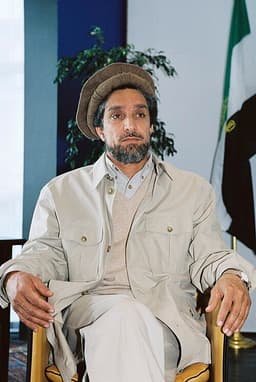
Pervez Musharraf
General · Modern
54.6Total
Basic Information
Born
1548
1943
Died
1610
—
Era
Modern
Modern
Nationality
Japan
Pakistan
Occupation
General
General
Civilization
Eastern
Indian
Score Comparison
Military (10%)
70.0
50.0
Political (20%)
45.1
68.0
Influence (20%)
60.0
52.5
Legacy (20%)
56.0
42.5
Leadership (15%)
80.0
64.0
Strategy (15%)
50.0
60.0
TOTAL
59.8
54.6
Honda Tadakatsu — Complete Timeline
1570 AD
Battle of AnegawaWar
Honda Tadakatsu fought under Tokugawa Ieyasu at the Battle of Anegawa. He led a charge against the Azai and Asakura forces, contributing to the allied victory and earning recognition for his bravery.
Sengoku PeriodBattleTokugawa
Impact: regionalconstructive
1584 AD
Battle of Komaki and NagakuteWar◆ Major
Honda Tadakatsu fought at the Battle of Komaki and Nagakute against Toyotomi Hideyoshi's forces. He commanded a unit and engaged in skirmishes, demonstrating his skill as a general.
Sengoku PeriodBattleKomaki
Impact: regional
1590 AD
Siege of OdawaraWar
Honda Tadakatsu participated in the Siege of Odawara under Toyotomi Hideyoshi. He commanded a contingent of Tokugawa forces during the siege, which ended with the surrender of the Hojo clan.
Sengoku PeriodSiegeOdawara
Impact: regional
1600 AD
Battle of SekigaharaWar
Honda Tadakatsu fought for Tokugawa Ieyasu at Sekigahara. He led his forces against the Western Army, contributing to the decisive victory that established Tokugawa rule.
Sengoku PeriodBattleSekigahara
Impact: nationalconstructive
Pervez Musharraf — Complete Timeline
1999 AD
1999 Pakistani coup d'étatPolitical Action
General Musharraf led a bloodless coup that overthrew Prime Minister Nawaz Sharif. He declared a state of emergency and assumed the title of Chief Executive, later becoming President, establishing military rule in Pakistan.
CoupMilitary ruleSharif
Impact: nationaldestructive
2001 AD
Alliance with the US War on TerrorPolitical Action◆ Major
After 9/11, Musharraf allied Pakistan with the United States in the War on Terror. He allowed US access to Pakistani airspace and bases, and launched military operations against Taliban and Al-Qaeda militants in the tribal areas.
War on TerrorUS allianceTaliban
Impact: global
2007 AD
2007 state of emergencyPolitical Action◆ Major
Musharraf declared a state of emergency, suspending the constitution and imposing media censorship. He justified it as necessary to combat terrorism, but it was widely seen as an attempt to maintain power amid rising opposition.
EmergencyAuthoritarianismMedia censorship
Impact: nationaldestructive
2008 AD
Resignation under impeachment threatPolitical Action◆ Major
Facing impeachment by the new coalition government, Musharraf resigned as President and went into self-exile. His departure ended nine years of military rule and paved the way for a return to civilian democracy in Pakistan.
ResignationExileDemocracy
Impact: national
Expert Analysis
Origins
Honda Tadakatsu was born in 1548 in Mikawa Province, Japan, into a samurai family serving the Matsudaira clan (later Tokugawa). His father, Honda Tadataka, was a retainer. Tadakatsu began serving Tokugawa Ieyasu as a page from a young age, learning martial skills and military tactics. He rose through the ranks due to his prowess in battle and unwavering loyalty.
Pervez Musharraf was born on August 11, 1943, in Delhi, British India, into a middle-class family. After Partition, his family moved to Karachi, Pakistan. He attended Forman Christian College and later the Pakistan Military Academy in Kakul. He was commissioned in the Pakistan Army in 1964, serving in the artillery regiment.
Rise to Power
Honda Tadakatsu's rise was gradual, tied to Tokugawa Ieyasu's campaigns. He first distinguished himself at the Battle of Anegawa (1570), where he led a charge against the Azai and Asakura forces. His reputation grew at the Battle of Komaki and Nagakute (1584), where he commanded a unit against Toyotomi Hideyoshi's forces. His most significant contribution came at the Battle of Sekigahara (1600), where he fought for the Eastern Army under Tokugawa Ieyasu. His leadership helped secure victory, leading to the establishment of the Tokugawa shogunate. He was later granted the fief of Kuwana (100,000 koku).
Pervez Musharraf rose through the army's ranks, becoming a general in 1998. His rise to national power came through the 1999 Pakistani coup d'état, which overthrew Prime Minister Nawaz Sharif after the latter attempted to dismiss Musharraf as army chief. Musharraf assumed the title of Chief Executive, later becoming President in 2001. His power consolidation was swift, backed by military force.
Leadership & Governance
Honda Tadakatsu's leadership was characterized by personal bravery and leading from the front. He was known for never being wounded in battle, a testament to his skill. As a daimyo, he governed his fief efficiently, focusing on military readiness and infrastructure. He was a key advisor to Tokugawa Ieyasu, but his political influence was limited compared to other generals. His military score of 70.0 reflects his battlefield prowess, while political score of 45.1 indicates less involvement in governance.
Pervez Musharraf's leadership was autocratic, ruling through the military. He implemented economic reforms, including privatization and deregulation, leading to GDP growth. However, his governance was marked by suppression of political opposition and media. He allied Pakistan with the US War on Terror, receiving billions in aid. His political score of 68.0 reflects his ability to consolidate power, but his military score of 50.0 is moderate due to his role as a political leader rather than a combat commander.
Triumph & Tragedy
Honda Tadakatsu's greatest success was his undefeated record in battle, earning him the title "the warrior who surpassed death itself." He contributed to Tokugawa Ieyasu's unification of Japan. His failures include limited political influence; he never rose to the highest councils of the shogunate. He died in 1610 at age 62, having served his lord faithfully.
Pervez Musharraf's triumph was stabilizing Pakistan's economy and navigating the post-9/11 era. His alliance with the US brought international support. However, his tragedy was the erosion of democratic institutions, the 2007 state of emergency, and his eventual resignation under impeachment threat in 2008. He went into self-exile, and his legacy is mixed.
Character & Destiny
Honda Tadakatsu was disciplined, loyal, and fearless. His character shaped his destiny as a trusted general, but his lack of ambition limited his political rise. He was content serving the Tokugawa clan, a contrast to more politically ambitious contemporaries.
Pervez Musharraf was pragmatic and decisive, but his authoritarian tendencies led to his downfall. His character allowed him to seize power but also made enemies. He was a complex figure, often described as a moderate in a polarized environment.
Legacy
Honda Tadakatsu is remembered as a symbol of samurai virtue, with his armor and spear preserved in museums. His legacy influences Japanese culture and martial arts. In historical assessments, he scores 56.0 in legacy.
Pervez Musharraf's legacy is contested. In Pakistan, he is criticized for undermining democracy, but credited for economic growth. Internationally, he is seen as a key ally in the War on Terror. His legacy score is 42.5.
Conclusion
Honda Tadakatsu had greater historical impact as a military figure, with a total score of 59.8 compared to Musharraf's 54.6. While Musharraf's political influence was broader, Tadakatsu's role in shaping Japan's feudal system was more enduring. Tadakatsu's influence on samurai culture and military history is profound, whereas Musharraf's impact is limited to a specific period. Thus, Honda Tadakatsu emerges as the more significant figure.
Rankings
🥇
Honda TadakatsuLeader
Mil: 70.0Pol: 45.1Inf: 60.0
59.8
🥈
Pervez Musharraf
Mil: 50.0Pol: 68.0Inf: 52.5
54.6
+5.2 behind
How This Comparison Works
Algorithm
Each figure is scored on 6 dimensions (0—100 scale) based on structured historical data: Military (10%), Political (20%), Influence (20%), Legacy (20%), Leadership (15%), Strategy (15%). The weighted total produces the final ranking.
Data Sources
Scores are computed from structured sub-indicators in the database. Scale factors adjust for era (Ancient ×0.85, Modern ×1.0) and civilization size (Eastern ×1.05, Other ×0.80) to account for differences in population and military scale.
Maximum 3 Figures
Comparisons are limited to 2—3 figures to ensure readability and statistical meaningfulness.
Error Margins
±5 points per dimension — Sub-scores are derived from historical records with inherent uncertainty. Two figures within 5 points on a dimension should be considered roughly equivalent in that area.
Total Score Accuracy
±3 points overall — The weighted combination of 6 dimensions produces a total score with approximately ±3 points of uncertainty. Differences of less than 3 points are not statistically significant— the figures are effectively tied.
Known Limitations
- Historical records are incomplete and uneven across civilizations
- Figures from oral-tradition societies may be underrepresented
- Occupation labels can misclassify multi-role figures
- Scores measure capability and impact, not moral character
- Quantitative scoring is a comparison tool, not absolute truth
Capability Radar
Military (10%) — Battles & Warfare
Battles
65
15
Win Rate
70
20
Expansion
40
10
Political (20%) — Governance & Reform
Reform
25
40
Diplomacy
40
45
Economy
30
35
Influence (20%) — Cultural & Global Reach
Cultural
55
20
Global
35
25
Legacy (20%) — Historical Impact
Historical
60
30
Longevity
50
15
Leadership (15%) — Power & Stability
Tenure
45
55
Stability
50
20
Strategy (15%) — Tactics & Innovation
Strategy
60
30
Tactics
75
25
Reform
30
40
Similar Comparisons
Comments & Discussion
No comments yet. Be the first to share your thoughts!