Loading...
This comparison has not been analyzed yet.
One-time AI generation (~1 minute). Scores and timeline are already available below.
Pausanias of Sparta vs Pausanias the Spartan
Pausanias the Spartan leads by 0.6 pts · 2 figures compared
…
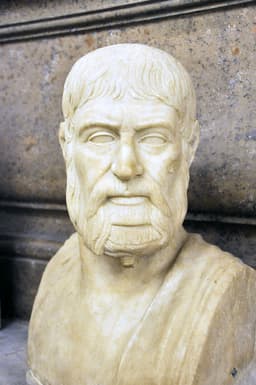
Pausanias of Sparta
General · Ancient
49.6Total

Pausanias the Spartan
General · Ancient
50.2Total
Basic Information
Born
-460
-510
Died
-395
-470
Era
Ancient
Ancient
Nationality
Sparta
Sparta
Occupation
General
General
Civilization
Western
Western
Score Comparison
Military (10%)
67.3
82.0
Political (20%)
32.1
35.0
Influence (20%)
53.3
51.8
Legacy (20%)
48.3
47.5
Leadership (15%)
43.8
40.9
Strategy (15%)
61.3
58.0
TOTAL
49.6
50.2
Pausanias of Sparta — Complete Timeline
479 BC
Battle of PlataeaWar
Pausanias, as regent for the young king Pleistarchus, commanded the combined Greek forces against the Persian army under Mardonius. He won a decisive victory, destroying the Persian invasion force and ending the Greco-Persian Wars on the mainland.
Greco-Persian WarsBattleVictory
Impact: global
478 BC
Siege of ByzantiumWar◆ Major
Pausanias led a Greek fleet to capture Byzantium from the Persians. During the siege, his arrogant behavior and alleged negotiations with the Persian king led to accusations of medism (collaboration with Persia), causing his recall to Sparta.
Greco-Persian WarsSiegeMedism
Impact: regional
477 BC
Accusation of Medism and RecallPolitical Action◆ Major
Pausanias was recalled to Sparta and tried for medism. He was acquitted but his reputation was damaged. The allies, disgusted by his behavior, transferred leadership of the Hellenic League to Athens, leading to the formation of the Delian League.
Spartan PoliticsTrialDelian League
Impact: regionaldestructive
395 BC
Death by StarvationPolitical Action◆ Major
Pausanias was suspected of plotting with the helots and the Persians. He took refuge in the temple of Athena of the Brazen House. The ephors walled him in, and he was starved to death, just before his mother was to bring him out.
Spartan PoliticsExecutionTreason
Impact: nationaltragic
Pausanias the Spartan — Complete Timeline
479 BC
Battle of PlataeaWar
Pausanias, as regent of Sparta, commanded the combined Greek forces at Plataea. He led the decisive victory over the Persian army under Mardonius, ending the second Persian invasion of Greece. The victory secured Greek independence.
Greco-Persian WarsBattleSparta
Impact: regionalconstructive
478 BC
Capture of ByzantiumWar◆ Major
Pausanias led a Greek fleet to capture Byzantium from the Persians. During this campaign, his arrogant behavior and alleged sympathy for Persian customs alienated the allies, leading to the transfer of leadership to Athens.
Greco-Persian WarsSiegeSparta
Impact: regional
477 BC
Recall and Trial of PausaniasPolitical Action◆ Major
Pausanias was recalled to Sparta and tried for medism (collaboration with Persia). Although acquitted, his reputation was damaged. He returned to Byzantium without Spartan authorization, acting as a private individual.
TrialSpartan PoliticsMedism
Impact: national
470 BC
Death by StarvationOther◆ Major
Pausanias, suspected of plotting with the helots and Persians, took refuge in the Temple of Athena of the Brazen House in Sparta. The ephors walled him inside, and he was starved to death, ending his life in disgrace.
DeathSpartaTreason
Impact: nationaltragic
This comparison has not been analyzed yet.
One-time AI generation (~1 minute). Scores and timeline are already available below.
Rankings
🥇
Pausanias the SpartanLeader
Mil: 82.0Pol: 35.0Inf: 51.8
50.2
🥈
Pausanias of Sparta
Mil: 67.3Pol: 32.1Inf: 53.3
49.6
+0.6 behind
How This Comparison Works
Algorithm
Each figure is scored on 6 dimensions (0—100 scale) based on structured historical data: Military (10%), Political (20%), Influence (20%), Legacy (20%), Leadership (15%), Strategy (15%). The weighted total produces the final ranking.
Data Sources
Scores are computed from structured sub-indicators in the database. Scale factors adjust for era (Ancient ×0.85, Modern ×1.0) and civilization size (Eastern ×1.05, Other ×0.80) to account for differences in population and military scale.
Maximum 3 Figures
Comparisons are limited to 2—3 figures to ensure readability and statistical meaningfulness.
Error Margins
±5 points per dimension — Sub-scores are derived from historical records with inherent uncertainty. Two figures within 5 points on a dimension should be considered roughly equivalent in that area.
Total Score Accuracy
±3 points overall — The weighted combination of 6 dimensions produces a total score with approximately ±3 points of uncertainty. Differences of less than 3 points are not statistically significant— the figures are effectively tied.
Known Limitations
- Historical records are incomplete and uneven across civilizations
- Figures from oral-tradition societies may be underrepresented
- Occupation labels can misclassify multi-role figures
- Scores measure capability and impact, not moral character
- Quantitative scoring is a comparison tool, not absolute truth
Capability Radar
Military (10%) — Battles & Warfare
Battles
65
70
Win Rate
70
75
Expansion
30
30
Political (20%) — Governance & Reform
Reform
15
10
Diplomacy
40
30
Economy
20
10
Influence (20%) — Cultural & Global Reach
Cultural
40
30
Global
30
30
Legacy (20%) — Historical Impact
Historical
55
55
Longevity
45
40
Leadership (15%) — Power & Stability
Tenure
55
40
Stability
25
10
Strategy (15%) — Tactics & Innovation
Strategy
80
75
Tactics
75
80
Reform
20
10
Similar Comparisons
Comments & Discussion
No comments yet. Be the first to share your thoughts!