Loading...
Patrice de MacMahon vs Zhang Xueliang
Patrice de MacMahon leads by 2.2 pts · 2 figures compared
…

Patrice de MacMahon
General · Modern
54.2Total
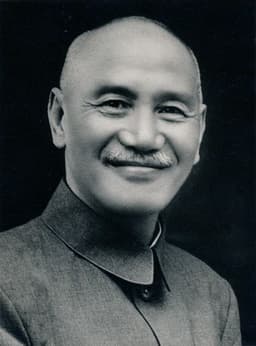
Zhang Xueliang
General · Modern
52.0Total
Basic Information
Born
1808
1901
Died
1893
2001
Era
Modern
Modern
Nationality
France
China
Occupation
General
General
Civilization
Western
Eastern
Score Comparison
Military (10%)
70.0
46.7
Political (20%)
48.0
43.7
Influence (20%)
57.2
58.0
Legacy (20%)
46.7
54.0
Leadership (15%)
53.2
50.7
Strategy (15%)
60.0
51.7
TOTAL
54.2
52.0
Patrice de MacMahon — Complete Timeline
1859 AD
Battle of Magenta (1859)War◆ Major
MacMahon commanded the French II Corps at the Battle of Magenta during the Second Italian War of Independence. His timely arrival helped secure a French victory over the Austrians.
Italian UnificationBattle
Impact: regionalconstructive
Battle of Solferino (1859)War◆ Major
MacMahon commanded French forces at the Battle of Solferino, a bloody engagement that led to an Austrian defeat. He was wounded during the battle.
Italian UnificationBattle
Impact: regional
1870 AD
Battle of Sedan (1870)War
MacMahon commanded the French Army of Ch
Franco-Prussian WarDefeat
Impact: nationaltragic
1871 AD
Suppression of the Paris Commune (1871)War◆ Major
MacMahon led the Versailles army in the suppression of the Paris Commune. The brutal campaign resulted in the deaths of thousands of Communards and the restoration of government control.
Paris CommuneCivil War
Impact: nationaldestructive
1873 AD
President of France (1873-1879)Political Action◆ Major
MacMahon was elected President of the Third Republic. A monarchist, he sought to restore the monarchy but failed due to divisions among royalists.
Third RepublicPresidency
Impact: national
1877 AD
Seize Mai Crisis (1877)Political Action
MacMahon dissolved the Chamber of Deputies in an attempt to weaken the republican majority. The subsequent elections returned a republican majority, and MacMahon was forced to accept a republican government.
Third RepublicConstitutional Crisis
Impact: nationaldestructive
1879 AD
Resignation as President (1879)Political Action◆ Major
MacMahon resigned the presidency after the republican victory in the Senate elections. His resignation marked the end of monarchist influence in the Third Republic.
Third RepublicResignation
Impact: national
Zhang Xueliang — Complete Timeline
1928 AD
Inheritance of the Fengtian ArmyPolitical Action◆ Major
Zhang Xueliang inherited command of the Fengtian Army after his father Zhang Zuolin was assassinated by the Japanese. He became the Young Marshal and controlled Manchuria, one of China's most strategic regions.
Fengtian CliqueInheritanceMilitary Command
Impact: national
Northeast Flag ReplacementPolitical Action
Zhang Xueliang declared allegiance to the Nationalist government by replacing the Fengtian flag with the Kuomintang flag in Manchuria. This act nominally unified China under Chiang Kai-shek's rule and ended the warlord era in the northeast.
Chinese UnificationNationalist GovernmentPolitics
Impact: nationalconstructive
1931 AD
Loss of Manchuria to JapanWar
Zhang Xueliang's forces withdrew from Manchuria following the Mukden Incident, allowing Japan to occupy the region. His decision not to resist led to the establishment of Manchukuo and widespread criticism of his leadership.
Japanese InvasionManchuriaMilitary Decision
Impact: globaltragic
1936 AD
Xi'an IncidentPolitical Action
Zhang Xueliang kidnapped Chiang Kai-shek in Xi'an to force him to form a united front against Japan. The incident ended with Chiang's release and the establishment of the Second United Front between the KMT and CCP.
Xi'an IncidentUnited FrontKidnapping
Impact: globalconstructive
1937 AD
House Arrest by Chiang Kai-shekPolitical Action◆ Major
After the Xi'an Incident, Zhang Xueliang was placed under house arrest by Chiang Kai-shek. He remained in captivity for over 50 years, first in mainland China and later in Taiwan, until his release in 1990.
House ArrestPolitical PrisonerChiang Kai-shek
Impact: nationaltragic
Expert Analysis
Origins
Patrice de MacMahon (1808–1893) was born into an aristocratic Irish-French family in Sully, Burgundy. His father was a legitimist peer, and MacMahon was educated at the military school of Saint-Cyr. He served in the French Army, participating in the conquest of Algeria in the 1830s and 1840s, which shaped his martial outlook.
Zhang Xueliang (1901–2001) was born in Haicheng, Manchuria, as the eldest son of Zhang Zuolin, the warlord ruler of Manchuria. He received a traditional Chinese education but immersed himself in military affairs from a young age. His father's assassination in 1928 thrust him into leadership of the Fengtian Army.
Rise to Power
MacMahon's rise came through distinguished service in the Crimean War and the Second Italian War of Independence. At the Battle of Magenta (1859), his timely arrival with the II Corps secured a French victory, earning him the title of Duke of Magenta. He was appointed Marshal of France in 1859. His political ascent was slower: he served as Governor-General of Algeria (1864–1870) and commanded the Army of Châlons at the disastrous Battle of Sedan (1870), where he was wounded and captured. Despite this defeat, he was elected President of the Third Republic in 1873, largely because monarchists believed he would restore the monarchy.
Zhang Xueliang's rise was immediate after his father's death in the Huanggutun Incident (June 4, 1928). He inherited the Fengtian Army and control of Manchuria. In December 1928, he declared the Northeast Flag Replacement, pledging allegiance to Chiang Kai-shek's Nationalist government and unifying China nominally. This act made him a key figure in the Republic of China. However, his position was weakened by his father's murder by Japanese agents, which created deep distrust of Japan.
Leadership & Governance
MacMahon's presidency (1873–1879) was marked by his conservative, monarchist leanings. He attempted to strengthen executive power and limit republican influence. The Seize Mai Crisis (May 16, 1877) saw him dissolve the Chamber of Deputies, hoping to win a monarchist majority. Instead, the subsequent elections returned a republican majority, and MacMahon was forced to accept a republican government. His leadership style was authoritarian but constrained by the constitution. He scored 53.2 in Leadership, reflecting his inability to navigate political currents effectively.
Zhang Xueliang's leadership was more charismatic but less consistent. He modernized the Fengtian Army, incorporating German advisors and equipment. However, his decision not to resist the Japanese invasion after the Mukden Incident (September 18, 1931) led to the loss of Manchuria. He was widely criticized for this retreat. Later, the Xi'an Incident (December 12, 1936) demonstrated his boldness: he kidnapped Chiang Kai-shek to force a united front against Japan. This act changed Chinese history but led to his own downfall. His Leadership score of 50.7 reflects his bravery but poor strategic judgment.
Triumph & Tragedy
MacMahon's greatest triumph was his military career, particularly at Magenta. However, his command at Sedan was a disaster, resulting in the capture of himself and his army. Politically, his attempt to restore the monarchy failed, but he did oversee the adoption of the French national anthem, La Marseillaise, and the establishment of July 14 as Bastille Day. His resignation in 1879 marked the end of monarchist hopes.
Zhang Xueliang's triumph was the Xi'an Incident, which forced Chiang to form the Second United Front against Japan, a crucial move that allowed China to resist Japanese aggression more effectively. However, his tragedy was the loss of Manchuria and his subsequent 50-year house arrest. He never returned to power, and his legacy is mixed between his patriotic act and his earlier retreat.
Character & Destiny
MacMahon was a loyal monarchist, stubborn and principled. His belief in the divine right of kings clashed with the republican tide. He was also a competent soldier but a poor politician. His character led him to challenge the republican majority, but his failure cemented the Third Republic. He died in 1893, largely forgotten.
Zhang Xueliang was impulsive and romantic, known for his opium addiction and womanizing. But he also had a sense of patriotic duty. His decision to kidnap Chiang was both brave and reckless. His destiny was shaped by his filial piety (avenging his father) and his guilt over losing Manchuria. He accepted house arrest meekly, perhaps out of a sense of honor or fear.
Legacy
MacMahon's legacy is minor. He is remembered as a president who tried to subvert the republic but failed. The Seize Mai Crisis is a lesson in constitutional limits. His military achievements are overshadowed by Sedan. He scored 46.7 in Legacy.
Zhang Xueliang's legacy is more significant. In China, he is often seen as a patriotic hero who sacrificed himself to save the nation. The Xi'an Incident is a pivotal event in modern Chinese history. However, his earlier inaction against Japan is condemned. His Legacy score of 54.0 reflects this duality. He died in 2001, finally released from house arrest.
Conclusion
Zhang Xueliang had a greater impact on history than Patrice de MacMahon. Despite similar total scores (MacMahon 54.2 vs Zhang 52.0), Zhang's actions directly influenced the course of the Second Sino-Japanese War and the Chinese Civil War. The Xi'an Incident forced a united front that allowed China to survive Japanese invasion. MacMahon's failure only solidified republican governance in France, a trend already underway. Zhang's legacy is debated but his influence on China's 20th-century trajectory is undeniable. Therefore, Zhang Xueliang emerges as the more consequential figure.
Rankings
🥇
Patrice de MacMahonLeader
Mil: 70.0Pol: 48.0Inf: 57.2
54.2
🥈
Zhang Xueliang
Mil: 46.7Pol: 43.7Inf: 58.0
52.0
+2.2 behind
How This Comparison Works
Algorithm
Each figure is scored on 6 dimensions (0—100 scale) based on structured historical data: Military (10%), Political (20%), Influence (20%), Legacy (20%), Leadership (15%), Strategy (15%). The weighted total produces the final ranking.
Data Sources
Scores are computed from structured sub-indicators in the database. Scale factors adjust for era (Ancient ×0.85, Modern ×1.0) and civilization size (Eastern ×1.05, Other ×0.80) to account for differences in population and military scale.
Maximum 3 Figures
Comparisons are limited to 2—3 figures to ensure readability and statistical meaningfulness.
Error Margins
±5 points per dimension — Sub-scores are derived from historical records with inherent uncertainty. Two figures within 5 points on a dimension should be considered roughly equivalent in that area.
Total Score Accuracy
±3 points overall — The weighted combination of 6 dimensions produces a total score with approximately ±3 points of uncertainty. Differences of less than 3 points are not statistically significant— the figures are effectively tied.
Known Limitations
- Historical records are incomplete and uneven across civilizations
- Figures from oral-tradition societies may be underrepresented
- Occupation labels can misclassify multi-role figures
- Scores measure capability and impact, not moral character
- Quantitative scoring is a comparison tool, not absolute truth
Capability Radar
Military (10%) — Battles & Warfare
Battles
65
35
Win Rate
60
30
Expansion
40
20
Political (20%) — Governance & Reform
Reform
30
20
Diplomacy
40
55
Economy
35
15
Influence (20%) — Cultural & Global Reach
Cultural
30
30
Global
25
40
Legacy (20%) — Historical Impact
Historical
40
60
Longevity
30
45
Leadership (15%) — Power & Stability
Tenure
55
40
Stability
45
10
Strategy (15%) — Tactics & Innovation
Strategy
50
45
Tactics
55
40
Reform
30
25
Similar Comparisons
Comments & Discussion
No comments yet. Be the first to share your thoughts!