Loading...
Anastasio Somoza Debayle vs Zhang Xueliang
Zhang Xueliang leads by 8.4 pts · 2 figures compared
…

Anastasio Somoza Debayle
General · Modern
43.6Total
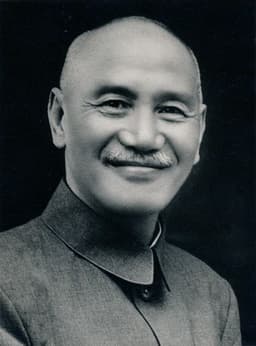
Zhang Xueliang
General · Modern
52.0Total
Basic Information
Born
1925
1901
Died
—
2001
Era
Modern
Modern
Nationality
Nicaragua
China
Occupation
General
General
Civilization
Western
Eastern
Score Comparison
Military (10%)
25.9
46.7
Political (20%)
32.2
43.7
Influence (20%)
50.2
58.0
Legacy (20%)
40.0
54.0
Leadership (15%)
64.5
50.7
Strategy (15%)
39.6
51.7
TOTAL
43.6
52.0
Anastasio Somoza Debayle — Complete Timeline
1967 AD
Assumption of the Presidency of NicaraguaPolitical Action◆ Major
Somoza Debayle became President of Nicaragua in 1967, succeeding his brother Luis Somoza Debayle. He inherited a regime dominated by the Somoza family, which had ruled Nicaragua since 1936 through the National Guard.
NicaraguaSomoza DynastyPresidency
Impact: national
1972 AD
Imposition of Martial Law and Crackdown on OppositionPolitical Action◆ Major
Following a devastating earthquake in Managua in 1972, Somoza declared martial law and used the National Guard to suppress political opposition. The regime's corruption and mishandling of relief aid fueled growing resentment.
NicaraguaMartial LawRepression
Impact: nationaldestructive
1979 AD
Overthrow by the Sandinista RevolutionWar
Somoza was overthrown by the Sandinista National Liberation Front (FSLN) in July 1979 after a prolonged civil war. He fled to Paraguay, ending 43 years of Somoza family rule in Nicaragua.
NicaraguaSandinista RevolutionOverthrow
Impact: regionaltragic
1980 AD
Assassination in ParaguayOther◆ Major
Somoza was assassinated in Asunci
AssassinationSandinistaExile
Impact: regionaltragic
Zhang Xueliang — Complete Timeline
1928 AD
Inheritance of the Fengtian ArmyPolitical Action◆ Major
Zhang Xueliang inherited command of the Fengtian Army after his father Zhang Zuolin was assassinated by the Japanese. He became the Young Marshal and controlled Manchuria, one of China's most strategic regions.
Fengtian CliqueInheritanceMilitary Command
Impact: national
Northeast Flag ReplacementPolitical Action
Zhang Xueliang declared allegiance to the Nationalist government by replacing the Fengtian flag with the Kuomintang flag in Manchuria. This act nominally unified China under Chiang Kai-shek's rule and ended the warlord era in the northeast.
Chinese UnificationNationalist GovernmentPolitics
Impact: nationalconstructive
1931 AD
Loss of Manchuria to JapanWar
Zhang Xueliang's forces withdrew from Manchuria following the Mukden Incident, allowing Japan to occupy the region. His decision not to resist led to the establishment of Manchukuo and widespread criticism of his leadership.
Japanese InvasionManchuriaMilitary Decision
Impact: globaltragic
1936 AD
Xi'an IncidentPolitical Action
Zhang Xueliang kidnapped Chiang Kai-shek in Xi'an to force him to form a united front against Japan. The incident ended with Chiang's release and the establishment of the Second United Front between the KMT and CCP.
Xi'an IncidentUnited FrontKidnapping
Impact: globalconstructive
1937 AD
House Arrest by Chiang Kai-shekPolitical Action◆ Major
After the Xi'an Incident, Zhang Xueliang was placed under house arrest by Chiang Kai-shek. He remained in captivity for over 50 years, first in mainland China and later in Taiwan, until his release in 1990.
House ArrestPolitical PrisonerChiang Kai-shek
Impact: nationaltragic
Expert Analysis
Origins
Anastasio Somoza Debayle was born on December 5, 1925, in León, Nicaragua, into the ruling Somoza family. His father, Anastasio Somoza García, founded the dynasty in 1936 after orchestrating the assassination of rebel leader Augusto César Sandino. Somoza Debayle was educated at the United States Military Academy at West Point, graduating in 1946. He returned to Nicaragua and was groomed for power, heading the National Guard from 1956 onward.
Zhang Xueliang was born on June 3, 1901, in Haicheng, Fengtian Province (now Liaoning), China. His father, Zhang Zuolin, was a powerful warlord who controlled Manchuria as the "Old Marshal." Zhang Xueliang received a traditional Chinese education but also studied English and Western subjects. He was known as the "Young Marshal" and became involved in military affairs early, commanding troops in his twenties.
Rise to Power
Somoza Debayle's rise was dynastic. After his father's assassination in 1956, his brother Luis Somoza Debayle became president, while Anastasio took command of the National Guard, the regime's main pillar. In 1967, he formally assumed the presidency, but real power had always been in the family. He was effectively the third Somoza ruler, following his father and brother. His rule was marked by corruption, cronyism, and repression.
Zhang Xueliang's rise was also familial but more dramatic. After his father Zhang Zuolin was assassinated by the Japanese in 1928, Zhang Xueliang inherited the Fengtian Army and control of Manchuria at age 27. He quickly shifted allegiance from the Japanese to the Nationalist government of Chiang Kai-shek, a move known as the "Northeast Flag Replacement" in 1928. This nominally unified China under the Kuomintang but also put him at odds with Japanese expansion.
Leadership & Governance
Somoza Debayle ruled Nicaragua as a personal fiefdom. He and his family owned vast estates, controlled the economy, and used the National Guard to suppress dissent. After a devastating earthquake in Managua in 1972, he imposed martial law and misappropriated international aid, enriching himself further. His governance was characterized by nepotism and brutality; his political score of 32.2 reflects his lack of legitimacy and popular support.
Zhang Xueliang was a warlord who governed Manchuria with a mix of modernizing reforms and traditional warlord politics. He promoted education, built railways, and sought to develop the region. However, his military score of 46.7 and strategy score of 51.7 indicate he was more effective militarily than politically. His decision not to resist the Japanese invasion in 1931 (the Mukden Incident) showed poor strategic judgment, leading to the loss of Manchuria.
Triumph & Tragedy
Somoza's greatest success was maintaining the Somoza dynasty for 43 years, but that was a family achievement, not his alone. His greatest failure was his overthrow by the Sandinista Revolution in 1979. He fled to Paraguay, where he was assassinated in 1980 by a Sandinista commando team. His legacy is one of corruption and repression.
Zhang Xueliang's greatest triumph was the Xi'an Incident in 1936, where he kidnapped Chiang Kai-shek to force a united front against Japan. This act changed Chinese history by halting the civil war and aligning Nationalists and Communists against Japan. However, his tragedy was his subsequent 50-year house arrest by Chiang, which ended his public life. He also bore the shame of losing Manchuria without a fight.
Character & Destiny
Somoza was ruthless, greedy, and politically inept. He believed his family's power was invincible and ignored growing opposition. His character led to his downfall; he scored only 25.9 in military and 39.6 in strategy, indicating a leader who relied on inherited power rather than skill.
Zhang Xueliang was impulsive, patriotic, but sometimes naive. His decision to kidnap Chiang was bold but poorly planned, leading to his captivity. He was also criticized for his retreat from Manchuria. His total score of 52.0 reflects a conflicted legacy: a patriot who made costly mistakes.
Legacy
Somoza's legacy is overwhelmingly negative. He is remembered as a brutal dictator whose family plundered Nicaragua. The Sandinista Revolution that overthrew him shaped Central American politics for decades. His influence score of 50.2 is moderate, but his legacy score of 40.0 is low due to his infamy.
Zhang Xueliang's legacy is more complex. In China, he is often seen as a patriotic figure who forced Chiang to resist Japan, but also as the man who lost Manchuria. His house arrest made him a symbol of sacrifice. His influence score of 58.0 and legacy score of 54.0 reflect his enduring significance in Chinese history.
Conclusion
Zhang Xueliang had a greater impact on history than Anastasio Somoza Debayle. While Somoza's rule was destructive, it was largely confined to Nicaragua and ultimately unsuccessful. Zhang's Xi'an Incident directly influenced the course of World War II in Asia by creating the Second United Front. Despite his mistakes, Zhang's actions had wider consequences. His total score of 52.0 versus Somoza's 43.6 supports this. Zhang Xueliang's legacy, though mixed, is more significant globally.
Rankings
🥇
Zhang XueliangLeader
Mil: 46.7Pol: 43.7Inf: 58.0
52.0
🥈
Anastasio Somoza Debayle
Mil: 25.9Pol: 32.2Inf: 50.2
43.6
+8.4 behind
How This Comparison Works
Algorithm
Each figure is scored on 6 dimensions (0—100 scale) based on structured historical data: Military (10%), Political (20%), Influence (20%), Legacy (20%), Leadership (15%), Strategy (15%). The weighted total produces the final ranking.
Data Sources
Scores are computed from structured sub-indicators in the database. Scale factors adjust for era (Ancient ×0.85, Modern ×1.0) and civilization size (Eastern ×1.05, Other ×0.80) to account for differences in population and military scale.
Maximum 3 Figures
Comparisons are limited to 2—3 figures to ensure readability and statistical meaningfulness.
Error Margins
±5 points per dimension — Sub-scores are derived from historical records with inherent uncertainty. Two figures within 5 points on a dimension should be considered roughly equivalent in that area.
Total Score Accuracy
±3 points overall — The weighted combination of 6 dimensions produces a total score with approximately ±3 points of uncertainty. Differences of less than 3 points are not statistically significant— the figures are effectively tied.
Known Limitations
- Historical records are incomplete and uneven across civilizations
- Figures from oral-tradition societies may be underrepresented
- Occupation labels can misclassify multi-role figures
- Scores measure capability and impact, not moral character
- Quantitative scoring is a comparison tool, not absolute truth
Capability Radar
Military (10%) — Battles & Warfare
Battles
15
35
Win Rate
10
30
Expansion
5
20
Political (20%) — Governance & Reform
Reform
10
20
Diplomacy
20
55
Economy
20
15
Influence (20%) — Cultural & Global Reach
Cultural
10
30
Global
20
40
Legacy (20%) — Historical Impact
Historical
30
60
Longevity
10
45
Leadership (15%) — Power & Stability
Tenure
60
40
Stability
10
10
Strategy (15%) — Tactics & Innovation
Strategy
10
45
Tactics
10
40
Reform
5
25
Similar Comparisons
Comments & Discussion
No comments yet. Be the first to share your thoughts!