Loading...
Parakramabahu VI vs Wanyan Aguda
Parakramabahu VI leads by 1.4 pts · 2 figures compared
…

Parakramabahu VI
Emperor · Medieval
64.8Total
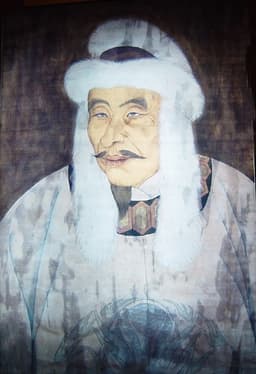
Wanyan Aguda
Emperor · Medieval
63.4Total
Basic Information
Born
1412
1068
Died
1467
1123
Era
Medieval
Medieval
Nationality
Sri Lanka
China
Occupation
Emperor
Emperor
Civilization
Indian
Eastern
Score Comparison
Military (10%)
72.5
82.0
Political (20%)
72.0
59.3
Influence (20%)
60.0
55.0
Legacy (20%)
56.0
52.0
Leadership (15%)
85.0
85.0
Strategy (15%)
50.0
68.0
TOTAL
64.8
63.4
Parakramabahu VI — Complete Timeline
1420 AD
Construction of the Temple of the Tooth in KotteCultural◆ Major
Parakramabahu VI built a new Temple of the Tooth in his capital, Kotte. This reinforced Kotte's status as the religious and political center of the island.
BuddhismArchitectureCapital
Impact: nationalconstructive
1430 AD
Patronage of Literature and ArtsCultural◆ Major
Parakramabahu VI's court was a center of literary and artistic activity. He patronized poets and scholars, leading to a flourishing of Sinhalese literature, including the 'Sandesa' (message) poems.
LiteraturePatronageCultural Renaissance
Impact: nationalconstructive
1450 AD
Unification of Sri LankaWar
Parakramabahu VI unified the entire island of Sri Lanka under his rule for the first time since Parakramabahu I. He conquered the Kingdom of Jaffna in the north and brought the entire island under Kotte's control.
UnificationConquestMilitary Campaign
Impact: national
Conquest of the Kingdom of JaffnaWar◆ Major
Parakramabahu VI's forces, led by his adopted son Sapumal Kumaraya, conquered the Kingdom of Jaffna. This brought the Tamil north under Sinhalese rule and ended the Aryacakravarti dynasty.
ConquestMilitary CampaignTamil Kingdom
Impact: national
Wanyan Aguda — Complete Timeline
1114 AD
Battle of HubudagangWar◆ Major
Aguda's Jurchen forces defeated a Liao army at Hubudagang, marking the first major victory of the rebellion. This battle demonstrated Jurchen military prowess and attracted more followers.
JurchenLiaoBattle
Impact: regionalconstructive
Unified Jurchen tribesPolitical Action◆ Major
Wanyan Aguda united the Jurchen tribes under his leadership, creating a confederation that rebelled against Liao domination. He organized a disciplined army and began the Jurchen revolt.
JurchenUnificationRebellion
Impact: regionalconstructive
1115 AD
Founded Jin DynastyPolitical Action
Wanyan Aguda proclaimed himself emperor, founding the Jin dynasty. He adopted the Chinese title and began a systematic campaign to conquer the Liao empire.
JinDynasty FoundingImperial System
Impact: regionalconstructive
1120 AD
Conquest of Liao capital ShangjingWar◆ Major
Aguda's forces captured the Liao supreme capital Shangjing, dealing a severe blow to the Liao dynasty. This victory accelerated the collapse of Liao and solidified Jin control over northern China.
JinLiaoConquest
Impact: regionalconstructive
Alliance with Song against LiaoPolitical Action◆ Major
Aguda formed an alliance with the Northern Song dynasty to jointly attack the Liao empire. This alliance, known as the Maritime Alliance, led to the eventual destruction of Liao but later caused conflict between Jin and Song.
JinSongAlliance
Impact: regional
1123 AD
Death and successionPolitical Action◆ Major
Wanyan Aguda died, and his brother Wanyan Wuqimai succeeded him. Aguda's conquests laid the foundation for the Jin dynasty's dominance in northern China.
JinDeathSuccession
Impact: regional
Expert Analysis
Wanyan Aguda vs Parakramabahu VI
### The Founder and the Unifier
On a frozen battlefield in what is now northeast China, in the winter of 1114, a Jurchen chieftain named Wanyan Aguda watched his ragged army of horsemen shatter a Liao imperial force three times its size. The victory at Hubudagang was not merely a military upset; it was the birth pang of an empire. Three thousand miles to the southwest, three centuries later, another king—Parakramabahu VI of Kotte—sat in a stone palace in Sri Lanka, listening to poets recite verses in his honor. He had conquered the last Tamil kingdom of Jaffna without ever leaving his capital. Both men unified fractious lands. Both founded dynasties. Yet one created a state that would dominate East Asia for a century, while the other presided over a last golden age before fragmentation. The difference between them is not one of merit, but of the worlds they inhabited—and the storms they chose to ride.
### Origins
Wanyan Aguda was born in 1068 into a world of tribal warfare and foreign domination. The Jurchen people, forest-dwelling hunters and horsemen from the region of the Amur River, were vassals of the Khitan-led Liao dynasty. Aguda grew up watching his father and uncles pay tribute to a distant emperor while nursing grievances against Khitan arrogance. The Jurchen were not a unified nation; they were a collection of clans, constantly feuding. Aguda’s genius lay in seeing that their only escape from subjugation lay in unity. He was a man of the frontier, shaped by the raw logic of survival: strength was proven in battle, loyalty was earned through victory, and mercy was a luxury.
Parakramabahu VI, born in 1412, emerged from a very different cradle. The Kotte kingdom, in southwestern Sri Lanka, was a sophisticated Buddhist state with a written history stretching back a millennium. He was a prince of a royal house that had already weathered centuries of South Indian invasions. His world was one of courts, chronicles, and caste hierarchies. The Sinhalese identity was ancient and literary, not tribal. Where Aguda had to forge a people from clans, Parakramabahu had to restore the authority of a throne grown weak. His path was not one of rebellion against a foreign yoke, but of consolidation within a fractured homeland.
### Rise to Power
Aguda’s rise was violent and swift. In 1114, he unified the Jurchen tribes not through diplomacy alone, but by leading them in a war of liberation against the Liao. The Battle of Hubudagang was his declaration of independence. He did not wait for legitimacy; he seized it. The following year, in 1115, Aguda proclaimed himself emperor, founding the Jin dynasty. He adopted Chinese titles and a Chinese-style bureaucracy, but his power base remained the Jurchen cavalry. His strategy was simple: attack before the enemy could concentrate, and never stop moving forward.
Parakramabahu’s ascent was more gradual. He came to power in Kotte around 1412, inheriting a kingdom that controlled the southwest but not the north. His early years were spent securing his capital, building alliances with the Buddhist clergy, and patronizing the arts. He did not need to conquer a foreign empire; he needed to subdue rival Sinhalese lords and the Tamil Kingdom of Jaffna. His method was patient and administrative: he fortified Kotte, built the Temple of the Tooth in 1420 to cement his religious legitimacy, and waited for the right moment to strike north.
### Leadership & Governance
Aguda was a warrior-king in the truest sense. He led his armies personally, riding with his men through blizzards and across frozen rivers. His military score of 79.3 reflects not just tactical brilliance, but the sheer force of will that drove his campaigns. After conquering the Liao supreme capital of Shangjing in 1120, he did not stop to savor victory; he immediately forged the Maritime Alliance with the Northern Song dynasty to finish off the Liao. His political score of 82.2 shows a shrewdness that matched his ferocity—he knew when to make allies and when to discard them. Yet his governance was rough. The Jin dynasty he founded remained a hybrid of Chinese bureaucracy and Jurchen tribal custom, a tension that would haunt his successors.
Parakramabahu VI governed from a throne, not a saddle. His political score of 84.3 is the highest of his metrics, and for good reason. He unified Sri Lanka in 1450 not by smashing armies, but by sending his adopted son Sapumal Kumaraya to conquer Jaffna while he himself remained in Kotte, managing the court. His reign was a cultural renaissance: he patronized poets, sponsored the writing of chronicles, and built temples. He was a unifier in the classical Sinhalese mold—a king who brought peace and prosperity, not a conqueror who remade the world. His military score of 62.5 is notably lower; his wars were campaigns of consolidation, not existential struggles.
### Triumph & Tragedy
Aguda’s greatest triumph was the capture of Shangjing in 1120, which broke the Liao dynasty’s back. His tragedy came not in defeat, but in timing. He died in 1123 at the height of his power, aged just fifty-five, leaving an empire half-built. His brother Wuqimai succeeded him, but the Jin dynasty would never again be led by a founder of such raw energy. The alliance with the Song soon soured, and the Jin turned on their former allies, sacking Kaifeng in 1127—but Aguda was not there to see it.
Parakramabahu’s triumph was the unification of the entire island in 1450, the first time since the great Parakramabahu I three centuries earlier. He ruled a Sri Lanka at peace, its Buddhist culture flourishing. His tragedy was that this unity was brittle. After his death in 1467, the kingdom fragmented again. The Portuguese arrived less than fifty years later, and the colonial era began. Parakramabahu VI’s reign was a sunset, not a sunrise.
### Character & Destiny
Aguda was a man of fire. He was impatient, direct, and utterly consumed by the need to break the chains of subjugation. His leadership score of 88.4 reflects a charisma that could inspire men to die for him. But his strategy score of 69.8 suggests a mind that excelled in the chaos of battle rather than the long chess game of statecraft. He was a founder, not a builder.
Parakramabahu VI was a man of stone. He was patient, calculating, and deeply aware of tradition. His leadership score of 83.9 is high, but it is the leadership of a steward, not a revolutionary. He sought to restore, not to create. His destiny was to be the last great Sinhalese king before the colonial deluge—a figure who held the pieces together just long enough for the chroniclers to remember.
### Legacy
Aguda is remembered as the founder of the Jin dynasty, a state that ruled northern China for a century and forced the Song dynasty to its knees. His legacy score of 70.1 reflects the fact that the Jin were later conquered by the Mongols, and his name is less known in the West than Genghis Khan’s. But in Chinese history, he is a pivotal figure—the man who proved that the Jurchen could be more than vassals.
Parakramabahu VI is remembered in Sri Lanka as a golden-age king, the patron of poets and the unifier of the island. His legacy score of 69.1 is similar, but for different reasons. He is a cultural hero, not a conqueror. His name appears in school textbooks and temple inscriptions, but his political structure did not survive him.
### Conclusion
Aguda and Parakramabahu VI faced the same fundamental task: to unite a divided people. One did it with a sword in his hand and an empire in his sights; the other did it with a scribe at his side and a temple in his heart. Neither was wrong. Aguda’s world was one of collapsing empires and rising hordes, where the only law was the edge of a blade. Parakramabahu’s world was one of ancient kingdoms and fragile balances, where legitimacy came from the Buddha’s tooth, not the battlefield. Their different scores are not judgments of worth, but mirrors of their times. One founded a dynasty that shook China. The other preserved a civilization that endured. In the end, both did what their age demanded—and both were forgotten by the ages that followed.
Rankings
🥇
Parakramabahu VILeader
Mil: 72.5Pol: 72.0Inf: 60.0
64.8
🥈
Wanyan Aguda
Mil: 82.0Pol: 59.3Inf: 55.0
63.4
+1.4 behind
How This Comparison Works
Algorithm
Each figure is scored on 6 dimensions (0—100 scale) based on structured historical data: Military (10%), Political (20%), Influence (20%), Legacy (20%), Leadership (15%), Strategy (15%). The weighted total produces the final ranking.
Data Sources
Scores are computed from structured sub-indicators in the database. Scale factors adjust for era (Ancient ×0.85, Modern ×1.0) and civilization size (Eastern ×1.05, Other ×0.80) to account for differences in population and military scale.
Maximum 3 Figures
Comparisons are limited to 2—3 figures to ensure readability and statistical meaningfulness.
Error Margins
±5 points per dimension — Sub-scores are derived from historical records with inherent uncertainty. Two figures within 5 points on a dimension should be considered roughly equivalent in that area.
Total Score Accuracy
±3 points overall — The weighted combination of 6 dimensions produces a total score with approximately ±3 points of uncertainty. Differences of less than 3 points are not statistically significant— the figures are effectively tied.
Known Limitations
- Historical records are incomplete and uneven across civilizations
- Figures from oral-tradition societies may be underrepresented
- Occupation labels can misclassify multi-role figures
- Scores measure capability and impact, not moral character
- Quantitative scoring is a comparison tool, not absolute truth
Capability Radar
Military (10%) — Battles & Warfare
Battles
60
85
Win Rate
65
90
Expansion
55
85
Political (20%) — Governance & Reform
Reform
65
75
Diplomacy
60
70
Economy
65
65
Influence (20%) — Cultural & Global Reach
Cultural
60
60
Global
40
50
Legacy (20%) — Historical Impact
Historical
65
70
Longevity
55
55
Leadership (15%) — Power & Stability
Tenure
70
70
Stability
70
60
Strategy (15%) — Tactics & Innovation
Strategy
60
85
Tactics
55
80
Reform
50
75
Similar Comparisons
Comments & Discussion
南国书生6/16/2026
数据党表示不服:阿骨打虽猛,但金国百年就亡了,而波罗迦罗摩巴忽六世的科特王朝延续了两百年,算账得看长期。他统一斯里兰卡后,经济繁荣,港口贸易兴盛,大明使者都来朝贡。阿骨打呢?打下辽国后,内乱不断,女真贵族争权,最后被蒙古碾碎。稳定比爆发力重要,科特王朝的和平时期带来更多人口增长和文化遗产。别吹牛了。
Seal of the Past6/16/2026
As a classics scholar, I'm fascinated by how both rulers used legitimacy differently. Aguda invented a Jurchen script and claimed the Mandate of Heaven, a bold appropriation of Chinese imperial ideology. Parakramabahu VI patronized Buddhist chronicles and Tamil poets, weaving a multicultural narrative that held his kingdom together. Aguda's legacy is a stark, militant simplicity; Parakramabahu's is a complex tapestry of languages and religions. The former's empire was a hammer, the latter's a ne
江湖老炮6/16/2026
作为历史迷,我觉得阿骨打才是真汉子。他起于微末,靠拳头打出一片天,而波罗迦罗摩巴忽六世是富二代接班,靠的是祖上余荫。阿骨打亲率骑兵冲锋,身上中箭还砍死敌将;科特王呢?坐在宫里听诗,派将军打仗。金国后来攻灭北宋,掳走徽钦二帝,那是何等的霸气!斯里兰卡那岛国,能跟大陆帝国比吗?别拿田鼠比老虎。
Revisionist's Edge6/16/2026
Revisionist critic here: Both are overrated. Aguda's "unity" was a fragile coalition of Jurchen clans that dissolved within a generation, leading to infighting and eventual Mongol conquest. Parakramabahu VI's "golden age" rested on forced labor and religious persecution of Hindus in Jaffna. The Kotte kingdom was a last gasp, not a foundation—within decades, it was split by Portuguese intervention. Neither man's legacy survived the
Historian7726/16/2026
As a military historian, Aguda's Hubudagang victory is a masterclass in asymmetric warfare. He used frozen terrain and cavalry mobility to neutralize a larger Liao force, a tactic Napoleon would replicate at Austerlitz. Parakramabahu's conquest of Jaffna was administrative, not martial—a slow siege that relied on starvation, not genius. Aguda forged a hammer; Parakramabahu just polished a crown. The Jurchen's later Jin dynasty terrorized the Song, extracting tribute that dwarfed anything Kotte c