Loading...
This comparison has not been analyzed yet.
One-time AI generation (~1 minute). Scores and timeline are already available below.
Pak Pong-ju vs Ruslan Stefanchuk
Ruslan Stefanchuk leads by 9.2 pts · 2 figures compared
…

Pak Pong-ju
Politician · Modern
43.2Total
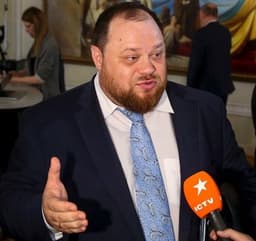
Ruslan Stefanchuk
Politician · Modern
52.4Total
Basic Information
Born
1939
1975
Died
—
—
Era
Modern
Modern
Nationality
North Korea
Ukraine
Occupation
Politician
Politician
Civilization
Eastern
Western
Score Comparison
Military (10%)
11.6
50.0
Political (20%)
46.6
61.3
Influence (20%)
48.6
54.9
Legacy (20%)
39.2
45.0
Leadership (15%)
64.0
53.2
Strategy (15%)
35.2
52.5
TOTAL
43.2
52.4
Pak Pong-ju — Complete Timeline
2003 AD
Appointed Premier of North KoreaPolitical Action◆ Major
Pak Pong-ju was appointed Premier of North Korea, succeeding Hong Song-nam. He was known for advocating limited economic reforms, including introducing elements of a market economy within the socialist system.
North KoreaPremierEconomic Reform
Impact: national
2007 AD
Dismissed as PremierPolitical Action◆ Major
Pak Pong-ju was dismissed from his position as Premier, reportedly due to opposition from hardliners to his economic reforms. He was replaced by Kim Yong-il, signaling a return to more centralized economic policies.
North KoreaDismissalPolitical Purge
Impact: nationaldestructive
2013 AD
Reappointed as PremierPolitical Action◆ Major
Pak Pong-ju was reappointed as Premier of North Korea, indicating a renewed focus on economic management. He oversaw the implementation of the 'socialist enterprise responsibility system,' which granted more autonomy to factories.
North KoreaPremierEconomic Reform
Impact: nationalconstructive
2021 AD
Removed from PolitburoPolitical Action◆ Major
Pak Pong-ju was removed from the Politburo of the Workers' Party of Korea during the 8th Party Congress. This was part of a broader reshuffle by Kim Jong-un, sidelining figures associated with economic reform.
North KoreaPolitburoPurge
Impact: nationaldestructive
Ruslan Stefanchuk — Complete Timeline
2021 AD
Elected Speaker of the Verkhovna RadaPolitical Action◆ Major
Stefanchuk was elected Chairman of the Verkhovna Rada (Speaker of the Parliament) of Ukraine. He became the second-highest-ranking official in the state, responsible for legislative processes and representing parliament.
ParliamentSpeakerUkraine
Impact: national
2022 AD
Signed EU Candidacy ApplicationPolitical Action◆ Major
Stefanchuk, as Speaker, signed Ukraine's official application for European Union membership. This was a historic step in Ukraine's European integration, especially in the context of the Russian invasion.
EU IntegrationMembership ApplicationHistoric
Impact: globalprogressive
Led Parliament During WartimePolitical Action◆ Major
Stefanchuk oversaw the functioning of the Ukrainian parliament during the Russian full-scale invasion. He coordinated legislative support for martial law, defense, and international diplomatic efforts.
Wartime LeadershipParliamentRussian Invasion
Impact: national
This comparison has not been analyzed yet.
One-time AI generation (~1 minute). Scores and timeline are already available below.
Rankings
🥇
Ruslan StefanchukLeader
Mil: 50.0Pol: 61.3Inf: 54.9
52.4
🥈
Pak Pong-ju
Mil: 11.6Pol: 46.6Inf: 48.6
43.2
+9.2 behind
How This Comparison Works
Algorithm
Each figure is scored on 6 dimensions (0—100 scale) based on structured historical data: Military (10%), Political (20%), Influence (20%), Legacy (20%), Leadership (15%), Strategy (15%). The weighted total produces the final ranking.
Data Sources
Scores are computed from structured sub-indicators in the database. Scale factors adjust for era (Ancient ×0.85, Modern ×1.0) and civilization size (Eastern ×1.05, Other ×0.80) to account for differences in population and military scale.
Maximum 3 Figures
Comparisons are limited to 2—3 figures to ensure readability and statistical meaningfulness.
Error Margins
±5 points per dimension — Sub-scores are derived from historical records with inherent uncertainty. Two figures within 5 points on a dimension should be considered roughly equivalent in that area.
Total Score Accuracy
±3 points overall — The weighted combination of 6 dimensions produces a total score with approximately ±3 points of uncertainty. Differences of less than 3 points are not statistically significant— the figures are effectively tied.
Known Limitations
- Historical records are incomplete and uneven across civilizations
- Figures from oral-tradition societies may be underrepresented
- Occupation labels can misclassify multi-role figures
- Scores measure capability and impact, not moral character
- Quantitative scoring is a comparison tool, not absolute truth
Capability Radar
Military (10%) — Battles & Warfare
Battles
17
27
Win Rate
15
30
Expansion
22
36
Political (20%) — Governance & Reform
Reform
40
40
Diplomacy
35
60
Economy
40
30
Influence (20%) — Cultural & Global Reach
Cultural
10
20
Global
10
40
Legacy (20%) — Historical Impact
Historical
15
35
Longevity
10
25
Leadership (15%) — Power & Stability
Tenure
45
55
Stability
30
45
Strategy (15%) — Tactics & Innovation
Strategy
23
37
Tactics
24
43
Reform
31
43
Similar Comparisons
Comments & Discussion
No comments yet. Be the first to share your thoughts!