Loading...
Mwai Kibaki vs Ruslan Stefanchuk
Mwai Kibaki leads by 0.7 pts · 2 figures compared
…

Mwai Kibaki
Politician · Modern
53.1Total
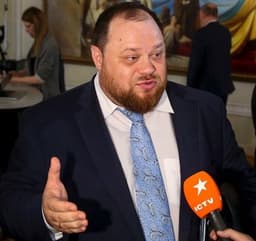
Ruslan Stefanchuk
Politician · Modern
52.4Total
Basic Information
Born
1931
1975
Died
—
—
Era
Modern
Modern
Nationality
Kenya
Ukraine
Occupation
Politician
Politician
Civilization
Other
Western
Score Comparison
Military (10%)
42.8
50.0
Political (20%)
60.0
61.3
Influence (20%)
54.1
54.9
Legacy (20%)
45.0
45.0
Leadership (15%)
72.0
53.2
Strategy (15%)
42.7
52.5
TOTAL
53.1
52.4
Mwai Kibaki — Complete Timeline
2002 AD
2002 Kenyan general electionPolitical Action◆ Major
Mwai Kibaki, as candidate of the National Rainbow Coalition (NARC), won the presidential election, defeating Uhuru Kenyatta of the Kenya African National Union (KANU). This ended KANU's 39-year rule and marked Kenya's first peaceful transfer of power since independence.
ElectionDemocratic TransitionNARC
Impact: nationalprogressive
2003 AD
Free primary education policyReform◆ Major
Kibaki's government introduced free primary education, abolishing tuition fees for public primary schools. This policy led to a surge in enrollment from 5.9 million to 7.2 million children within a year, significantly improving access to education across Kenya.
Education ReformSocial PolicyAccess
Impact: nationalprogressive
Economic recovery strategyReform◆ Major
Kibaki implemented the Economic Recovery Strategy for Wealth and Employment Creation (ERS), focusing on macroeconomic stability, infrastructure investment, and privatization. Kenya's GDP growth averaged over 5% annually from 2004 to 2007, reversing a decade of stagnation.
Economic ReformGrowthInfrastructure
Impact: nationalconstructive
2007 AD
2007-2008 Kenyan post-election violencePolitical Action◆ Major
After Kibaki was declared winner of the disputed 2007 presidential election, opposition supporters protested, leading to ethnic violence that killed over 1,100 people and displaced 600,000. The crisis ended with a power-sharing agreement that created a coalition government with Raila Odinga as Prime Minister.
Election DisputeEthnic ViolencePower-Sharing
Impact: nationaltragic
2010 AD
Promulgation of the 2010 ConstitutionReform◆ Major
Kibaki oversaw the passage of a new constitution in a national referendum, which devolved power to 47 counties, introduced a bill of rights, and limited presidential powers. The constitution was a key outcome of the 2008 peace agreement and reshaped Kenya's governance structure.
Constitutional ReformDevolutionGovernance
Impact: nationalprogressive
Ruslan Stefanchuk — Complete Timeline
2021 AD
Elected Speaker of the Verkhovna RadaPolitical Action◆ Major
Stefanchuk was elected Chairman of the Verkhovna Rada (Speaker of the Parliament) of Ukraine. He became the second-highest-ranking official in the state, responsible for legislative processes and representing parliament.
ParliamentSpeakerUkraine
Impact: national
2022 AD
Signed EU Candidacy ApplicationPolitical Action◆ Major
Stefanchuk, as Speaker, signed Ukraine's official application for European Union membership. This was a historic step in Ukraine's European integration, especially in the context of the Russian invasion.
EU IntegrationMembership ApplicationHistoric
Impact: globalprogressive
Led Parliament During WartimePolitical Action◆ Major
Stefanchuk oversaw the functioning of the Ukrainian parliament during the Russian full-scale invasion. He coordinated legislative support for martial law, defense, and international diplomatic efforts.
Wartime LeadershipParliamentRussian Invasion
Impact: national
Expert Analysis
Origins
Mwai Kibaki was born on November 15, 1931, in Gatuyaini, Central Kenya, to Kikuyu peasant farmers. He excelled academically, attending Makerere University in Uganda and later the London School of Economics, where he earned a master's degree in public finance. His early career as a lecturer and civil servant shaped his technocratic approach.
Ruslan Stefanchuk was born on October 29, 1975, in Khmelnytskyi, western Ukraine, into a family of teachers. He studied law at the Khmelnytskyi University of Economics and later at the National Academy of Public Administration. His early work as a lawyer and legal scholar gave him expertise in constitutional law, which became central to his political career.
Rise to Power
Kibaki entered politics in 1963 as a Member of Parliament and quickly rose to become Minister of Finance (1969–1981) under Jomo Kenyatta and Daniel arap Moi. He served as Vice President from 1978 to 1988 but resigned after falling out with Moi. After years in opposition, he united a fractured opposition into the National Rainbow Coalition (NARC) and won the 2002 presidential election with 62% of the vote, ending 39 years of KANU rule.
Stefanchuk entered politics in 2019 as a member of the Servant of the People party, elected to parliament. He served as First Deputy Speaker before being elected Speaker of the Verkhovna Rada on October 8, 2021, with 261 votes. His rise was tied to President Zelenskyy's party, and he became the second-highest official in Ukraine after the president.
Leadership & Governance
Kibaki's leadership was technocratic and reformist. He prioritized economic recovery, introducing the Economic Recovery Strategy for Wealth and Employment Creation (ERS) in 2003. This focused on macroeconomic stability, infrastructure investment (roads, energy), and privatization. Under his watch, GDP growth averaged 5.8% from 2003 to 2007, up from 0.6% in 2002. He also implemented free primary education in 2003, causing enrollment to jump from 5.9 million to 7.2 million children. However, his governance was criticized for being aloof and slow to respond to crises, particularly the 2007-2008 post-election violence.
Stefanchuk's leadership has been defined by wartime parliamentary management. He oversaw the Rada's functioning during Russia's full-scale invasion, coordinating legislative support for martial law, sanctions, and defense budgets. He signed Ukraine's EU membership application in February 2022, a historic step. His style is procedural and legalistic, ensuring continuity of government. However, his role is largely symbolic compared to President Zelenskyy, limiting his independent decision-making.
Triumph & Tragedy
Kibaki's greatest triumph was the 2010 Constitution, which devolved power to 47 counties, introduced a bill of rights, and limited presidential powers. It was passed by a 67% referendum vote and remains a cornerstone of Kenyan governance. His economic record is also a success: the ERS reduced inflation from 12% in 2002 to 4% in 2007 and boosted foreign investment. However, his greatest tragedy was the 2007-2008 post-election violence, which killed over 1,100 people and displaced 600,000. Kibaki was accused of rigging the election and failing to prevent the ethnic clashes, tarnishing his legacy.
Stefanchuk's triumph is maintaining parliamentary democracy during war. Under his speakership, the Rada passed over 200 laws in 2022 alone, including sanctions, budget adjustments, and human rights protections. He also helped secure EU candidate status for Ukraine in June 2022. His tragedy is the inherent limitation of his role: he has been overshadowed by Zelenskyy and has no direct control over military or foreign policy. The war has also disrupted normal legislative processes, with sessions moved to a fortified location.
Character & Destiny
Kibaki was known as a quiet, meticulous technocrat, often described as "aloof" but competent. His cautious nature helped him build coalitions but also led to indecisiveness during crises. Historian David Anderson notes that Kibaki's "lack of political communication" during the 2007 election crisis exacerbated violence. His destiny was to be a reformer who achieved much but ended his tenure amid national trauma.
Stefanchuk is a reserved, legalistic figure, more comfortable with constitutional procedures than political grandstanding. His destiny has been shaped by the war: he became a wartime speaker, a role that requires steady management rather than bold leadership. His legacy will likely be tied to Ukraine's resilience during the invasion, but his personal imprint is minimal.
Legacy
Kibaki's legacy is mixed but enduring. The 2010 Constitution transformed Kenya's governance, decentralizing power and strengthening civil liberties. His economic reforms laid the groundwork for Kenya's emergence as a regional hub. However, the 2007 violence exposed deep ethnic divisions and institutional weaknesses. He scored 45.0 in Legacy, reflecting this duality. His influence on African politics is modest, but within Kenya, he is remembered as a reformer who failed to manage political transitions.
Stefanchuk's legacy is still forming. He has been a steady hand during war, but his role is largely institutional. He scored 45.0 in Legacy as well, but his impact may grow if Ukraine joins the EU or if the Rada's wartime legislation shapes post-war reconstruction. For now, he is a secondary figure in Ukraine's history.
Conclusion
Mwai Kibaki had a greater impact than Ruslan Stefanchuk, despite their similar total scores (53.1 vs. 52.4). Kibaki's reforms—free primary education, the 2010 Constitution, and economic recovery—directly improved millions of lives and reshaped Kenyan institutions. Stefanchuk's role, while vital for democratic continuity, is constrained by wartime circumstances and his subordinate position. Kibaki's leadership score of 72.0 versus Stefanchuk's 53.2 underscores his greater agency. Thus, Kibaki's legacy, though flawed, is more substantial.
Rankings
🥇
Mwai KibakiLeader
Mil: 42.8Pol: 60.0Inf: 54.1
53.1
🥈
Ruslan Stefanchuk
Mil: 50.0Pol: 61.3Inf: 54.9
52.4
+0.7 behind
How This Comparison Works
Algorithm
Each figure is scored on 6 dimensions (0—100 scale) based on structured historical data: Military (10%), Political (20%), Influence (20%), Legacy (20%), Leadership (15%), Strategy (15%). The weighted total produces the final ranking.
Data Sources
Scores are computed from structured sub-indicators in the database. Scale factors adjust for era (Ancient ×0.85, Modern ×1.0) and civilization size (Eastern ×1.05, Other ×0.80) to account for differences in population and military scale.
Maximum 3 Figures
Comparisons are limited to 2—3 figures to ensure readability and statistical meaningfulness.
Error Margins
±5 points per dimension — Sub-scores are derived from historical records with inherent uncertainty. Two figures within 5 points on a dimension should be considered roughly equivalent in that area.
Total Score Accuracy
±3 points overall — The weighted combination of 6 dimensions produces a total score with approximately ±3 points of uncertainty. Differences of less than 3 points are not statistically significant— the figures are effectively tied.
Known Limitations
- Historical records are incomplete and uneven across civilizations
- Figures from oral-tradition societies may be underrepresented
- Occupation labels can misclassify multi-role figures
- Scores measure capability and impact, not moral character
- Quantitative scoring is a comparison tool, not absolute truth
Capability Radar
Military (10%) — Battles & Warfare
Battles
21
27
Win Rate
24
30
Expansion
28
36
Political (20%) — Governance & Reform
Reform
65
40
Diplomacy
55
60
Economy
75
30
Influence (20%) — Cultural & Global Reach
Cultural
30
20
Global
35
40
Legacy (20%) — Historical Impact
Historical
40
35
Longevity
30
25
Leadership (15%) — Power & Stability
Tenure
60
55
Stability
50
45
Strategy (15%) — Tactics & Innovation
Strategy
29
37
Tactics
34
43
Reform
38
43
Similar Comparisons
Comments & Discussion
No comments yet. Be the first to share your thoughts!