Loading...
Owen Arthur vs Qin Shi Huang
Qin Shi Huang leads by 28.8 pts · 2 figures compared
…

Owen Arthur
Politician · Modern
56.4Total
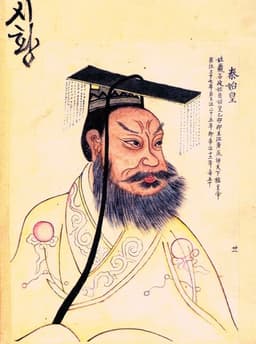
Qin Shi Huang
Emperor · Ancient
85.2Total
Basic Information
Born
1949
-259
Died
—
-210
Era
Modern
Ancient
Nationality
Barbados
China
Occupation
Politician
Emperor
Civilization
Other
Eastern
Score Comparison
Military (10%)
45.7
80.0
Political (20%)
60.0
90.0
Influence (20%)
57.2
85.0
Legacy (20%)
48.3
90.0
Leadership (15%)
80.0
78.0
Strategy (15%)
44.8
82.0
TOTAL
56.4
85.2
Owen Arthur — Complete Timeline
1994 AD
Became Prime Minister of BarbadosPolitical Action◆ Major
Owen Arthur led the Barbados Labour Party (BLP) to victory in the 1994 general election, becoming Prime Minister. He succeeded Lloyd Erskine Sandiford and began a 14-year tenure.
Prime MinisterBLPElection
Impact: nationalconstructive
1995 AD
Implemented economic reforms and growthReform◆ Major
Arthur's government implemented economic reforms focused on fiscal discipline, tourism promotion, and financial services. Barbados experienced sustained economic growth and improved living standards during his tenure.
Economic ReformGrowthTourism
Impact: nationalconstructive
1999 AD
Won 1999 general electionPolitical Action◆ Major
Arthur led the BLP to a landslide victory in the 1999 general election, winning 26 of 28 seats. This was one of the largest electoral victories in Barbadian history.
ElectionLandslideBLP
Impact: nationalconstructive
2006 AD
Led Barbados into CARICOM Single Market and EconomyPolitical Action◆ Major
Arthur played a key role in advancing the CARICOM Single Market and Economy (CSME), which aimed to integrate Caribbean economies. Barbados was among the early adopters of the CSME.
CARICOMRegional IntegrationCSME
Impact: regionalconstructive
2008 AD
Lost 2008 general electionPolitical Action◆ Major
Arthur's BLP lost the 2008 general election to the Democratic Labour Party (DLP) led by David Thompson. This ended his 14-year tenure as Prime Minister.
ElectionDefeatDLP
Impact: nationaltragic
Qin Shi Huang — Complete Timeline
246 BC
Construction of the Mausoleum and Terracotta ArmyOther◆ Major
Qin Shi Huang commissioned a vast mausoleum complex near Xi'an, guarded by thousands of life-sized terracotta soldiers, horses, and chariots. The project employed hundreds of thousands of workers and reflected his obsession with immortality and imperial power.
Impact: global
230 BC
Conquest of the Six Warring StatesWar
From 230 to 221 BCE, Ying Zheng led the Qin state in a series of campaigns that conquered the Han, Zhao, Wei, Chu, Yan, and Qi states. This unified China under a single ruler for the first time, ending the Warring States period.
Impact: global
221 BC
Standardization of Writing, Currency, and MeasurementsReform◆ Major
Qin Shi Huang ordered the standardization of Chinese script, currency, and weights and measures across the unified empire. This facilitated administration, trade, and cultural integration, laying a foundation for future dynasties.
Impact: globalconstructive
Proclamation of the Qin DynastyPolitical Action
After conquering the last independent state, Ying Zheng declared himself Shi Huangdi (First Emperor), founding the Qin Dynasty. He adopted a new title to signify his supreme authority and initiated centralized imperial rule.
Impact: global
214 BC
Initiation of the Great Wall ConstructionOther◆ Major
Qin Shi Huang ordered the connection and extension of existing northern fortifications to create a unified defensive wall against nomadic Xiongnu raids. This project involved massive conscripted labor and became the precursor to the later Great Wall.
Impact: regional
213 BC
Burning of Books and Burying of ScholarsPolitical Action◆ Major
On the advice of Li Si, Qin Shi Huang ordered the burning of historical records and philosophical texts not aligned with Legalist doctrine. He also had 460 Confucian scholars buried alive to suppress dissent and consolidate ideological control.
Impact: nationaldestructive
Expert Analysis
owen-arthur-vs-qin-shi-huang
# The Emperor and the Prime Minister: Two Visions of Power Across the Millennia
Imagine a man who declares himself the son of heaven, ordering thousands of laborers to build a tomb guarded by an army of clay soldiers, while simultaneously burning books and burying scholars alive. Now imagine another man, a Caribbean economist, who wins elections by convincing his people that fiscal discipline and tourism promotion are the paths to national prosperity. Qin Shi Huang, the First Emperor of China, and Owen Arthur, the longest-serving Prime Minister of Barbados, seem to inhabit different universes. Yet both men shared a fundamental ambition: to forge a unified nation from fragmented parts. Their differences, however, tell us more about the nature of power itself than any superficial similarity ever could.
Origins
Ying Zheng was born in 259 BC into a world of chaos. The Warring States period had torn China apart for centuries, with seven rival kingdoms locked in endless conflict. His father was a prince of Qin, a western state considered semi-barbaric by the more cultured eastern kingdoms. Young Ying Zheng grew up in a court rife with intrigue—his father died when he was thirteen, leaving him to navigate a world of scheming regents and ambitious generals. The Qin state, however, had already embraced Legalist philosophy, which taught that human nature was inherently selfish and that only strict laws and harsh punishments could maintain order.
Owen Arthur was born in 1949 on the Caribbean island of Barbados, a former British colony that had only gained full independence three years earlier. His father was a laborer, his mother a teacher. Unlike the emperor, Arthur grew up in a world shaped by democratic institutions, colonial legacies, and the emerging post-war consensus that small nations could thrive through education and international cooperation. He studied economics at the University of the West Indies, then worked as a government economist before entering politics. The contrast could not be starker: one man was forged in the crucible of ancient warfare, the other in the quiet corridors of modern bureaucracy.
Rise to Power
Qin Shi Huang’s path to power was one of relentless conquest. Between 230 and 221 BC, he led Qin armies in a series of campaigns that systematically crushed the six rival states—Han, Zhao, Wei, Chu, Yan, and Qi. Each victory was not merely a military triumph but a psychological hammer blow. When he finally declared himself *Shi Huangdi* (First Emperor) in 221 BC, he had accomplished what no Chinese ruler had ever done: total unification. His rise was built on iron discipline, advanced military strategy, and a willingness to use terror as a tool of statecraft.
Owen Arthur’s rise was gentler but no less determined. He entered the Barbados Labour Party (BLP) and served in various ministerial roles before leading the party to victory in the 1994 general election. His ascent was democratic, relying on persuasion rather than force. He won the people’s trust by promising economic stability and social progress—not through conquest but through competence. In 1999, his party won 26 of 28 parliamentary seats, one of the largest landslides in Caribbean electoral history. His power came from ballots, not blades.
Leadership & Governance
Here the two men diverge most dramatically. Qin Shi Huang governed through standardization and suppression. He ordered the unification of writing scripts, currency, and weights and measures across his empire—a monumental achievement that would shape Chinese civilization for two millennia. He initiated the construction of the Great Wall in 214 BC, connecting existing fortifications into a unified defensive barrier. But his methods were brutal. In 213 BC, on the advice of his chancellor Li Si, he ordered the burning of historical records and philosophical texts not aligned with Legalist doctrine, followed by the burying alive of scholars who protested. His governance was a machine of control, designed to eliminate dissent and enforce uniformity.
Owen Arthur governed through reform and integration. His economic policies focused on fiscal discipline, tourism promotion, and developing Barbados as a financial services hub. In 2006, he led his nation into the CARICOM Single Market and Economy, aiming to integrate Caribbean economies for mutual benefit. His leadership style was consultative, technocratic, and forward-looking. Where Qin Shi Huang built walls, Owen Arthur built bridges—both literal and metaphorical. The emperor sought to isolate China from external threats; the prime minister sought to embed Barbados in a global network of trade and diplomacy.
Triumph & Tragedy
Qin Shi Huang’s greatest triumph was the creation of a unified Chinese state that would endure, in various forms, for over two thousand years. His standardization of writing alone ensured that a single script could unite diverse peoples across vast distances. His greatest tragedy was his obsession with immortality. He sent expeditions to find the elixir of life, consumed mercury pills prescribed by alchemists, and died in 210 BC at age 49—likely poisoned by the very substances meant to save him. Within three years of his death, the Qin Dynasty collapsed in rebellion, its harshness having bred widespread hatred.
Owen Arthur’s triumph was transforming Barbados into one of the most stable and prosperous small island states in the world. His three consecutive terms from 1994 to 2008 brought sustained economic growth and improved living standards. His tragedy was the 2008 election loss, when his party was defeated by the Democratic Labour Party under David Thompson. After fourteen years in power, the voters simply wanted change. There were no rebellions, no executions—just a peaceful transfer of power, the ultimate testament to the democratic system he had helped sustain.
Character & Destiny
Qin Shi Huang was paranoid, ruthless, and visionary. He believed that unity required absolute control, that history must be rewritten to serve the state, and that his own god-like status was essential to maintaining order. His personality shaped a destiny of grandeur and misery: he built the foundations of Chinese civilization but at a terrible human cost. His mausoleum, guarded by the Terracotta Army—thousands of life-sized clay soldiers, each with a unique face—reveals a man who saw death itself as an extension of his imperial will.
Owen Arthur was pragmatic, patient, and democratic. He understood that in a small nation, leadership required consensus-building, not coercion. His personality shaped a destiny of modest but real achievement: he left Barbados wealthier, more stable, and more integrated into the world. His legacy is not an army of clay but a generation of Barbadians who saw their small island as capable of great things.
Legacy
Qin Shi Huang is remembered as both a unifier and a tyrant. His name is synonymous with Chinese imperial power, yet his methods are condemned. The Terracotta Army draws millions of visitors annually, a silent monument to his ambition. Chinese historians debate his legacy to this day—was he the father of the nation or its first despot? The answer, perhaps, is both.
Owen Arthur is remembered with respect but not reverence. He is honored as a capable leader who modernized Barbados, but his legacy is measured in GDP growth rates and election results, not in monuments or conquests. He died in 2020, leaving behind a nation that had become a model of Caribbean democracy.
Conclusion
What drives the difference between an emperor who buries scholars alive and a prime minister who wins elections by offering fiscal discipline? The answer lies not in their personal qualities alone but in the worlds they inhabited. Qin Shi Huang lived in an era when unity could only be forged through violence, when the alternative to empire was endless war. Owen Arthur lived in an era when unity could be built through institutions, when the alternative to democratic governance was not chaos but stagnation. Both men sought to create order from fragmentation. The methods they used reflect not just their characters but the possibilities of their times. And perhaps that is the deepest lesson: power is not a fixed substance but a shape-shifting force, taking its form from the age that gives it birth.
Rankings
🥇
Qin Shi HuangLeader
Mil: 80.0Pol: 90.0Inf: 85.0
85.2
🥈
Owen Arthur
Mil: 45.7Pol: 60.0Inf: 57.2
56.4
+28.8 behind
How This Comparison Works
Algorithm
Each figure is scored on 6 dimensions (0—100 scale) based on structured historical data: Military (10%), Political (20%), Influence (20%), Legacy (20%), Leadership (15%), Strategy (15%). The weighted total produces the final ranking.
Data Sources
Scores are computed from structured sub-indicators in the database. Scale factors adjust for era (Ancient ×0.85, Modern ×1.0) and civilization size (Eastern ×1.05, Other ×0.80) to account for differences in population and military scale.
Maximum 3 Figures
Comparisons are limited to 2—3 figures to ensure readability and statistical meaningfulness.
Error Margins
±5 points per dimension — Sub-scores are derived from historical records with inherent uncertainty. Two figures within 5 points on a dimension should be considered roughly equivalent in that area.
Total Score Accuracy
±3 points overall — The weighted combination of 6 dimensions produces a total score with approximately ±3 points of uncertainty. Differences of less than 3 points are not statistically significant— the figures are effectively tied.
Known Limitations
- Historical records are incomplete and uneven across civilizations
- Figures from oral-tradition societies may be underrepresented
- Occupation labels can misclassify multi-role figures
- Scores measure capability and impact, not moral character
- Quantitative scoring is a comparison tool, not absolute truth
Capability Radar
Military (10%) — Battles & Warfare
Battles
22
85
Win Rate
23
90
Expansion
29
90
Political (20%) — Governance & Reform
Reform
65
95
Diplomacy
60
75
Economy
70
90
Influence (20%) — Cultural & Global Reach
Cultural
40
95
Global
45
85
Legacy (20%) — Historical Impact
Historical
50
95
Longevity
40
95
Leadership (15%) — Power & Stability
Tenure
70
70
Stability
65
65
Strategy (15%) — Tactics & Innovation
Strategy
32
85
Tactics
33
80
Reform
34
95
Similar Comparisons
Comments & Discussion
SwordOfTai6/17/2026
Comparing these two is like comparing a typhoon to a desk fan. Owen Arthur's "fiscal discipline" is a dinner party joke next to Qin Shi Huang's standardization of writing, currency, and axle widths across a continent. That is nation-building, not managing a Caribbean hotel budget. Arthur balanced books. The First Emperor conquered time itself.
观史如棋6/17/2026
搞学术的别拿GDP当权力标准。秦始皇把六国文字烧成灰再铸成一套,这种文化灭霸操作叫统一;亚瑟搞旅游促销叫管理。量级差距大到不可比。别拿Barbados的经济数据去碰瓷东方帝王术,那叫不识抬举。
StoneFistScholar6/17/2026
As a military historian, I see no comparison possible. Qin Shi Huang fielded armies of hundreds of thousands armed with standardized bronze crossbows, engineered the Great Wall as a defensive system, and centralized logistics under a Legalist bureaucracy. Owen Arthur inherited a sugar colony’s economy and led by consensus. These are not "two visions of power"—this is apples interplanetary.
数据粉碎机6/17/2026
吐槽下"将破碎的部分统一"这句。亚瑟统一的是选票,秦统一的是文字货币度量衡。前者靠拉拢后殖民精英,后者靠杀到六国血脉断根。说两人"志同道合"属于历史盲写通稿。建议加个注:统一≠政治协商。