Loading...
Owain Glyndwr vs Qin Shi Huang
Qin Shi Huang leads by 37.7 pts · 2 figures compared
…

Owain Glyndwr
Revolutionary · Medieval
47.5Total
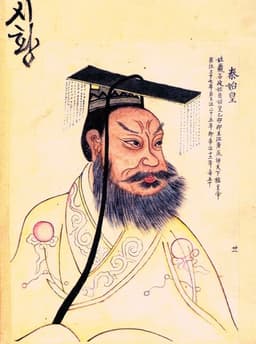
Qin Shi Huang
Emperor · Ancient
85.2Total
Basic Information
Born
1359
-259
Died
1415
-210
Era
Medieval
Ancient
Nationality
Wales
China
Occupation
Revolutionary
Emperor
Civilization
Western
Eastern
Score Comparison
Military (10%)
47.5
80.0
Political (20%)
32.2
90.0
Influence (20%)
56.7
85.0
Legacy (20%)
58.0
90.0
Leadership (15%)
33.5
78.0
Strategy (15%)
41.7
82.0
TOTAL
47.5
85.2
Owain Glyndwr — Complete Timeline
1400 AD
Proclaimed Prince of WalesPolitical Action
Following a dispute with English lord Reginald Grey, Owain Glynd
RebellionWelsh Independence
Impact: regional
1402 AD
Battle of PillethWar◆ Major
Glyndŵr's forces defeated an English army led by Sir Edmund Mortimer at Bryn Glas in Powys. Mortimer was captured and later allied with Glyndŵr through marriage. The victory boosted the rebellion's momentum and secured control over much of Wales.
BattleWelsh Rebellion
Impact: regional
1404 AD
Held a Parliament at MachynllethPolitical Action◆ Major
Glyndŵr convened a Welsh parliament at Machynlleth, where he was crowned Prince of Wales. He established diplomatic relations with France and Scotland, and outlined plans for an independent Welsh church and university. This represented the peak of his rebellion's political organization.
ParliamentWelsh Statehood
Impact: regionalconstructive
1405 AD
Alliance with FrancePolitical Action◆ Major
Glyndŵr signed the Treaty of Paris with France, securing French military support against England. A French expeditionary force landed in Wales and joined the rebellion. The alliance temporarily strengthened the Welsh cause but failed to achieve decisive victory.
AllianceFranco-Welsh Cooperation
Impact: regional
1409 AD
Rebellion CollapsedWar◆ Major
English forces under Prince Henry (future Henry V) recaptured Harlech Castle, Glynd
DefeatEnd of Rebellion
Impact: regionaltragic
Qin Shi Huang — Complete Timeline
246 BC
Construction of the Mausoleum and Terracotta ArmyOther◆ Major
Qin Shi Huang commissioned a vast mausoleum complex near Xi'an, guarded by thousands of life-sized terracotta soldiers, horses, and chariots. The project employed hundreds of thousands of workers and reflected his obsession with immortality and imperial power.
Impact: global
230 BC
Conquest of the Six Warring StatesWar
From 230 to 221 BCE, Ying Zheng led the Qin state in a series of campaigns that conquered the Han, Zhao, Wei, Chu, Yan, and Qi states. This unified China under a single ruler for the first time, ending the Warring States period.
Impact: global
221 BC
Standardization of Writing, Currency, and MeasurementsReform◆ Major
Qin Shi Huang ordered the standardization of Chinese script, currency, and weights and measures across the unified empire. This facilitated administration, trade, and cultural integration, laying a foundation for future dynasties.
Impact: globalconstructive
Proclamation of the Qin DynastyPolitical Action
After conquering the last independent state, Ying Zheng declared himself Shi Huangdi (First Emperor), founding the Qin Dynasty. He adopted a new title to signify his supreme authority and initiated centralized imperial rule.
Impact: global
214 BC
Initiation of the Great Wall ConstructionOther◆ Major
Qin Shi Huang ordered the connection and extension of existing northern fortifications to create a unified defensive wall against nomadic Xiongnu raids. This project involved massive conscripted labor and became the precursor to the later Great Wall.
Impact: regional
213 BC
Burning of Books and Burying of ScholarsPolitical Action◆ Major
On the advice of Li Si, Qin Shi Huang ordered the burning of historical records and philosophical texts not aligned with Legalist doctrine. He also had 460 Confucian scholars buried alive to suppress dissent and consolidate ideological control.
Impact: nationaldestructive
Expert Analysis
owain-glyndwr-vs-qin-shi-huang
The Emperor and the Outlaw
On a winter morning in 221 BC, a man who called himself the First Emperor stood atop a chariot in the plains of central China, watching his armies march past captured banners of six kingdoms. Two thousand miles and fifteen centuries away, on a misty Welsh hillside in September 1400, another man raised a banner with a golden dragon and declared himself Prince of Wales. Both were rebels in their own way—one who conquered a world to create order, another who fought to preserve a world that was slipping away. But the gulf between them is not just one of time and geography; it is a chasm of ambition, scale, and fate. Why did one become the architect of an empire that would echo for millennia, while the other became a vanishing ghost in his nation’s memory?
Origins
Ying Zheng was born in 259 BC into the brutal chessboard of the Warring States period, where seven kingdoms had been locked in a cycle of conquest and betrayal for two centuries. His father, a prince of Qin, had been a hostage in the state of Zhao, and the boy grew up in a court where poison was as common as tea. By the time he inherited the throne at thirteen, he had learned one lesson above all: power is taken, not given. The Qin state was already the most disciplined and ruthless of the seven, shaped by Legalist philosophy that valued law and punishment above all else. Ying Zheng absorbed this worldview like a sword takes its temper.
Owain Glyndŵr was born in 1359 into a very different kind of struggle. He was a Welsh nobleman, a descendant of the ancient princes of Powys, who had grown up under the shadow of English rule. His world was one of shifting loyalties and suppressed identity—Welsh language and law were banned, English lords held the land, and a rebellion simmered beneath the surface of everyday life. Unlike Ying Zheng, who inherited a war machine, Glyndŵr inherited a grievance. He studied law at Oxford, served in English armies, and lived as a gentleman—until a land dispute with a neighbor, the English lord Reginald Grey, pushed him over the edge. For Ying Zheng, the path to power was a plan. For Glyndŵr, it was an explosion.
Rise to Power
Ying Zheng’s rise was methodical and absolute. From 230 to 221 BC, he unleashed a series of campaigns that swallowed the other six states one by one—Han, Zhao, Wei, Chu, Yan, and finally Qi. His generals used overwhelming force, psychological warfare, and systematic terror. When the last king surrendered, Ying Zheng did not simply add a new title; he invented one: *Shi Huangdi*, or First Emperor, a name that erased the past and claimed eternity. He was not just conquering territory; he was erasing the old world.
Glyndŵr’s rise was more chaotic, a fire that caught the dry grass of Welsh discontent. In 1400, after his dispute with Grey, he was proclaimed Prince of Wales by a handful of followers. Within months, the rebellion had spread across the north. In 1402, at the Battle of Pilleth, his small army defeated an English force led by Sir Edmund Mortimer, who later switched sides and married Glyndŵr’s daughter. By 1404, Glyndŵr had called a parliament at Machynlleth, signed treaties with France, and dreamed of an independent Welsh church and university. For a few years, he was not just a rebel—he was a king.
Leadership & Governance
Here the two men diverge like rivers flowing to different seas. Qin Shi Huang governed through standardization. He ordered the same script to be used from the Yellow River to the Yangtze, the same coinage, the same axle lengths for carts, the same weights and measures. He linked northern fortifications into what would become the Great Wall, and he built a network of roads and canals that tied his empire together. But his rule was also a machine of control. In 213 BC, on the advice of his chancellor Li Si, he ordered the burning of history books and philosophical texts that did not align with Legalist doctrine, and buried scholars alive. He sought to erase the past so that his own order would have no rival.
Glyndŵr governed through persuasion and alliance. He held parliaments, negotiated with the French, and tried to build a Welsh nation not by imposing uniformity but by appealing to shared language and memory. His military strategy was defensive and elusive—hit the English, then vanish into the mountains. He was a guerrilla leader, not a builder of empires. His governance was a dream of freedom, not a blueprint for control. Where Qin Shi Huang saw chaos and answered with iron, Glyndůr saw oppression and answered with hope.
Triumph & Tragedy
Qin Shi Huang’s greatest triumph was the unification itself—a feat that had seemed impossible for centuries. But his tragedy was that he could not hold what he had built. He died in 210 BC during an eastern tour, and his empire collapsed within three years, torn apart by rebellion. His mausoleum, guarded by the Terracotta Army he had commissioned in 246 BC, stands as a monument to his obsession with immortality—and his failure to achieve it.
Glyndŵr’s triumph was the rebellion itself. For nearly a decade, he held the English at bay, forged a Welsh identity, and made the name of Wales feared. But his tragedy came slowly. By 1409, after Prince Henry (the future Henry V) recaptured Harlech Castle, Glyndŵr’s wife and children were taken. The rebellion collapsed into scattered raids. He vanished into the mists of history—no one knows where he died or is buried. He became a legend, but a legend of loss.
Character & Destiny
Qin Shi Huang was paranoid, brilliant, and relentless. He believed that will alone could reshape the world, and he was almost right. His personality was that of a machine—efficient, cold, and incapable of mercy. He destroyed his critics, sought immortality through alchemy, and built a tomb that mirrored the universe he wanted to command. His destiny was to be remembered, but also feared.
Glyndŵr was proud, idealistic, and stubborn. He believed that a small nation could stand against an empire, and for a time, he was right. But his personality was that of a flame—bright, but consuming. He could not compromise, and he could not retreat into submission. His destiny was to be remembered, but also mourned.
Legacy
Qin Shi Huang left a template. Though his dynasty died with him, the system of centralized bureaucracy, standardized writing, and unified law became the foundation of every Chinese empire that followed. The name “China” itself may derive from his dynasty. He is worshipped and reviled, the First Emperor who gave China its shape.
Glyndŵr left a symbol. For centuries, Welsh nationalists have looked to him as the last true Prince of Wales, a man who fought for a nation that never quite was. His rebellion did not succeed, but it planted a seed of identity that would grow slowly, across generations, until it flowered in the modern Welsh revival. He is remembered not for what he built, but for what he dared.
Conclusion
One man unified a civilization; the other tried to save a fragment. Qin Shi Huang’s story is about order imposed by fire; Glyndŵr’s is about freedom fought with a flickering torch. Both failed in the end—the First Emperor’s empire crumbled, the Welsh prince’s rebellion faded. But failure is not the final measure. Qin Shi Huang’s China still stands, and Glyndŵr’s Wales still remembers. In the end, the difference between them is not one of victory or defeat, but of scale and memory. One built an empire that became a world. The other lit a fire that never went out.
Rankings
🥇
Qin Shi HuangLeader
Mil: 80.0Pol: 90.0Inf: 85.0
85.2
🥈
Owain Glyndwr
Mil: 47.5Pol: 32.2Inf: 56.7
47.5
+37.7 behind
How This Comparison Works
Algorithm
Each figure is scored on 6 dimensions (0—100 scale) based on structured historical data: Military (10%), Political (20%), Influence (20%), Legacy (20%), Leadership (15%), Strategy (15%). The weighted total produces the final ranking.
Data Sources
Scores are computed from structured sub-indicators in the database. Scale factors adjust for era (Ancient ×0.85, Modern ×1.0) and civilization size (Eastern ×1.05, Other ×0.80) to account for differences in population and military scale.
Maximum 3 Figures
Comparisons are limited to 2—3 figures to ensure readability and statistical meaningfulness.
Error Margins
±5 points per dimension — Sub-scores are derived from historical records with inherent uncertainty. Two figures within 5 points on a dimension should be considered roughly equivalent in that area.
Total Score Accuracy
±3 points overall — The weighted combination of 6 dimensions produces a total score with approximately ±3 points of uncertainty. Differences of less than 3 points are not statistically significant— the figures are effectively tied.
Known Limitations
- Historical records are incomplete and uneven across civilizations
- Figures from oral-tradition societies may be underrepresented
- Occupation labels can misclassify multi-role figures
- Scores measure capability and impact, not moral character
- Quantitative scoring is a comparison tool, not absolute truth
Capability Radar
Military (10%) — Battles & Warfare
Battles
45
85
Win Rate
40
90
Expansion
35
90
Political (20%) — Governance & Reform
Reform
45
95
Diplomacy
50
75
Economy
30
90
Influence (20%) — Cultural & Global Reach
Cultural
55
95
Global
40
85
Legacy (20%) — Historical Impact
Historical
60
95
Longevity
55
95
Leadership (15%) — Power & Stability
Tenure
40
70
Stability
25
65
Strategy (15%) — Tactics & Innovation
Strategy
50
85
Tactics
55
80
Reform
30
95
Similar Comparisons
Comments & Discussion
TheConquestSkeptic6/17/2026
Calling them both "rebels" is historically lazy. Qin Shi Huang crushed six kingdoms to unify China—he was a conqueror with a blueprint for eternal empire. Owain Glyndŵr led a doomed Welsh uprising against English rule, burning towns and fleeing to the hills. One built the Great Wall, the other vanished into myth. Comparing them insults the scale of Qin's ambition. Glyndŵr's a footnote; Qin's a founding father. Pick a lane.
长城信徒6/17/2026
秦始皇帝的野心是"普天之下莫非王土",而欧文只是在一个山沟里打游击。他连威尔士都没统一,更别说像秦一样车同轨、书同文。欧文那所谓的"议会"开了几次?秦军六十万,他呢?几百个弓箭手?别把它们放一起比。一个创造了世界纪录,另一个只配写进地方传说。
DataOverlord6/17/2026
Scale kills this comparison. Qin’s armies numbered in the hundreds of thousands; Glyndŵr’s peak force was maybe 8,000. Qin standardized weights, measures, and even axle lengths across a territory of 1.5 million square miles. Glyndŵr held a few castles in rural Wales for a decade. One left archaeological and bureaucratic footprints across half a continent; the other left poems and burned manors. Numbers don't lie—one is a civilization-builder, the other a regional rebellion leader.
LegalismSharp6/17/2026
从政治逻辑上看,秦用"法"(法家)彻底重塑社会,连文字都统一了——小篆成了帝国模板。欧文呢?他号召的是"恢复威尔士传统",本质上是对英格兰压迫的怀旧抵抗。一个往前看,搞集权创新;一个往后看,抓旧日幽灵。欧文失败不是偶然,他缺乏秦那种制度性暴力机器的支撑。思想层次、执行力、规模,都不在同一维度上。
MistyMountainMemory6/17/2026
This analysis misses the poetry. Yes, Qin built an empire that lasted—but he also burned books and buried scholars alive. Glyndŵr disappeared into legend, a ghost in the mist, and became a symbol that refused to die. Qin conquered with iron; Glyndŵr conquered imagination. The First Emperor's mausoleum is guarded by the Terracotta Army, silent for eternity. Owain's true fortress is in every Welsh heart that still whispers "Cymru am byth." Different triumphs, different failures.