Loading...
Oswaldo Lopez Arellano vs Wladyslaw Sikorski
Wladyslaw Sikorski leads by 7.2 pts · 2 figures compared
…

Oswaldo Lopez Arellano
General · Modern
46.9Total
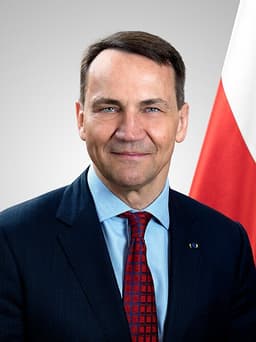
Wladyslaw Sikorski
General · Modern
54.1Total
Basic Information
Born
1921
1881
Died
—
1943
Era
Modern
Modern
Nationality
Honduras
Poland
Occupation
General
General
Civilization
Western
Western
Score Comparison
Military (10%)
50.0
25.0
Political (20%)
43.7
53.8
Influence (20%)
49.4
60.0
Legacy (20%)
39.2
52.0
Leadership (15%)
62.2
70.0
Strategy (15%)
38.6
50.0
TOTAL
46.9
54.1
Oswaldo Lopez Arellano — Complete Timeline
1963 AD
First coup: Overthrow of Villeda MoralesPolitical Action◆ Major
López Arellano led a military coup that overthrew President Ramón Villeda Morales, suspending the constitution and banning political parties. He established a military junta, beginning a period of direct military rule in Honduras.
CoupMilitary JuntaAuthoritarianism
Impact: nationaldestructive
1972 AD
Second coup: Overthrow of Ramón Ernesto CruzPolitical Action◆ Major
López Arellano staged a second coup, overthrowing President Ramón Ernesto Cruz, who had been elected in 1971. He justified the coup by citing corruption and inefficiency, and then implemented land reform and economic nationalism policies.
CoupLand ReformEconomic Nationalism
Impact: nationaldestructive
1975 AD
Nationalization of the banana industryPolitical Action◆ Major
López Arellano's government nationalized the banana industry, creating the Honduran Banana Corporation (COHBANA) to compete with foreign companies like United Fruit. This move was popular domestically but led to tensions with the U.S. and multinational corporations.
NationalizationBanana IndustryEconomic Sovereignty
Impact: nationalconstructive
Wladyslaw Sikorski — Complete Timeline
1939 AD
Appointment as Prime Minister of the Polish government-in-exilePolitical Action◆ Major
After the German invasion of Poland, Sikorski was appointed prime minister of the Polish government-in-exile on September 30, 1939, in Paris. He also served as Commander-in-Chief of the Polish Armed Forces. He led the exiled government throughout most of World War II.
Government-in-ExileWorld War IILeadership
Impact: nationalconstructive
1941 AD
Signing of the Sikorski-Maisky AgreementPolitical Action
Sikorski signed the Sikorski-Maisky Agreement with the Soviet Union on July 30, 1941, after the German invasion of the USSR. The agreement restored diplomatic relations, annulled the 1939 partition of Poland, and allowed for the formation of a Polish army in the Soviet Union under General Anders.
DiplomacySoviet UnionPolish Army
Impact: globalconstructive
1943 AD
Discovery of the Katyn MassacrePolitical Action◆ Major
In April 1943, German forces announced the discovery of mass graves of Polish officers in the Katyn Forest. Sikorski requested an International Red Cross investigation, which led to a break in diplomatic relations with the Soviet Union on April 25, 1943, as the USSR denied responsibility.
KatynMassacreSoviet Relations
Impact: globaltragic
Death in the Gibraltar plane crashOther
Sikorski died in a plane crash at Gibraltar on July 4, 1943, shortly after takeoff. The crash killed all 16 passengers and crew, including his daughter. The cause remains disputed, with theories ranging from accident to Soviet or British assassination. His death was a major blow to the Polish government-in-exile.
DeathPlane CrashConspiracy
Impact: nationaltragic
Expert Analysis
Origins
Oswaldo Lopez Arellano was born on June 30, 1921, in Danlí, Honduras. He entered the Honduran Military Academy at a young age and rose through the ranks. His family background was modest; his father was a farmer. Lopez Arellano received training in the United States and became a pilot, which shaped his early career.
Wladyslaw Sikorski was born on May 20, 1881, in Tuszów Narodowy, then part of Austria-Hungary. He came from a Polish noble family with a tradition of military service. Sikorski studied engineering at the Lwów Polytechnic and later served in the Austro-Hungarian Army. He was deeply influenced by Polish nationalism and the desire for independence.
Rise to Power
Lopez Arellano first seized power in a military coup on October 3, 1963, overthrowing President Ramón Villeda Morales. He justified the coup by citing corruption and communist influence. He suspended the constitution, banned political parties, and established a military junta. In 1965, he allowed elections but ensured his ally won. He stepped down in 1970 but staged a second coup on December 4, 1972, overthrowing President Ramón Ernesto Cruz, again citing corruption. This second coup solidified his control.
Sikorski rose to prominence as a military commander during the Polish-Soviet War (1919-1921), where he led successful campaigns. He became Prime Minister of Poland in 1922 but served only briefly. After the German invasion of Poland in 1939, he was appointed Prime Minister of the Polish government-in-exile on September 30, 1939. This role placed him as the leader of Polish resistance abroad. He also served as Commander-in-Chief of the Polish Armed Forces in the West.
Leadership & Governance
Lopez Arellano ruled as a military dictator. His governance was authoritarian: he banned political parties, censored the press, and suppressed dissent. However, he implemented some economic reforms, notably the nationalization of the banana industry in 1974, creating the Honduran Banana Corporation (COHBANA) to compete with foreign companies like United Fruit. This move was popular among nationalists. Yet, his regimes were marked by corruption and human rights abuses. He scored 62.2 in leadership but only 38.6 in strategy, reflecting his reliance on force over long-term planning.
Sikorski led a democratic government-in-exile. He prioritized maintaining Polish sovereignty and rebuilding the Polish military. He signed the Sikorski-Maisky Agreement on July 30, 1941, with the Soviet Union, which restored diplomatic relations and allowed the formation of a Polish army on Soviet soil. This was a strategic move to align with the Allies against Germany. However, his leadership was challenged by internal divisions among exile factions. His political score of 53.8 and military score of 25.0 reflect his focus on diplomacy over direct combat.
Triumph & Tragedy
Lopez Arellano's greatest success was the nationalization of the banana industry, which increased state revenue and reduced foreign control. He also maintained stability during his rule, though through repression. His greatest failure was the corruption that plagued his administration. In 1975, a scandal involving bribes from United Fruit forced him to step down. His score of 46.9 total reflects a mixed legacy.
Sikorski's triumph was the Sikorski-Maisky Agreement, which gave hope to Polish soldiers and civilians. He also led the Polish forces in the Battle of Britain and other campaigns. His tragedy was the Katyn Massacre discovery in 1943, which strained relations with the Soviets. Sikorski's death in the Gibraltar plane crash on July 4, 1943, was a devastating blow to the Polish cause. His total score of 54.1 is higher due to his influence and legacy.
Character & Destiny
Lopez Arellano was pragmatic and power-hungry. He used coups to achieve power and was willing to suppress democracy for stability. His character led to a cycle of coups and corruption that ultimately ended his career. He died in 2010 with a tarnished reputation.
Sikorski was a principled patriot and diplomat. He believed in constitutional governance even in exile. His decision to cooperate with the Soviets, while controversial, was aimed at defeating Germany. His death in a mysterious plane crash left many questions and cemented his status as a martyr for Polish independence.
Legacy
Lopez Arellano is remembered as a typical Latin American strongman. His nationalization of bananas had some lasting impact, but his authoritarian rule and corruption are his main legacy. He scored 39.2 in legacy, the lowest among his scores.
Sikorski's legacy is far greater. He is honored as a symbol of Polish resistance during WWII. His diplomatic efforts kept the Polish cause alive. The Katyn Massacre revelation and his death continue to be subjects of historical debate. He scored 52.0 in legacy, reflecting his enduring importance.
Conclusion
Wladyslaw Sikorski had greater historical impact. Despite a lower military score (25.0 vs Lopez Arellano's 50.0), Sikorski's political influence (53.8 vs 43.7) and legacy (52.0 vs 39.2) are superior. His role in maintaining Polish sovereignty during WWII and his tragic death resonate globally. Lopez Arellano's impact was limited to Honduras and marred by corruption. Sikorski's total score of 54.1 surpasses Lopez Arellano's 46.9 by 7.2 points, confirming his greater significance.
Rankings
🥇
Wladyslaw SikorskiLeader
Mil: 25.0Pol: 53.8Inf: 60.0
54.1
🥈
Oswaldo Lopez Arellano
Mil: 50.0Pol: 43.7Inf: 49.4
46.9
+7.2 behind
How This Comparison Works
Algorithm
Each figure is scored on 6 dimensions (0—100 scale) based on structured historical data: Military (10%), Political (20%), Influence (20%), Legacy (20%), Leadership (15%), Strategy (15%). The weighted total produces the final ranking.
Data Sources
Scores are computed from structured sub-indicators in the database. Scale factors adjust for era (Ancient ×0.85, Modern ×1.0) and civilization size (Eastern ×1.05, Other ×0.80) to account for differences in population and military scale.
Maximum 3 Figures
Comparisons are limited to 2—3 figures to ensure readability and statistical meaningfulness.
Error Margins
±5 points per dimension — Sub-scores are derived from historical records with inherent uncertainty. Two figures within 5 points on a dimension should be considered roughly equivalent in that area.
Total Score Accuracy
±3 points overall — The weighted combination of 6 dimensions produces a total score with approximately ±3 points of uncertainty. Differences of less than 3 points are not statistically significant— the figures are effectively tied.
Known Limitations
- Historical records are incomplete and uneven across civilizations
- Figures from oral-tradition societies may be underrepresented
- Occupation labels can misclassify multi-role figures
- Scores measure capability and impact, not moral character
- Quantitative scoring is a comparison tool, not absolute truth
Capability Radar
Military (10%) — Battles & Warfare
Battles
15
45
Win Rate
20
40
Expansion
10
20
Political (20%) — Governance & Reform
Reform
30
50
Diplomacy
35
65
Economy
25
30
Influence (20%) — Cultural & Global Reach
Cultural
15
40
Global
10
50
Legacy (20%) — Historical Impact
Historical
20
55
Longevity
15
45
Leadership (15%) — Power & Stability
Tenure
40
55
Stability
20
40
Strategy (15%) — Tactics & Innovation
Strategy
20
60
Tactics
15
50
Reform
25
55
Similar Comparisons
Comments & Discussion
No comments yet. Be the first to share your thoughts!