Loading...
Philippe Petain vs Wladyslaw Sikorski
Philippe Petain leads by 14.8 pts · 2 figures compared
…

Philippe Petain
General · Modern
68.9Total
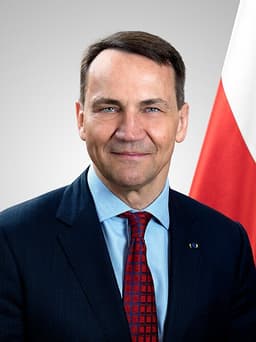
Wladyslaw Sikorski
General · Modern
54.1Total
Basic Information
Born
1856
1881
Died
1951
1943
Era
Modern
Modern
Nationality
France
Poland
Occupation
General
General
Civilization
Western
Western
Score Comparison
Military (10%)
70.0
25.0
Political (20%)
68.0
53.8
Influence (20%)
82.0
60.0
Legacy (20%)
55.0
52.0
Leadership (15%)
71.0
70.0
Strategy (15%)
68.1
50.0
TOTAL
68.9
54.1
Philippe Petain — Complete Timeline
1916 AD
Battle of VerdunWar
Pétain commanded the French Second Army during the Battle of Verdun, organizing the defense and supply lines. His leadership and the phrase 'They shall not pass' made him a national hero, though the battle was a bloody stalemate.
World War IWestern FrontDefense
Impact: national
1917 AD
Suppressed the 1917 French Army MutiniesPolitical Action◆ Major
After the failed Nivelle Offensive, P
World War IMutinyCommand
Impact: national
1940 AD
Appointed Prime Minister of Vichy FrancePolitical Action
After the French defeat by Germany, P
World War IIVichy FranceCollaboration
Impact: nationaldestructive
Implemented the Vichy Regime's Anti-Semitic LawsPolitical Action◆ Major
Pétain's government enacted the Statut des Juifs, excluding Jews from public life and many professions. This was part of a broader collaboration with Nazi Germany, including the deportation of French Jews to concentration camps.
World War IIAnti-SemitismCollaboration
Impact: nationaldestructive
1945 AD
Tried and Convicted for TreasonPolitical Action◆ Major
After the liberation of France, P
World War IITrialJustice
Impact: national
Wladyslaw Sikorski — Complete Timeline
1939 AD
Appointment as Prime Minister of the Polish government-in-exilePolitical Action◆ Major
After the German invasion of Poland, Sikorski was appointed prime minister of the Polish government-in-exile on September 30, 1939, in Paris. He also served as Commander-in-Chief of the Polish Armed Forces. He led the exiled government throughout most of World War II.
Government-in-ExileWorld War IILeadership
Impact: nationalconstructive
1941 AD
Signing of the Sikorski-Maisky AgreementPolitical Action
Sikorski signed the Sikorski-Maisky Agreement with the Soviet Union on July 30, 1941, after the German invasion of the USSR. The agreement restored diplomatic relations, annulled the 1939 partition of Poland, and allowed for the formation of a Polish army in the Soviet Union under General Anders.
DiplomacySoviet UnionPolish Army
Impact: globalconstructive
1943 AD
Discovery of the Katyn MassacrePolitical Action◆ Major
In April 1943, German forces announced the discovery of mass graves of Polish officers in the Katyn Forest. Sikorski requested an International Red Cross investigation, which led to a break in diplomatic relations with the Soviet Union on April 25, 1943, as the USSR denied responsibility.
KatynMassacreSoviet Relations
Impact: globaltragic
Death in the Gibraltar plane crashOther
Sikorski died in a plane crash at Gibraltar on July 4, 1943, shortly after takeoff. The crash killed all 16 passengers and crew, including his daughter. The cause remains disputed, with theories ranging from accident to Soviet or British assassination. His death was a major blow to the Polish government-in-exile.
DeathPlane CrashConspiracy
Impact: nationaltragic
Expert Analysis
Origins
Philippe Pétain was born in 1856 in Cauchy-à-la-Tour, France, into a peasant family. He attended the Saint-Cyr military academy and later the École Supérieure de Guerre. His early career was marked by a cautious, defensive-minded approach, which contrasted with the prevailing French doctrine of offensive à outrance. Władysław Sikorski was born in 1881 in Tuszów Narodowy, Poland, into a Polish noble family. He studied at the Lwów Polytechnic and later joined the Polish Legions under Józef Piłsudski. His early involvement in the Polish independence movement shaped his political and military aspirations.
Rise to Power
Pétain rose to prominence during World War I, particularly at the Battle of Verdun in 1916, where he commanded the French Second Army. His defensive strategy and logistical organization earned him the title 'Hero of Verdun.' In 1917, he was appointed Commander-in-Chief to suppress the French Army mutinies, which he did by addressing soldiers' grievances rather than imposing harsh punishments. Sikorski rose through the ranks of the Polish military and politics. He served as Prime Minister of Poland from 1922 to 1923 and later as Minister of Military Affairs. After the German invasion of Poland in 1939, he became Prime Minister of the Polish government-in-exile in Paris, later moving to London.
Leadership & Governance
Pétain's leadership was characterized by authoritarianism and collaboration. As head of Vichy France from 1940, he implemented the 'Révolution nationale,' a conservative, anti-Semitic program. His government enacted the Statut des Juifs in 1940, excluding Jews from public life. Pétain's military score of 70.0 reflects his defensive prowess, but his political score of 68.0 is tainted by collaboration. Sikorski's leadership focused on maintaining Polish sovereignty in exile. He signed the Sikorski-Maisky Agreement with the Soviet Union in 1941, restoring diplomatic relations and securing the release of Polish prisoners. His political score of 53.8 reflects the constraints of exile, but his leadership score of 70.0 indicates his ability to unite disparate Polish factions.
Triumph & Tragedy
Pétain's greatest triumph was his defense of Verdun, where he famously said 'They shall not pass.' His greatest tragedy was his collaboration with Nazi Germany, leading to his conviction for treason in 1945 and a death sentence commuted to life imprisonment. Sikorski's triumph was the Sikorski-Maisky Agreement, which allowed for the formation of a Polish army in the USSR. His tragedy was the discovery of the Katyn Massacre in 1943, which strained relations with the Soviets and likely contributed to his death in a plane crash at Gibraltar on July 4, 1943. The crash remains controversial, with suspicions of sabotage.
Character & Destiny
Pétain was cautious, stubborn, and deeply conservative. His decision to seek an armistice in 1940 reflected his belief that France's defeat was inevitable. His character led him to prioritize order and stability over resistance, ultimately aligning with the Nazis. Sikorski was pragmatic, diplomatic, and determined. He navigated the complex geopolitics of WWII, balancing relations with the Western Allies and the Soviets. His death in 1943 was a severe blow to the Polish cause, as he was the most respected leader of the exile government.
Legacy
Pétain's legacy is deeply controversial. He is remembered as the Hero of Verdun but also as the traitor who led Vichy France. His influence score of 82.0 reflects his impact on French history, but his legacy score of 55.0 is low due to his collaboration. Sikorski's legacy is more positive but less influential. He is remembered as a symbol of Polish resistance and the fight for sovereignty. His total score of 54.1 reflects his limited impact due to early death and exile. The Katyn Massacre remains a dark shadow, but Sikorski's efforts to expose it showed his commitment to truth.
Conclusion
While Pétain has a higher total score of 68.9 compared to Sikorski's 54.1, his impact is marred by collaboration and treason. Sikorski, despite a lower score, maintained moral integrity and fought for Poland's independence. However, in terms of sheer historical influence, Pétain's role in both world wars and the establishment of Vichy France gives him a greater impact. His military achievements at Verdun and his subsequent political actions shaped France's trajectory. Sikorski's influence was largely confined to the Polish exile community and did not alter the course of WWII. Thus, Pétain had greater impact, but for worse.
Rankings
🥇
Philippe PetainLeader
Mil: 70.0Pol: 68.0Inf: 82.0
68.9
🥈
Wladyslaw Sikorski
Mil: 25.0Pol: 53.8Inf: 60.0
54.1
+14.8 behind
How This Comparison Works
Algorithm
Each figure is scored on 6 dimensions (0—100 scale) based on structured historical data: Military (10%), Political (20%), Influence (20%), Legacy (20%), Leadership (15%), Strategy (15%). The weighted total produces the final ranking.
Data Sources
Scores are computed from structured sub-indicators in the database. Scale factors adjust for era (Ancient ×0.85, Modern ×1.0) and civilization size (Eastern ×1.05, Other ×0.80) to account for differences in population and military scale.
Maximum 3 Figures
Comparisons are limited to 2—3 figures to ensure readability and statistical meaningfulness.
Error Margins
±5 points per dimension — Sub-scores are derived from historical records with inherent uncertainty. Two figures within 5 points on a dimension should be considered roughly equivalent in that area.
Total Score Accuracy
±3 points overall — The weighted combination of 6 dimensions produces a total score with approximately ±3 points of uncertainty. Differences of less than 3 points are not statistically significant— the figures are effectively tied.
Known Limitations
- Historical records are incomplete and uneven across civilizations
- Figures from oral-tradition societies may be underrepresented
- Occupation labels can misclassify multi-role figures
- Scores measure capability and impact, not moral character
- Quantitative scoring is a comparison tool, not absolute truth
Capability Radar
Military (10%) — Battles & Warfare
Battles
75
45
Win Rate
70
40
Expansion
20
20
Political (20%) — Governance & Reform
Reform
40
50
Diplomacy
55
65
Economy
30
30
Influence (20%) — Cultural & Global Reach
Cultural
50
40
Global
60
50
Legacy (20%) — Historical Impact
Historical
70
55
Longevity
55
45
Leadership (15%) — Power & Stability
Tenure
65
55
Stability
25
40
Strategy (15%) — Tactics & Innovation
Strategy
85
60
Tactics
80
50
Reform
60
55
Similar Comparisons
Comments & Discussion
No comments yet. Be the first to share your thoughts!