Loading...
This comparison has not been analyzed yet.
One-time AI generation (~1 minute). Scores and timeline are already available below.
O Kuk-ryol vs Osorio Marquis
Osorio Marquis leads by 7.9 pts · 2 figures compared
…

O Kuk-ryol
General · Modern
47.8Total
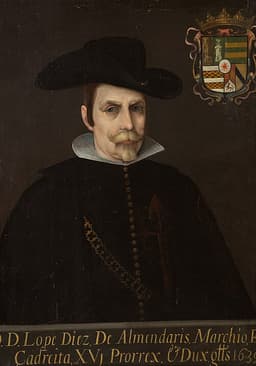
Osorio Marquis
General · Modern
55.7Total
Basic Information
Born
1930
1808
Died
—
1879
Era
Modern
Modern
Nationality
North Korea
Brazil
Occupation
General
General
Civilization
Eastern
Western
Score Comparison
Military (10%)
46.7
67.5
Political (20%)
35.1
43.7
Influence (20%)
52.5
59.0
Legacy (20%)
40.8
47.5
Leadership (15%)
68.0
64.5
Strategy (15%)
43.3
60.7
TOTAL
47.8
55.7
O Kuk-ryol — Complete Timeline
1995 AD
Appointed Chief of the KPA General StaffPolitical Action◆ Major
O Kuk-ryol was appointed Chief of the General Staff of the Korean People's Army, becoming the top military commander under Kim Jong-il. He played a key role in military strategy during a period of economic hardship and nuclear development.
North KoreaMilitary LeadershipKim Jong-il
Impact: national
2000 AD
Led military delegation to ChinaPolitical Action
O Kuk-ryol led a high-level North Korean military delegation to China to strengthen bilateral military ties. This visit underscored the strategic alliance between North Korea and China during a period of diplomatic engagement.
North KoreaChinaMilitary Diplomacy
Impact: regionalconstructive
2009 AD
Retired from active military postsPolitical Action
O Kuk-ryol retired from his active military positions, including his role as Chief of the General Staff. He remained a senior advisor to the Kim family, reflecting his long-standing loyalty and influence within the regime.
North KoreaRetirementMilitary
Impact: national
Osorio Marquis — Complete Timeline
1865 AD
Battle of YatayWar◆ Major
Osorio commanded the Brazilian cavalry in the Battle of Yatay, a key engagement in the Paraguayan War. His cavalry charge routed the Paraguayan forces, leading to a decisive Allied victory and the capture of many prisoners.
Paraguayan WarBattleCavalry Charge
Impact: regional
Appointed Commander of the Brazilian CavalryPolitical Action◆ Major
Osorio was appointed commander of the Brazilian cavalry forces in the Paraguayan War. He reorganized and trained the cavalry, making it an effective fighting force. His leadership was crucial in several battles.
Military CommandCavalryParaguayan War
Impact: regionalconstructive
1866 AD
Battle of TuyutíWar◆ Major
Osorio led the Brazilian cavalry in the Battle of Tuyut
Paraguayan WarBattleCavalry
Impact: regional
1868 AD
Battle of AvahyWar◆ Major
Osorio commanded the Brazilian cavalry in the Battle of Avahy during the Paraguayan War. His charge broke the Paraguayan lines, contributing to a decisive Allied victory. This battle demonstrated his tactical skill and leadership.
Paraguayan WarCavalry ChargeBattle
Impact: regional
This comparison has not been analyzed yet.
One-time AI generation (~1 minute). Scores and timeline are already available below.
Rankings
🥇
Osorio MarquisLeader
Mil: 67.5Pol: 43.7Inf: 59.0
55.7
🥈
O Kuk-ryol
Mil: 46.7Pol: 35.1Inf: 52.5
47.8
+7.9 behind
How This Comparison Works
Algorithm
Each figure is scored on 6 dimensions (0—100 scale) based on structured historical data: Military (10%), Political (20%), Influence (20%), Legacy (20%), Leadership (15%), Strategy (15%). The weighted total produces the final ranking.
Data Sources
Scores are computed from structured sub-indicators in the database. Scale factors adjust for era (Ancient ×0.85, Modern ×1.0) and civilization size (Eastern ×1.05, Other ×0.80) to account for differences in population and military scale.
Maximum 3 Figures
Comparisons are limited to 2—3 figures to ensure readability and statistical meaningfulness.
Error Margins
±5 points per dimension — Sub-scores are derived from historical records with inherent uncertainty. Two figures within 5 points on a dimension should be considered roughly equivalent in that area.
Total Score Accuracy
±3 points overall — The weighted combination of 6 dimensions produces a total score with approximately ±3 points of uncertainty. Differences of less than 3 points are not statistically significant— the figures are effectively tied.
Known Limitations
- Historical records are incomplete and uneven across civilizations
- Figures from oral-tradition societies may be underrepresented
- Occupation labels can misclassify multi-role figures
- Scores measure capability and impact, not moral character
- Quantitative scoring is a comparison tool, not absolute truth
Capability Radar
Military (10%) — Battles & Warfare
Battles
30
60
Win Rate
35
65
Expansion
20
55
Political (20%) — Governance & Reform
Reform
20
30
Diplomacy
25
35
Economy
15
25
Influence (20%) — Cultural & Global Reach
Cultural
15
40
Global
10
35
Legacy (20%) — Historical Impact
Historical
20
45
Longevity
15
30
Leadership (15%) — Power & Stability
Tenure
45
40
Stability
30
30
Strategy (15%) — Tactics & Innovation
Strategy
40
60
Tactics
40
70
Reform
25
50
Similar Comparisons
Comments & Discussion
No comments yet. Be the first to share your thoughts!