Loading...
This comparison has not been analyzed yet.
One-time AI generation (~1 minute). Scores and timeline are already available below.
Nur Misuari vs Sakamoto Ryoma
Sakamoto Ryoma leads by 14.2 pts · 2 figures compared
…

Nur Misuari
Revolutionary · Modern
35.9Total
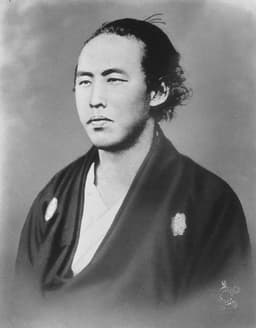
Sakamoto Ryoma
Revolutionary · Modern
50.1Total
Basic Information
Born
1939
1836
Died
—
1867
Era
Modern
Modern
Nationality
Philippines
Japan
Occupation
Revolutionary
Revolutionary
Civilization
Eastern
Eastern
Score Comparison
Military (10%)
22.6
41.6
Political (20%)
26.4
68.0
Influence (20%)
47.9
58.0
Legacy (20%)
37.5
50.0
Leadership (15%)
30.0
38.1
Strategy (15%)
38.6
30.3
TOTAL
35.9
50.1
Nur Misuari — Complete Timeline
1972 AD
Founded the Moro National Liberation FrontPolitical Action◆ Major
Misuari established the MNLF to fight for Moro independence from the Philippines. The group launched an armed insurgency in Mindanao, the Sulu Archipelago, and Palawan, leading to decades of conflict that killed over 100,000 people.
Moro InsurgencySeparatismMindanao
Impact: nationaldestructive
1973 AD
Led the MNLF in the 1970s insurgencyWar◆ Major
Under Misuari's leadership, the MNLF launched large-scale attacks on Philippine military positions in Mindanao. The insurgency peaked in the mid-1970s, with the MNLF controlling large areas of the countryside and engaging in conventional battles.
InsurgencyMindanaoWar
Impact: regionaldestructive
1976 AD
Signed the Tripoli AgreementPolitical Action◆ Major
Misuari signed a peace agreement with the Marcos government in Tripoli, Libya, brokered by Muammar Gaddafi. The agreement promised autonomy for Muslim Mindanao but was never fully implemented, leading to renewed fighting.
Peace AgreementAutonomyMarcos
Impact: nationalconstructive
1977 AD
Exiled to Libya and MalaysiaPolitical Action
After the Tripoli Agreement failed, Misuari went into exile in Libya and later Malaysia. From abroad, he continued to lead the MNLF, securing foreign support and training for his fighters. He returned to the Philippines in 1996 after a new peace deal.
ExileLeadershipForeign Support
Impact: national
Sakamoto Ryoma — Complete Timeline
1865 AD
Founded the Kameyama Shachu (Trading Company)Political Action
Ryoma established a trading company in Nagasaki with the goal of modernizing Japan's economy and military. The company imported Western weapons and ships, and served as a base for anti-shogunate activities.
Economic ReformModernizationTrade
Impact: nationalconstructive
1866 AD
Brokered the Satsuma-Choshu AlliancePolitical Action
Ryoma mediated between the Satsuma and Choshu domains, which had been hostile to each other. Through his negotiations, the two domains agreed to cooperate against the Tokugawa shogunate, forming a key alliance that enabled the Meiji Restoration.
Meiji RestorationAlliancePolitical Reform
Impact: nationalconstructive
1867 AD
Formulated the Eight-Point Plan (Senchu Hassaku)Reform◆ Major
Ryoma drafted a political reform plan proposing a new government structure for Japan, including a bicameral legislature, a constitution, and the return of power to the imperial court. The plan influenced the Meiji government's early policies.
Political ReformConstitutionMeiji Restoration
Impact: nationalprogressive
Assassinated at OmiyaPolitical Action◆ Major
Ryoma was assassinated at the Omiya inn in Kyoto by agents of the shogunate. His death at age 31 cut short his political influence, but his ideas continued to shape the Meiji Restoration.
AssassinationMeiji RestorationPolitical Violence
Impact: nationaltragic
This comparison has not been analyzed yet.
One-time AI generation (~1 minute). Scores and timeline are already available below.
Rankings
🥇
Sakamoto RyomaLeader
Mil: 41.6Pol: 68.0Inf: 58.0
50.1
🥈
Nur Misuari
Mil: 22.6Pol: 26.4Inf: 47.9
35.9
+14.2 behind
How This Comparison Works
Algorithm
Each figure is scored on 6 dimensions (0—100 scale) based on structured historical data: Military (10%), Political (20%), Influence (20%), Legacy (20%), Leadership (15%), Strategy (15%). The weighted total produces the final ranking.
Data Sources
Scores are computed from structured sub-indicators in the database. Scale factors adjust for era (Ancient ×0.85, Modern ×1.0) and civilization size (Eastern ×1.05, Other ×0.80) to account for differences in population and military scale.
Maximum 3 Figures
Comparisons are limited to 2—3 figures to ensure readability and statistical meaningfulness.
Error Margins
±5 points per dimension — Sub-scores are derived from historical records with inherent uncertainty. Two figures within 5 points on a dimension should be considered roughly equivalent in that area.
Total Score Accuracy
±3 points overall — The weighted combination of 6 dimensions produces a total score with approximately ±3 points of uncertainty. Differences of less than 3 points are not statistically significant— the figures are effectively tied.
Known Limitations
- Historical records are incomplete and uneven across civilizations
- Figures from oral-tradition societies may be underrepresented
- Occupation labels can misclassify multi-role figures
- Scores measure capability and impact, not moral character
- Quantitative scoring is a comparison tool, not absolute truth
Capability Radar
Military (10%) — Battles & Warfare
Battles
20
5
Win Rate
15
5
Expansion
20
10
Political (20%) — Governance & Reform
Reform
25
60
Diplomacy
30
75
Economy
10
30
Influence (20%) — Cultural & Global Reach
Cultural
35
65
Global
20
55
Legacy (20%) — Historical Impact
Historical
30
70
Longevity
25
65
Leadership (15%) — Power & Stability
Tenure
30
20
Stability
10
25
Strategy (15%) — Tactics & Innovation
Strategy
30
20
Tactics
25
10
Reform
35
40
Similar Comparisons
Comments & Discussion
No comments yet. Be the first to share your thoughts!