Loading...
This comparison has not been analyzed yet.
One-time AI generation (~1 minute). Scores and timeline are already available below.
Nur ad-Din Zengi vs Wanli Emperor
Nur ad-Din Zengi leads by 19.1 pts · 2 figures compared
…
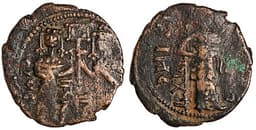
Nur ad-Din Zengi
Emperor · Medieval
64.4Total
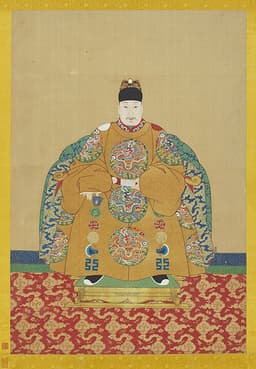
Wanli Emperor
Emperor · Medieval
45.3Total
Basic Information
Born
1118
1563
Died
1174
1620
Era
Medieval
Medieval
Nationality
Zengid Dynasty
China
Occupation
Emperor
Emperor
Civilization
Middle Eastern
Eastern
Score Comparison
Military (10%)
81.2
21.2
Political (20%)
65.7
30.8
Influence (20%)
58.3
53.3
Legacy (20%)
52.0
45.0
Leadership (15%)
79.8
67.0
Strategy (15%)
69.1
39.6
TOTAL
64.4
45.3
Nur ad-Din Zengi — Complete Timeline
1135 AD
Siege of DamascusWar◆ Major
Imad ad-Din Zengi besieged Damascus, attempting to expand his control over Syria. The siege failed due to strong defenses and the intervention of the Burid dynasty, preventing Zengi from unifying Muslim Syria under his rule.
DamascusSiegeBurid
Impact: regional
1144 AD
Capture of EdessaWar
Imad ad-Din Zengi, atabeg of Mosul, besieged and captured the Crusader city of Edessa. This was the first major Crusader territory to fall to Muslim forces, triggering the Second Crusade and establishing Zengi as a leading Muslim commander.
CrusadesEdessaSecond Crusade
Impact: global
1146 AD
Assassination of Imad ad-Din ZengiPolitical Action◆ Major
Imad ad-Din Zengi was assassinated by a Frankish slave in his sleep while besieging the fortress of Qal'at Ja'bar. His death fragmented his territories, which were divided between his sons Nur ad-Din and Saif ad-Din, but his legacy continued through Nur ad-Din's later successes.
AssassinationNur ad-DinQal'at Ja'bar
Impact: regionaltragic
Wanli Emperor — Complete Timeline
1572 AD
Longest reign of the Ming dynastyPolitical Action◆ Major
Wanli ascended the throne at age nine, beginning a 48-year reign. His early years were guided by Grand Secretary Zhang Juzheng, who implemented reforms that temporarily strengthened the Ming state.
ReignImperial successionMing dynasty
Impact: national
1573 AD
Zhang Juzheng's reformsReform◆ Major
Grand Secretary Zhang Juzheng implemented the Single Whip tax reform, consolidating various taxes into a single silver payment. He also reformed the civil service examination system and reduced government waste.
Tax reformAdministrative reformZhang Juzheng
Impact: nationalconstructive
1584 AD
Impeachment of Zhang JuzhengPolitical Action◆ Major
After Zhang Juzheng's death, Wanli approved the posthumous impeachment of his former mentor. Zhang's family was persecuted, his property confiscated, and his reforms were partially reversed.
Political purgeZhang JuzhengReversal of reforms
Impact: nationaldestructive
1586 AD
Succession dispute over the heir apparentPolitical Action◆ Major
Wanli favored his younger son Zhu Changxun over the eldest Zhu Changluo as heir. This triggered a prolonged succession dispute with Confucian officials, leading to factional strife and further imperial withdrawal.
Succession crisisFactionalismImperial family
Impact: nationaldestructive
1592 AD
Imjin WarWar◆ Major
Japan invaded Korea, prompting Wanli to dispatch Ming forces to aid the Joseon dynasty. The war lasted until 1598, with Ming and Korean forces eventually repelling the Japanese invasion at great cost.
Imjin WarKoreaJapan invasion
Impact: regional
1600 AD
Grand Secretariat vacancy crisisPolitical Action◆ Major
Wanli withdrew from active governance, refusing to appoint officials to fill vacancies in the Grand Secretariat and other key posts. This paralyzed the Ming bureaucracy and weakened central administration.
Government paralysisBureaucratic crisisImperial withdrawal
Impact: nationaldestructive
This comparison has not been analyzed yet.
One-time AI generation (~1 minute). Scores and timeline are already available below.
Rankings
🥇
Nur ad-Din ZengiLeader
Mil: 81.2Pol: 65.7Inf: 58.3
64.4
🥈
Wanli Emperor
Mil: 21.2Pol: 30.8Inf: 53.3
45.3
+19.1 behind
How This Comparison Works
Algorithm
Each figure is scored on 6 dimensions (0—100 scale) based on structured historical data: Military (10%), Political (20%), Influence (20%), Legacy (20%), Leadership (15%), Strategy (15%). The weighted total produces the final ranking.
Data Sources
Scores are computed from structured sub-indicators in the database. Scale factors adjust for era (Ancient ×0.85, Modern ×1.0) and civilization size (Eastern ×1.05, Other ×0.80) to account for differences in population and military scale.
Maximum 3 Figures
Comparisons are limited to 2—3 figures to ensure readability and statistical meaningfulness.
Error Margins
±5 points per dimension — Sub-scores are derived from historical records with inherent uncertainty. Two figures within 5 points on a dimension should be considered roughly equivalent in that area.
Total Score Accuracy
±3 points overall — The weighted combination of 6 dimensions produces a total score with approximately ±3 points of uncertainty. Differences of less than 3 points are not statistically significant— the figures are effectively tied.
Known Limitations
- Historical records are incomplete and uneven across civilizations
- Figures from oral-tradition societies may be underrepresented
- Occupation labels can misclassify multi-role figures
- Scores measure capability and impact, not moral character
- Quantitative scoring is a comparison tool, not absolute truth
Capability Radar
Military (10%) — Battles & Warfare
Battles
75
15
Win Rate
80
10
Expansion
72
5
Political (20%) — Governance & Reform
Reform
75
20
Diplomacy
85
30
Economy
68
25
Influence (20%) — Cultural & Global Reach
Cultural
65
30
Global
55
20
Legacy (20%) — Historical Impact
Historical
70
40
Longevity
60
30
Leadership (15%) — Power & Stability
Tenure
70
70
Stability
72
20
Strategy (15%) — Tactics & Innovation
Strategy
82
10
Tactics
78
10
Reform
70
5
Similar Comparisons
Comments & Discussion
No comments yet. Be the first to share your thoughts!