Loading...
Nur ad-Din vs Ordoño II of Leon
Nur ad-Din leads by 20.4 pts · 2 figures compared
…
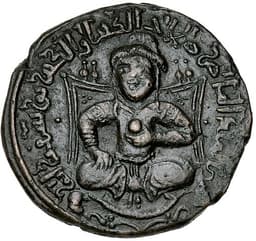
Nur ad-Din
Emperor · Medieval
68.3Total
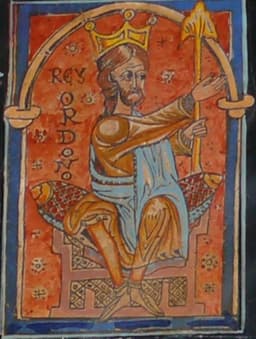
Ordoño II of Leon
Emperor · Medieval
47.9Total
Basic Information
Born
1118
873
Died
1174
924
Era
Medieval
Medieval
Nationality
Zengid dynasty
Leon
Occupation
Emperor
Emperor
Civilization
Middle Eastern
Western
Score Comparison
Military (10%)
78.0
30.0
Political (20%)
62.7
42.3
Influence (20%)
56.7
51.8
Legacy (20%)
72.0
43.3
Leadership (15%)
79.8
58.8
Strategy (15%)
69.1
60.0
TOTAL
68.3
47.9
Nur ad-Din — Complete Timeline
1149 AD
Battle of InabWar◆ Major
Nur ad-Din defeated the Crusader Principality of Antioch at the Battle of Inab. Prince Raymond of Antioch was killed, and the victory weakened Crusader control in northern Syria, marking a turning point in the Muslim counter-crusade.
BattleCrusadesAntioch
Impact: regional
1150 AD
Promotion of Sunni OrthodoxyCultural◆ Major
Nur ad-Din built numerous madrasas, mosques, and hospitals across Syria, promoting Sunni Islam and countering Shi'a influence. His patronage of religious institutions strengthened the Sunni identity of his realm and laid the ideological foundation for jihad against the Crusaders.
Sunni RevivalMadrasaJihad
Impact: regionalconstructive
1154 AD
Unification of SyriaWar◆ Major
Nur ad-Din captured Damascus from the Burid dynasty, uniting Syria under his rule. This consolidation created a powerful Muslim state that could effectively confront the Crusader states in the Levant.
ConquestSyriaUnification
Impact: regional
1164 AD
Siege of HarimWar
Nur ad-Din captured the fortress of Harim from the Crusaders after a prolonged siege. This victory further reduced Crusader territory in Syria and demonstrated Nur ad-Din's military persistence.
SiegeCrusadesFortress
1169 AD
Mentorship of SaladinPolitical Action◆ Major
Nur ad-Din sent his general Shirkuh, accompanied by his nephew Saladin, to Egypt to intervene in Fatimid politics. After Shirkuh's death, Saladin became vizier of Egypt, eventually breaking from Nur ad-Din's control, but the campaign laid the groundwork for Saladin's later successes.
SaladinEgyptFatimids
Impact: regional
Ordoño II of Leon — Complete Timeline
914 AD
Union of Leon and GaliciaPolitical Action◆ Major
Upon the death of his brother Garcia I, Ordo
UnionLeonGalicia
Impact: regionalconstructive
917 AD
Battle of San Esteban de GormazWar◆ Major
Ordoño II led a Leonese army to victory against the forces of the Emirate of Cordoba at San Esteban de Gormaz. The battle was a significant Christian success, temporarily halting Muslim advances into the Duero Valley and boosting the morale of the Leonese kingdom.
BattleReconquistaCordoba
Impact: regionalconstructive
920 AD
Defeat by Abd al-Rahman III at ValdejunqueraWar◆ Major
Ordoño II suffered a major defeat at the hands of the Cordoban Caliph Abd al-Rahman III at the Battle of Valdejunquera. The Leonese army was routed, and many nobles were killed or captured. This defeat weakened Leonese power and forced Ordoño to sue for peace, paying tribute to Cordoba.
DefeatAbd al-Rahman IIITribute
Impact: regionaltragic
Expert Analysis
Origins
Nur ad-Din (1118–1174) was born into the Zengid dynasty, the son of Imad ad-Din Zengi, a powerful atabeg who ruled Mosul and Aleppo. Growing up in a military household, Nur ad-Din was trained in warfare and administration from an early age. His father's assassination in 1146 thrust him into leadership at age 28, inheriting a fragmented realm that included Aleppo and parts of northern Syria. Nur ad-Din's education emphasized Sunni orthodoxy, which later shaped his religious policies.
Ordoño II of Leon (c. 873–924) was born into the Astur-Leonese royal family, son of King Alfonso III the Great and Queen Jimena. As a younger son, he was initially granted the kingdom of Galicia in 910 after his father's abdication. Ordoño grew up in the turbulent Christian frontier of Iberia, where constant warfare against the Emirate of Cordoba defined his upbringing. He received a typical noble education focused on military skills and governance, but lacked the broader religious or administrative vision of his counterpart.
Rise to Power
Nur ad-Din's rise began with his father's conquest of Edessa in 1144, but after Zengi's murder, Nur ad-Din had to consolidate power. His first major step was capturing Damascus in 1154 from the Burid dynasty, a move that unified Syria under his rule. This was achieved through a combination of military pressure and diplomacy, exploiting divisions among the Burids. By 1154, he controlled Aleppo, Damascus, and most of Syria, creating a formidable state. The capture of Damascus scored him 78.0 in military and 69.1 in strategy, reflecting his ability to seize key cities.
Ordoño II became king of Galicia in 910, but his rise to greater power came in 914 when his brother Garcia I died without heirs. Ordoño then inherited the throne of Leon, uniting it with Galicia. This union was peaceful but required navigating the ambitions of his other brother, Fruela II, who later succeeded him. Ordoño's early reign focused on consolidating control over the Christian north, but his lack of strategic foresight compared to Nur ad-Din is evident in his political score of 42.3.
Leadership & Governance
Nur ad-Din was a meticulous administrator who promoted Sunni Islam as a unifying force. He built numerous madrasas, mosques, and hospitals across Syria, including the famous Nur al-Din Bimaristan in Damascus. His governance emphasized justice and religious orthodoxy, countering Shi'a influence. He also established a network of spies and maintained a disciplined army. His leadership score of 79.8 reflects his ability to inspire loyalty and manage a diverse realm.
Ordoño II ruled as a typical medieval Christian king, relying on feudal levies and noble support. He attempted to strengthen royal authority but faced constant opposition from the powerful nobility. His defeat at Valdejunquera in 920 by Abd al-Rahman III exposed weaknesses in his military organization. Unlike Nur ad-Din's institutional building, Ordoño's governance was reactive and lacked long-term vision, earning him a leadership score of 58.8.
Triumph & Tragedy
Nur ad-Din's greatest triumph was unifying Syria and laying the groundwork for Saladin's conquest of Jerusalem. His victory at the Battle of Inab in 1149 killed Prince Raymond of Antioch, weakening Crusader states. He also captured the fortress of Harim in 1164, further reducing Crusader territory. However, his tragedy was his failure to capture Jerusalem himself; he died before achieving this goal, though his mentorship of Saladin ensured the legacy. His legacy score of 72.0 reflects his enduring impact.
Ordoño II's triumph was the union of Leon and Galicia, creating a stronger Christian kingdom. His victory at the Battle of San Esteban de Gormaz in 917 against the Emirate of Cordoba was a significant Christian success. However, his tragedy was the crushing defeat at Valdejunquera in 920, where his army was routed by Abd al-Rahman III. This defeat stalled Christian expansion and exposed his military limitations. His military score of 30.0 underscores his poor performance against a superior foe.
Character & Destiny
Nur ad-Din was pious, disciplined, and strategic. He was known for his justice and humility, often personally leading prayers. His character fostered loyalty among his subjects and generals, including Saladin. His destiny was to be a unifier and precursor, setting the stage for the Ayyubid dynasty. Historical assessments praise his administrative reforms and religious patronage, which strengthened Sunni Islam.
Ordoño II was ambitious but impulsive, lacking the strategic depth of his rival. His defeat at Valdejunquera stemmed from overconfidence and poor intelligence. He died in 924, possibly from illness, and his kingdom was soon divided among his brothers. Historians view him as a capable but ultimately unsuccessful king, overshadowed by his father Alfonso III and his brother Fruela II. His total score of 47.9 reflects his limited impact.
Legacy
Nur ad-Din's legacy is immense: he unified Syria, promoted Sunni orthodoxy, and mentored Saladin, who would recapture Jerusalem in 1187. His institutions like madrasas and hospitals influenced Islamic education and healthcare for centuries. His political score of 62.7 reflects his state-building, while his influence score of 56.7 is tempered by Saladin overshadowing him.
Ordoño II's legacy is more modest. He successfully united Leon and Galicia, but his defeat at Valdejunquera weakened Christian momentum. His reign is remembered as a prelude to the later rise of the Kingdom of Leon under his successors. His influence score of 51.8 is modest, and his legacy score of 43.3 indicates limited long-term impact.
Conclusion
Nur ad-Din had a greater impact than Ordoño II. With a total score of 68.3 versus 47.9, the 20.4-point gap reflects the scale of their achievements. Nur ad-Din's unification of Syria and mentorship of Saladin changed the course of the Crusades, while Ordoño's reign, though significant for Leon, did not alter the broader power balance in Iberia. Nur ad-Din's strategic vision and administrative reforms created a lasting legacy, whereas Ordoño's defeats limited his influence. Thus, Nur ad-Din stands as the more consequential leader.
Rankings
🥇
Nur ad-DinLeader
Mil: 78.0Pol: 62.7Inf: 56.7
68.3
🥈
Ordoño II of Leon
Mil: 30.0Pol: 42.3Inf: 51.8
47.9
+20.4 behind
How This Comparison Works
Algorithm
Each figure is scored on 6 dimensions (0—100 scale) based on structured historical data: Military (10%), Political (20%), Influence (20%), Legacy (20%), Leadership (15%), Strategy (15%). The weighted total produces the final ranking.
Data Sources
Scores are computed from structured sub-indicators in the database. Scale factors adjust for era (Ancient ×0.85, Modern ×1.0) and civilization size (Eastern ×1.05, Other ×0.80) to account for differences in population and military scale.
Maximum 3 Figures
Comparisons are limited to 2—3 figures to ensure readability and statistical meaningfulness.
Error Margins
±5 points per dimension — Sub-scores are derived from historical records with inherent uncertainty. Two figures within 5 points on a dimension should be considered roughly equivalent in that area.
Total Score Accuracy
±3 points overall — The weighted combination of 6 dimensions produces a total score with approximately ±3 points of uncertainty. Differences of less than 3 points are not statistically significant— the figures are effectively tied.
Known Limitations
- Historical records are incomplete and uneven across civilizations
- Figures from oral-tradition societies may be underrepresented
- Occupation labels can misclassify multi-role figures
- Scores measure capability and impact, not moral character
- Quantitative scoring is a comparison tool, not absolute truth
Capability Radar
Military (10%) — Battles & Warfare
Battles
75
40
Win Rate
80
35
Expansion
80
55
Political (20%) — Governance & Reform
Reform
85
40
Diplomacy
90
35
Economy
75
40
Influence (20%) — Cultural & Global Reach
Cultural
65
30
Global
60
20
Legacy (20%) — Historical Impact
Historical
80
35
Longevity
70
25
Leadership (15%) — Power & Stability
Tenure
80
45
Stability
70
30
Strategy (15%) — Tactics & Innovation
Strategy
85
50
Tactics
70
45
Reform
75
30
Similar Comparisons
Comments & Discussion
No comments yet. Be the first to share your thoughts!