Loading...
This comparison has not been analyzed yet.
One-time AI generation (~1 minute). Scores and timeline are already available below.
Nguza Karl-i-Bond vs Zhao Yi
Nguza Karl-i-Bond leads by 0.4 pts · 2 figures compared
…

Nguza Karl-i-Bond
Politician · Modern
47.3Total
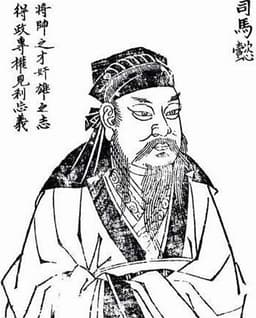
Zhao Yi
Politician · Modern
46.9Total
Basic Information
Born
1938
1727
Died
—
1814
Era
Modern
Modern
Nationality
DR Congo
China
Occupation
Politician
Politician
Civilization
Other
Eastern
Score Comparison
Military (10%)
50.0
10.2
Political (20%)
40.8
43.7
Influence (20%)
48.6
59.0
Legacy (20%)
38.3
52.0
Leadership (15%)
67.0
53.2
Strategy (15%)
44.0
35.5
TOTAL
47.3
46.9
Nguza Karl-i-Bond — Complete Timeline
1980 AD
Appointed Prime Minister of ZairePolitical Action◆ Major
Nguza Karl-i-Bond was appointed Prime Minister of Zaire by President Mobutu Sese Seko. This marked his entry into the highest levels of government, serving as a key ally of Mobutu before their later falling out.
Mobutu regimePrime MinisterZaire
Impact: national
1981 AD
Dismissed and Imprisoned by MobutuPolitical Action◆ Major
Nguza Karl-i-Bond was dismissed as Prime Minister and imprisoned by Mobutu on charges of plotting a coup. This event marked his transition from regime insider to opposition figure, enduring harsh prison conditions.
Political repressionImprisonmentMobutu
Impact: nationaldestructive
1985 AD
Fled into Exile and Joined OppositionPolitical Action◆ Major
After his release, Nguza Karl-i-Bond fled Zaire and joined the opposition in exile. He became a prominent critic of Mobutu's regime, advocating for democratic reforms and international pressure against the dictatorship.
ExileOppositionDemocracy
Impact: national
1990 AD
Returned to Zaire and Rejoined GovernmentPolitical Action◆ Major
Nguza Karl-i-Bond returned to Zaire and reconciled with Mobutu, accepting a position in the government. This move was seen by many as a betrayal of the opposition, highlighting the complex and shifting loyalties in Zairian politics.
Political reconciliationMobutuControversy
Impact: national
1991 AD
Appointed Prime Minister AgainPolitical Action◆ Major
Nguza Karl-i-Bond was reappointed Prime Minister by Mobutu during a period of political crisis and economic collapse. His second term was marked by hyperinflation, strikes, and growing instability, leading to his dismissal again in 1992.
Prime MinisterPolitical crisisZaire
Impact: national
2003 AD
Died in ExileOther
Nguza Karl-i-Bond died in exile in South Africa. His death marked the end of a turbulent political career that spanned from being a top Mobutu loyalist to a leading opposition figure, reflecting the instability of Congolese politics.
DeathExileEnd of career
Impact: nationaltragic
Zhao Yi — Complete Timeline
1775 AD
Compilation of the 'Twenty-Two Histories'Cultural◆ Major
Zhao Yi contributed to the compilation and annotation of the 'Twenty-Two Histories', a standard collection of Chinese dynastic histories. His work helped preserve and systematize historical records for future scholars.
HistoriographyScholarshipCompilation
Impact: nationalconstructive
1795 AD
Publication of 'Notes on the Twenty-Two Histories'Cultural◆ Major
Zhao Yi published his critical study 'Notes on the Twenty-Two Histories', which analyzed historical texts for accuracy and bias. The work became a foundational text in Chinese historiography.
HistoriographyPublicationScholarship
Impact: nationalconstructive
This comparison has not been analyzed yet.
One-time AI generation (~1 minute). Scores and timeline are already available below.
Rankings
🥇
Nguza Karl-i-BondLeader
Mil: 50.0Pol: 40.8Inf: 48.6
47.3
🥈
Zhao Yi
Mil: 10.2Pol: 43.7Inf: 59.0
46.9
+0.4 behind
How This Comparison Works
Algorithm
Each figure is scored on 6 dimensions (0—100 scale) based on structured historical data: Military (10%), Political (20%), Influence (20%), Legacy (20%), Leadership (15%), Strategy (15%). The weighted total produces the final ranking.
Data Sources
Scores are computed from structured sub-indicators in the database. Scale factors adjust for era (Ancient ×0.85, Modern ×1.0) and civilization size (Eastern ×1.05, Other ×0.80) to account for differences in population and military scale.
Maximum 3 Figures
Comparisons are limited to 2—3 figures to ensure readability and statistical meaningfulness.
Error Margins
±5 points per dimension — Sub-scores are derived from historical records with inherent uncertainty. Two figures within 5 points on a dimension should be considered roughly equivalent in that area.
Total Score Accuracy
±3 points overall — The weighted combination of 6 dimensions produces a total score with approximately ±3 points of uncertainty. Differences of less than 3 points are not statistically significant— the figures are effectively tied.
Known Limitations
- Historical records are incomplete and uneven across civilizations
- Figures from oral-tradition societies may be underrepresented
- Occupation labels can misclassify multi-role figures
- Scores measure capability and impact, not moral character
- Quantitative scoring is a comparison tool, not absolute truth
Capability Radar
Military (10%) — Battles & Warfare
Battles
24
16
Win Rate
22
17
Expansion
30
22
Political (20%) — Governance & Reform
Reform
30
40
Diplomacy
45
30
Economy
20
35
Influence (20%) — Cultural & Global Reach
Cultural
15
55
Global
15
30
Legacy (20%) — Historical Impact
Historical
20
60
Longevity
10
50
Leadership (15%) — Power & Stability
Tenure
60
60
Stability
10
40
Strategy (15%) — Tactics & Innovation
Strategy
28
24
Tactics
36
25
Reform
34
29
Similar Comparisons
Comments & Discussion
No comments yet. Be the first to share your thoughts!