Loading...
Ahmed Abdallah vs Zhao Yi
Zhao Yi leads by 7.6 pts · 2 figures compared
…

Ahmed Abdallah
Politician · Modern
39.3Total
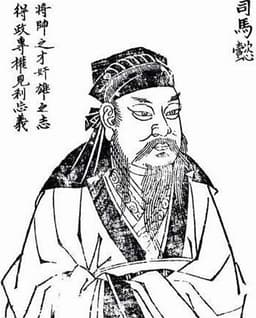
Zhao Yi
Politician · Modern
46.9Total
Basic Information
Born
1919
1727
Died
1989
1814
Era
Modern
Modern
Nationality
Comoros
China
Occupation
Politician
Politician
Civilization
Other
Eastern
Score Comparison
Military (10%)
38.0
10.2
Political (20%)
27.9
43.7
Influence (20%)
47.1
59.0
Legacy (20%)
37.5
52.0
Leadership (15%)
38.1
53.2
Strategy (15%)
44.7
35.5
TOTAL
39.3
46.9
Ahmed Abdallah — Complete Timeline
1975 AD
Became First President of ComorosPolitical Action◆ Major
Ahmed Abdallah became the first president of the independent Comoros after the islands declared independence from France. He led the country through its early years of statehood.
ComorosIndependencePresidency
Impact: nationalconstructive
Overthrown by Ali SoilihPolitical Action◆ Major
Abdallah was overthrown in a coup led by Ali Soilih just one month after independence. He went into exile in France, but returned to power later.
ComorosCoupExile
Impact: nationaldestructive
1978 AD
Returned to Power in CoupPolitical Action◆ Major
Abdallah returned to power in a coup led by French mercenary Bob Denard, overthrowing the regime of Ali Soilih. He became president again, ruling with an iron fist and relying on Denard's mercenaries.
ComorosCoupBob Denard
Impact: nationaldestructive
1989 AD
Assassinated in CoupPolitical Action◆ Major
Abdallah was assassinated during a coup led by Bob Denard, who had been his security chief. The assassination occurred in his presidential office, and Denard briefly took control of the country.
ComorosAssassinationBob Denard
Impact: nationaltragic
Zhao Yi — Complete Timeline
1775 AD
Compilation of the 'Twenty-Two Histories'Cultural◆ Major
Zhao Yi contributed to the compilation and annotation of the 'Twenty-Two Histories', a standard collection of Chinese dynastic histories. His work helped preserve and systematize historical records for future scholars.
HistoriographyScholarshipCompilation
Impact: nationalconstructive
1795 AD
Publication of 'Notes on the Twenty-Two Histories'Cultural◆ Major
Zhao Yi published his critical study 'Notes on the Twenty-Two Histories', which analyzed historical texts for accuracy and bias. The work became a foundational text in Chinese historiography.
HistoriographyPublicationScholarship
Impact: nationalconstructive
Expert Analysis
Origins
Ahmed Abdallah was born in 1919 in the Comoros archipelago, then a French colony. He came from a wealthy landowning family and received education in Madagascar and France, studying law. His background was in business and politics, serving in the French colonial administration and later as a representative to the French National Assembly.
Zhao Yi was born in 1727 in Jiangsu, China, during the Qing dynasty. He came from a scholar-official family and passed the imperial examinations, earning the jinshi degree in 1754. He served in various government posts, including as a compiler at the Hanlin Academy, and was known for his wide-ranging interests in history, poetry, and classical studies.
Rise to Power
Abdallah rose to prominence as a leader in the independence movement of the Comoros. He became the first president of the independent Comoros on July 6, 1975, after the islands declared independence from France. However, his rule was short-lived: he was overthrown in a coup led by Ali Soilih on August 3, 1975, just one month after independence. He fled to exile in France but returned to power in 1978 after a coup by French mercenary Bob Denard, who overthrew Soilih.
Zhao Yi rose through the ranks of the Qing bureaucracy by excelling in the civil service examinations. He served in various positions, including as a magistrate and later as a compiler of imperial histories. His reputation grew through his scholarly works, particularly his critical analysis of historical texts. He retired from officialdom in 1772 to focus on writing and teaching.
Leadership & Governance
Abdallah's governance was characterized by authoritarian rule and reliance on foreign mercenaries. After returning to power in 1978, he established a one-party state under the Comorian Union for Progress. He implemented pro-Western policies and maintained close ties with France and South Africa. His regime was marked by corruption and human rights abuses. He scored 38.1 in Leadership and 27.9 in Political ability, reflecting his unstable rule.
Zhao Yi, as a scholar-official, did not hold top leadership positions but influenced governance through his historical writings. He advocated for rigorous historical methodology and criticized officials who falsified records. His works served as a check on power by promoting accurate historical understanding. He scored 53.2 in Leadership, reflecting his intellectual influence rather than executive power.
Triumph & Tragedy
Abdallah's greatest triumph was leading the Comoros to independence, achieving a long-sought goal for the islands. However, his assassination in 1989 during a coup led by Bob Denard, his own security chief, marked a tragic end. He was killed in his presidential office, and the coup plunged the country into instability. His legacy is marred by his authoritarian rule and reliance on mercenaries.
Zhao Yi's greatest success was the publication of 'Notes on the Twenty-Two Histories', a critical study that analyzed Chinese dynastic histories for accuracy and bias. This work became a foundation for modern Chinese historiography. However, his tragedy may be that his influence was limited to scholarly circles, and his reforms in historical methodology were not widely adopted during his lifetime. He scored 52.0 in Legacy.
Character & Destiny
Abdallah was pragmatic and willing to use force to maintain power, but his reliance on foreign mercenaries ultimately led to his downfall. His character was shaped by a desire for control, but he lacked the political acumen to build stable institutions.
Zhao Yi was meticulous and intellectually honest, devoted to uncovering historical truth. His destiny was to be remembered as a pioneering historian, not a political leader. His character emphasized accuracy and impartiality, which earned him respect but limited his political impact.
Legacy
Abdallah's legacy is mixed: he is remembered as the founding president but also as a symbol of political instability. The Comoros has experienced numerous coups since his death. His total score of 39.3 reflects limited enduring influence.
Zhao Yi's legacy is significant in Chinese historiography. His methods influenced later scholars like Qian Daxin and Wang Mingsheng. His work remains a reference for historical research. He scored 46.9 overall, with higher influence (59.0) and legacy (52.0).
Conclusion
Zhao Yi had greater impact overall, with a total score of 46.9 compared to Abdallah's 39.3. While Abdallah's role as a founding president is notable, his tenure was brief and destabilizing. Zhao Yi's scholarly contributions have had lasting effects on historical methodology and continue to be studied. The score gap of 7.6 points reflects this difference. Zhao Yi's influence in intellectual history surpasses Abdallah's political legacy.
Rankings
🥇
Zhao YiLeader
Mil: 10.2Pol: 43.7Inf: 59.0
46.9
🥈
Ahmed Abdallah
Mil: 38.0Pol: 27.9Inf: 47.1
39.3
+7.6 behind
How This Comparison Works
Algorithm
Each figure is scored on 6 dimensions (0—100 scale) based on structured historical data: Military (10%), Political (20%), Influence (20%), Legacy (20%), Leadership (15%), Strategy (15%). The weighted total produces the final ranking.
Data Sources
Scores are computed from structured sub-indicators in the database. Scale factors adjust for era (Ancient ×0.85, Modern ×1.0) and civilization size (Eastern ×1.05, Other ×0.80) to account for differences in population and military scale.
Maximum 3 Figures
Comparisons are limited to 2—3 figures to ensure readability and statistical meaningfulness.
Error Margins
±5 points per dimension — Sub-scores are derived from historical records with inherent uncertainty. Two figures within 5 points on a dimension should be considered roughly equivalent in that area.
Total Score Accuracy
±3 points overall — The weighted combination of 6 dimensions produces a total score with approximately ±3 points of uncertainty. Differences of less than 3 points are not statistically significant— the figures are effectively tied.
Known Limitations
- Historical records are incomplete and uneven across civilizations
- Figures from oral-tradition societies may be underrepresented
- Occupation labels can misclassify multi-role figures
- Scores measure capability and impact, not moral character
- Quantitative scoring is a comparison tool, not absolute truth
Capability Radar
Military (10%) — Battles & Warfare
Battles
22
16
Win Rate
25
17
Expansion
26
22
Political (20%) — Governance & Reform
Reform
15
40
Diplomacy
25
30
Economy
10
35
Influence (20%) — Cultural & Global Reach
Cultural
10
55
Global
10
30
Legacy (20%) — Historical Impact
Historical
15
60
Longevity
10
50
Leadership (15%) — Power & Stability
Tenure
20
60
Stability
5
40
Strategy (15%) — Tactics & Innovation
Strategy
29
24
Tactics
36
25
Reform
35
29
Similar Comparisons
Comments & Discussion
No comments yet. Be the first to share your thoughts!