Loading...
This comparison has not been analyzed yet.
One-time AI generation (~1 minute). Scores and timeline are already available below.
Nguyen Van Thieu vs Vauban
Vauban leads by 28.2 pts · 2 figures compared
…
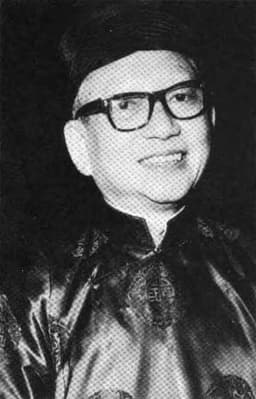
Nguyen Van Thieu
General · Modern
48.2Total

Vauban
General · Modern
76.4Total
Basic Information
Born
1923
1633
Died
—
1707
Era
Modern
Modern
Nationality
Vietnam
France
Occupation
General
General
Civilization
Eastern
Western
Score Comparison
Military (10%)
35.0
76.0
Political (20%)
43.7
59.3
Influence (20%)
53.3
71.0
Legacy (20%)
45.0
90.0
Leadership (15%)
67.0
77.2
Strategy (15%)
35.0
80.6
TOTAL
48.2
76.4
Nguyen Van Thieu — Complete Timeline
1967 AD
Election as President of South VietnamPolitical Action◆ Major
Nguyen Van Thieu was elected president of South Vietnam in a US-supervised election, with Nguyen Cao Ky as vice president. The election was marred by fraud and limited participation, but it provided a veneer of legitimacy for the military-dominated government during the Vietnam War.
ElectionSouth VietnamVietnam War
Impact: national
1968 AD
Tet OffensiveWar
North Vietnamese and Viet Cong forces launched the Tet Offensive, a massive surprise attack on cities and military bases across South Vietnam. Thieu's government survived the assault, but the offensive exposed the vulnerability of the regime and shifted US public opinion against the war.
Tet OffensiveVietnam WarTurning Point
Impact: globaltragic
1973 AD
Paris Peace AccordsPolitical Action◆ Major
Thieu reluctantly signed the Paris Peace Accords, which called for a ceasefire and US withdrawal from Vietnam. The agreement allowed North Vietnamese troops to remain in the South, and Thieu's government was left to fight alone, leading to its eventual collapse.
Paris AccordsPeaceVietnam War
Impact: globaldestructive
1975 AD
Fall of Saigon and ResignationPolitical Action
As North Vietnamese forces advanced on Saigon, Nguyen Van Thieu resigned the presidency and fled to Taiwan. His departure marked the end of South Vietnam, which surrendered unconditionally days later, leading to the reunification of Vietnam under communist rule.
Fall of SaigonResignationReunification
Impact: globaltragic
Vauban — Complete Timeline
1673 AD
Siege of MaastrichtWar◆ Major
Vauban directed the siege of Maastricht for Louis XIV. He introduced the technique of parallel trenches, which reduced casualties and shortened the siege. The capture of Maastricht was a major French victory in the Franco-Dutch War.
Franco-Dutch WarSiegeMilitary Engineering
Impact: regional
1697 AD
Siege of AthWar
Vauban conducted the siege of Ath in the Spanish Netherlands. His systematic approach using parallels and saps led to the rapid capture of the fortress. The siege demonstrated the effectiveness of his methods.
Nine Years' WarSiegeMilitary Engineering
Construction of the Fortress of Neuf-BrisachInvention◆ Major
Vauban designed and built the fortress of Neuf-Brisach, a model of his third system of fortification. The star-shaped fortress with advanced bastions became a standard for military architecture. It was built to protect the French border after the Treaty of Ryswick.
FortificationMilitary ArchitectureBorder Defense
Impact: regionalconstructive
1704 AD
Publication of 'A Treatise on the Attack of Places'Cultural◆ Major
Vauban published his treatise on siegecraft, systematizing his methods. The work became a standard military textbook in Europe. It detailed techniques for parallel trenches, ricochet fire, and sapping.
Military TheorySiegecraftPublication
Impact: globalconstructive
1707 AD
Proposal for a 'Dîme Royale' Tax ReformReform
Vauban proposed a radical tax reform called the 'D
Tax ReformEconomic PolicyFrance
Impact: nationalconstructive
This comparison has not been analyzed yet.
One-time AI generation (~1 minute). Scores and timeline are already available below.
Rankings
🥇
VaubanLeader
Mil: 76.0Pol: 59.3Inf: 71.0
76.4
🥈
Nguyen Van Thieu
Mil: 35.0Pol: 43.7Inf: 53.3
48.2
+28.2 behind
How This Comparison Works
Algorithm
Each figure is scored on 6 dimensions (0—100 scale) based on structured historical data: Military (10%), Political (20%), Influence (20%), Legacy (20%), Leadership (15%), Strategy (15%). The weighted total produces the final ranking.
Data Sources
Scores are computed from structured sub-indicators in the database. Scale factors adjust for era (Ancient ×0.85, Modern ×1.0) and civilization size (Eastern ×1.05, Other ×0.80) to account for differences in population and military scale.
Maximum 3 Figures
Comparisons are limited to 2—3 figures to ensure readability and statistical meaningfulness.
Error Margins
±5 points per dimension — Sub-scores are derived from historical records with inherent uncertainty. Two figures within 5 points on a dimension should be considered roughly equivalent in that area.
Total Score Accuracy
±3 points overall — The weighted combination of 6 dimensions produces a total score with approximately ±3 points of uncertainty. Differences of less than 3 points are not statistically significant— the figures are effectively tied.
Known Limitations
- Historical records are incomplete and uneven across civilizations
- Figures from oral-tradition societies may be underrepresented
- Occupation labels can misclassify multi-role figures
- Scores measure capability and impact, not moral character
- Quantitative scoring is a comparison tool, not absolute truth
Capability Radar
Military (10%) — Battles & Warfare
Battles
35
75
Win Rate
25
85
Expansion
10
70
Political (20%) — Governance & Reform
Reform
30
80
Diplomacy
40
60
Economy
20
55
Influence (20%) — Cultural & Global Reach
Cultural
20
80
Global
30
75
Legacy (20%) — Historical Impact
Historical
40
85
Longevity
20
85
Leadership (15%) — Power & Stability
Tenure
55
65
Stability
15
70
Strategy (15%) — Tactics & Innovation
Strategy
30
90
Tactics
30
95
Reform
40
95
Similar Comparisons
Comments & Discussion
No comments yet. Be the first to share your thoughts!