Loading...
Nguyen Van Thieu vs Ushijima Mitsuru
Nguyen Van Thieu leads by 3.9 pts · 2 figures compared
…
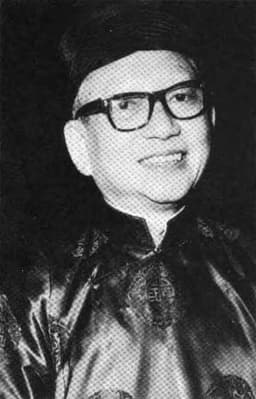
Nguyen Van Thieu
General · Modern
48.2Total

Ushijima Mitsuru
General · Modern
44.3Total
Basic Information
Born
1923
1887
Died
—
1945
Era
Modern
Modern
Nationality
Vietnam
Japan
Occupation
General
General
Civilization
Eastern
Eastern
Score Comparison
Military (10%)
35.0
45.0
Political (20%)
43.7
27.9
Influence (20%)
53.3
51.0
Legacy (20%)
45.0
43.3
Leadership (15%)
67.0
40.4
Strategy (15%)
35.0
60.0
TOTAL
48.2
44.3
Nguyen Van Thieu — Complete Timeline
1967 AD
Election as President of South VietnamPolitical Action◆ Major
Nguyen Van Thieu was elected president of South Vietnam in a US-supervised election, with Nguyen Cao Ky as vice president. The election was marred by fraud and limited participation, but it provided a veneer of legitimacy for the military-dominated government during the Vietnam War.
ElectionSouth VietnamVietnam War
Impact: national
1968 AD
Tet OffensiveWar
North Vietnamese and Viet Cong forces launched the Tet Offensive, a massive surprise attack on cities and military bases across South Vietnam. Thieu's government survived the assault, but the offensive exposed the vulnerability of the regime and shifted US public opinion against the war.
Tet OffensiveVietnam WarTurning Point
Impact: globaltragic
1973 AD
Paris Peace AccordsPolitical Action◆ Major
Thieu reluctantly signed the Paris Peace Accords, which called for a ceasefire and US withdrawal from Vietnam. The agreement allowed North Vietnamese troops to remain in the South, and Thieu's government was left to fight alone, leading to its eventual collapse.
Paris AccordsPeaceVietnam War
Impact: globaldestructive
1975 AD
Fall of Saigon and ResignationPolitical Action
As North Vietnamese forces advanced on Saigon, Nguyen Van Thieu resigned the presidency and fled to Taiwan. His departure marked the end of South Vietnam, which surrendered unconditionally days later, leading to the reunification of Vietnam under communist rule.
Fall of SaigonResignationReunification
Impact: globaltragic
Ushijima Mitsuru — Complete Timeline
1944 AD
Appointed Commander of 32nd ArmyPolitical Action◆ Major
Ushijima Mitsuru was appointed commander of the Japanese 32nd Army in August 1944, tasked with defending Okinawa. He organized the island's defenses, preparing for the expected Allied invasion with a strategy of attrition and fortified positions.
World War IIOkinawaMilitary Command
Impact: regional
1945 AD
Led Defense of OkinawaWar
Ushijima commanded Japanese forces during the Battle of Okinawa from April to June 1945. His defensive strategy caused massive casualties on both sides, with over 100,000 Japanese soldiers and 12,000 American soldiers killed, along with tens of thousands of Okinawan civilians.
World War IIBattle of OkinawaMilitary Defense
Impact: globaltragic
Committed Ritual SuicideOther◆ Major
On June 22, 1945, as the battle ended, Ushijima Mitsuru committed seppuku (ritual suicide) at his headquarters. He chose death over surrender, following the samurai code, and was posthumously promoted to full general.
World War IIOkinawaRitual Suicide
Impact: nationaltragic
Expert Analysis
Origins
Nguyen Van Thieu was born on April 5, 1923, in Tri Thuy, Phan Rang, central Vietnam, into a middle-class family. His father was a small landowner and fisherman. Thieu attended the National Military Academy in Dalat, graduating in 1949, and later trained in France. Ushijima Mitsuru was born on July 31, 1887, in Kagoshima, Japan, into a samurai family. He graduated from the Imperial Japanese Army Academy in 1908 and later from the Army War College. Both men were shaped by military traditions, but Thieu's background was more modest and colonial, while Ushijima's was rooted in Japan's imperial warrior ethos.
Rise to Power
Thieu rose through the ranks of the Army of the Republic of Vietnam (ARVN) during the 1950s, becoming a general by 1964. He participated in the 1963 coup that overthrew Ngo Dinh Diem. In 1965, he became chairman of the National Leadership Committee, and in 1967, he was elected president of South Vietnam in a US-supervised election, with Nguyen Cao Ky as vice president. Ushijima's rise was more conventional: he served in various staff and command positions, including in Burma, and was appointed commander of the Japanese 32nd Army in August 1944, tasked with defending Okinawa. His appointment came as Japan faced imminent invasion.
Leadership & Governance
Thieu led South Vietnam during the Vietnam War, focusing on pacification and Vietnamization. His governance was marked by corruption and political repression, but he maintained stability among fractious factions. His military strategy relied heavily on US support, scoring 35.0 in military acumen. Ushijima, scoring 60.0 in strategy, employed defensive tactics at Okinawa, using caves and fortifications to inflict maximum casualties. He prioritized delaying the inevitable US victory. Unlike Thieu, Ushijima had no political role; his leadership was purely military.
Triumph & Tragedy
Thieu's greatest success was overseeing the 1972 Easter Offensive repulse with US air support. His greatest failure was the 1975 collapse; he resigned on April 21, 1975, as North Vietnamese forces approached Saigon, fleeing to Taiwan. The fall of Saigon ended South Vietnam. Ushijima's triumph was the costly defense of Okinawa from April to June 1945, causing over 100,000 casualties. His tragedy was the loss of the battle and his ritual suicide on June 22, 1945, after ordering his troops to fight to the death. Both men faced defeat, but Thieu's flight contrasted sharply with Ushijima's seppuku.
Character & Destiny
Thieu was pragmatic but indecisive, often deferring to US advisors. His corruption and reliance on US aid undermined his legitimacy. His score of 67.0 in leadership reflects his ability to hold power, but his political score of 43.7 indicates limited effectiveness. Ushijima was stoic and fatalistic, embodying the samurai code. His strategic score of 60.0 shows competence, but his political score of 27.9 reflects his narrow focus. Both men were products of their cultures: Thieu of a US-dependent client state, Ushijima of Imperial Japan's suicidal militarism.
Legacy
Thieu is remembered as the last president of South Vietnam, a symbol of US failure. His legacy score of 45.0 reflects his negative reputation in Vietnam and limited impact globally. Ushijima's legacy score of 43.3 is similar; he is remembered for his stubborn defense and ritual suicide, emblematic of Japan's wartime fanaticism. Neither left enduring institutions. Thieu's scores: Military 35.0, Political 43.7, Influence 53.3, Legacy 45.0, Leadership 67.0, Strategy 35.0, TOTAL 48.2. Ushijima: Military 45.0, Political 27.9, Influence 51.0, Legacy 43.3, Leadership 40.4, Strategy 60.0, TOTAL 44.3.
Conclusion
Nguyen Van Thieu had a greater overall impact due to his role in the Vietnam War, which shaped global politics. Despite his lower military and strategy scores, his political leadership (43.7 vs 27.9) and influence (53.3 vs 51.0) placed him at the center of a conflict that defined the Cold War. Ushijima's tactical skill at Okinawa was significant, but his theater was limited. Therefore, Thieu's total score of 48.2 surpasses Ushijima's 44.3, and his actions affected millions more. Thieu is the more consequential figure.
Rankings
🥇
Nguyen Van ThieuLeader
Mil: 35.0Pol: 43.7Inf: 53.3
48.2
🥈
Ushijima Mitsuru
Mil: 45.0Pol: 27.9Inf: 51.0
44.3
+3.9 behind
How This Comparison Works
Algorithm
Each figure is scored on 6 dimensions (0—100 scale) based on structured historical data: Military (10%), Political (20%), Influence (20%), Legacy (20%), Leadership (15%), Strategy (15%). The weighted total produces the final ranking.
Data Sources
Scores are computed from structured sub-indicators in the database. Scale factors adjust for era (Ancient ×0.85, Modern ×1.0) and civilization size (Eastern ×1.05, Other ×0.80) to account for differences in population and military scale.
Maximum 3 Figures
Comparisons are limited to 2—3 figures to ensure readability and statistical meaningfulness.
Error Margins
±5 points per dimension — Sub-scores are derived from historical records with inherent uncertainty. Two figures within 5 points on a dimension should be considered roughly equivalent in that area.
Total Score Accuracy
±3 points overall — The weighted combination of 6 dimensions produces a total score with approximately ±3 points of uncertainty. Differences of less than 3 points are not statistically significant— the figures are effectively tied.
Known Limitations
- Historical records are incomplete and uneven across civilizations
- Figures from oral-tradition societies may be underrepresented
- Occupation labels can misclassify multi-role figures
- Scores measure capability and impact, not moral character
- Quantitative scoring is a comparison tool, not absolute truth
Capability Radar
Military (10%) — Battles & Warfare
Battles
35
30
Win Rate
25
25
Expansion
10
10
Political (20%) — Governance & Reform
Reform
30
10
Diplomacy
40
15
Economy
20
10
Influence (20%) — Cultural & Global Reach
Cultural
20
20
Global
30
15
Legacy (20%) — Historical Impact
Historical
40
30
Longevity
20
20
Leadership (15%) — Power & Stability
Tenure
55
20
Stability
15
15
Strategy (15%) — Tactics & Innovation
Strategy
30
40
Tactics
30
45
Reform
40
10
Similar Comparisons
Comments & Discussion
No comments yet. Be the first to share your thoughts!