Loading...
This comparison has not been analyzed yet.
One-time AI generation (~1 minute). Scores and timeline are already available below.
Nereu Ramos vs Pavel Milyukov
Pavel Milyukov leads by 17.4 pts · 2 figures compared
…
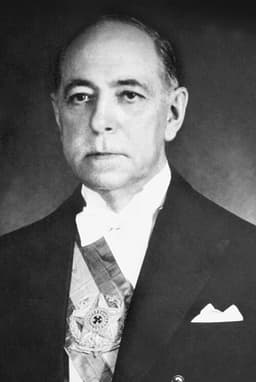
Nereu Ramos
Politician · Modern
38.7Total

Pavel Milyukov
Politician · Modern
56.1Total
Basic Information
Born
1888
1859
Died
1958
1943
Era
Modern
Modern
Nationality
Brazil
Russia
Occupation
Politician
Politician
Civilization
Western
Western
Score Comparison
Military (10%)
48.6
50.0
Political (20%)
27.9
72.0
Influence (20%)
45.5
55.7
Legacy (20%)
35.8
44.2
Leadership (15%)
34.6
74.0
Strategy (15%)
41.0
42.6
TOTAL
38.7
56.1
Nereu Ramos — Complete Timeline
1955 AD
Appointed Vice President of BrazilPolitical Action
Nereu Ramos was elected Vice President of Brazil in 1955, serving under President Juscelino Kubitschek. This position made him a key figure in the government.
Vice presidencyKubitschek administration
Impact: national
Became Interim President of BrazilPolitical Action◆ Major
After the military coup that ousted Carlos Luz on November 11, 1955, Nereu Ramos, as Vice President, assumed the presidency on an interim basis. He served from November 11, 1955, to January 31, 1956, overseeing the transition to the elected government of Juscelino Kubitschek.
Interim presidencyPolitical transitionCoup aftermath
Impact: national
1956 AD
President of the Chamber of DeputiesPolitical Action
After serving as interim president, Nereu Ramos returned to the Chamber of Deputies and was elected its President in 1956. He held this position until 1958.
Legislative roleChamber presidency
Impact: national
Pavel Milyukov — Complete Timeline
1907 AD
Leadership of the Constitutional Democratic PartyPolitical Action◆ Major
Milyukov became the leader of the Constitutional Democratic Party (Kadets), the main liberal party in Russia. He advocated for a constitutional monarchy, civil liberties, and parliamentary government. Under his leadership, the Kadets became a major force in the Duma.
KadetsLiberal PartyDuma
Impact: nationalconstructive
1917 AD
Appointment as Foreign MinisterPolitical Action◆ Major
After the February Revolution, Milyukov was appointed Foreign Minister in the Provisional Government. He pursued a policy of continuing the war against the Central Powers and honoring Russia's commitments to the Allies, which became increasingly unpopular.
Foreign MinisterProvisional GovernmentWorld War I
Impact: national
Milyukov NotePolitical Action◆ Major
Milyukov sent a note to the Allies reaffirming Russia's commitment to the war and its war aims, including annexation of the Straits. The note sparked massive protests in Petrograd, leading to the April Crisis and Milyukov's resignation as Foreign Minister.
Milyukov NoteApril CrisisWar Aims
Impact: nationaldestructive
1918 AD
Exile and Anti-Bolshevik ActivitiesPolitical Action
After the Bolshevik takeover, Milyukov fled to the south of Russia and later emigrated to France. He initially supported the White movement but later advocated for a more conciliatory approach toward the Bolsheviks. He continued to write and publish historical works.
ExileWhite MovementEmigration
Impact: national
This comparison has not been analyzed yet.
One-time AI generation (~1 minute). Scores and timeline are already available below.
Rankings
🥇
Pavel MilyukovLeader
Mil: 50.0Pol: 72.0Inf: 55.7
56.1
🥈
Nereu Ramos
Mil: 48.6Pol: 27.9Inf: 45.5
38.7
+17.4 behind
How This Comparison Works
Algorithm
Each figure is scored on 6 dimensions (0—100 scale) based on structured historical data: Military (10%), Political (20%), Influence (20%), Legacy (20%), Leadership (15%), Strategy (15%). The weighted total produces the final ranking.
Data Sources
Scores are computed from structured sub-indicators in the database. Scale factors adjust for era (Ancient ×0.85, Modern ×1.0) and civilization size (Eastern ×1.05, Other ×0.80) to account for differences in population and military scale.
Maximum 3 Figures
Comparisons are limited to 2—3 figures to ensure readability and statistical meaningfulness.
Error Margins
±5 points per dimension — Sub-scores are derived from historical records with inherent uncertainty. Two figures within 5 points on a dimension should be considered roughly equivalent in that area.
Total Score Accuracy
±3 points overall — The weighted combination of 6 dimensions produces a total score with approximately ±3 points of uncertainty. Differences of less than 3 points are not statistically significant— the figures are effectively tied.
Known Limitations
- Historical records are incomplete and uneven across civilizations
- Figures from oral-tradition societies may be underrepresented
- Occupation labels can misclassify multi-role figures
- Scores measure capability and impact, not moral character
- Quantitative scoring is a comparison tool, not absolute truth
Capability Radar
Military (10%) — Battles & Warfare
Battles
31
26
Win Rate
34
34
Expansion
33
34
Political (20%) — Governance & Reform
Reform
15
60
Diplomacy
20
55
Economy
15
40
Influence (20%) — Cultural & Global Reach
Cultural
5
30
Global
5
35
Legacy (20%) — Historical Impact
Historical
10
40
Longevity
5
25
Leadership (15%) — Power & Stability
Tenure
10
45
Stability
10
20
Strategy (15%) — Tactics & Innovation
Strategy
35
37
Tactics
39
41
Reform
44
44
Similar Comparisons
Comments & Discussion
No comments yet. Be the first to share your thoughts!