Loading...
Carlos Andres Perez vs Nereu Ramos
Carlos Andres Perez leads by 12.4 pts · 2 figures compared
…

Carlos Andres Perez
Politician · Modern
51.1Total
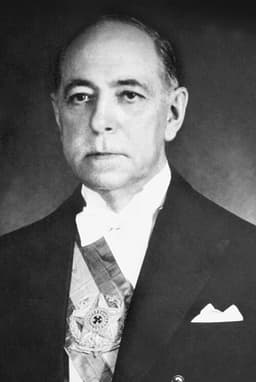
Nereu Ramos
Politician · Modern
38.7Total
Basic Information
Born
1922
1888
Died
—
1958
Era
Modern
Modern
Nationality
Venezuela
Brazil
Occupation
Politician
Politician
Civilization
Western
Western
Score Comparison
Military (10%)
50.0
48.6
Political (20%)
65.0
27.9
Influence (20%)
57.2
45.5
Legacy (20%)
46.7
35.8
Leadership (15%)
40.0
34.6
Strategy (15%)
44.2
41.0
TOTAL
51.1
38.7
Carlos Andres Perez — Complete Timeline
1974 AD
First Presidency (1974-1979)Political Action◆ Major
Carlos Andr
Oil BoomNationalizationSocial Programs
Impact: nationalconstructive
1989 AD
Second Presidency and Economic Crisis (1989-1993)Political Action◆ Major
Pérez began his second term facing a severe economic crisis. He implemented neoliberal austerity measures, including the 'Gran Viraje' (Great Turnaround), which led to the Caracazo riots in February 1989, resulting in hundreds of deaths. The crisis also fueled two coup attempts in 1992.
CaracazoNeoliberalismCoup Attempts
Impact: nationaldestructive
1993 AD
Impeachment and Removal from OfficePolitical Action◆ Major
Pérez was impeached by the Venezuelan Congress on charges of corruption and misuse of public funds, specifically for illegally allocating 250 million bolivars to support the presidential campaign of Violeta Chamorro in Nicaragua. He was suspended from office and later convicted, serving time under house arrest.
ImpeachmentCorruptionPolitical Crisis
Impact: nationaldestructive
Nereu Ramos — Complete Timeline
1955 AD
Appointed Vice President of BrazilPolitical Action
Nereu Ramos was elected Vice President of Brazil in 1955, serving under President Juscelino Kubitschek. This position made him a key figure in the government.
Vice presidencyKubitschek administration
Impact: national
Became Interim President of BrazilPolitical Action◆ Major
After the military coup that ousted Carlos Luz on November 11, 1955, Nereu Ramos, as Vice President, assumed the presidency on an interim basis. He served from November 11, 1955, to January 31, 1956, overseeing the transition to the elected government of Juscelino Kubitschek.
Interim presidencyPolitical transitionCoup aftermath
Impact: national
1956 AD
President of the Chamber of DeputiesPolitical Action
After serving as interim president, Nereu Ramos returned to the Chamber of Deputies and was elected its President in 1956. He held this position until 1958.
Legislative roleChamber presidency
Impact: national
Expert Analysis
Origins
Carlos Andrés Pérez was born on October 27, 1922, in Rubio, Táchira, Venezuela. He was the son of a farmer and a schoolteacher, growing up in a modest rural environment. Pérez studied law at the Central University of Venezuela but left before completing his degree to pursue politics full-time. He joined the social democratic Democratic Action party (AD) in his youth, influenced by the ideals of Rómulo Betancourt.
Nereu Ramos was born on September 3, 1888, in Lages, Santa Catarina, Brazil. He came from a politically active family; his father was a state deputy. Ramos studied law at the Faculty of Law of São Paulo, graduating in 1910. He entered politics early, becoming a state deputy in Santa Catarina in 1915, and later a federal deputy. Ramos was a member of the Social Democratic Party (PSD), a centrist party that supported Getúlio Vargas.
Rise to Power
Pérez rose through the ranks of Democratic Action, serving as a federal deputy and later as Minister of Interior under President Betancourt (1959–1964). He gained prominence for his role in suppressing leftist insurgencies. In 1973, he won the presidency with 48.7% of the vote, campaigning on a platform of using oil revenues for national development. His first term (1974–1979) coincided with the 1970s oil boom, which saw Venezuela's oil income skyrocket.
Ramos's rise was more gradual. He served multiple terms as a federal deputy and was President of the Chamber of Deputies from 1946 to 1947. In 1955, he was elected Vice President under President Juscelino Kubitschek. However, a political crisis in November 1955 led to a military coup that ousted Carlos Luz, the interim president. As Vice President, Ramos assumed the interim presidency from November 11, 1955, to January 31, 1956, serving only 81 days. His role was to stabilize the transition until Kubitschek's inauguration.
Leadership & Governance
Pérez's leadership was characterized by bold, often controversial, policies. During his first term, he nationalized the iron and petroleum industries, creating the state-owned companies Sidor and PDVSA. He also implemented ambitious infrastructure projects, such as the Caracas metro and the Guri Dam expansion, funded by oil revenues. His total political score of 65.0 reflects his ability to push through major reforms. However, his second term (1989–1993) was marked by neoliberal austerity measures, the "Gran Viraje," which included eliminating subsidies, devaluing the currency, and opening the economy. These policies sparked the Caracazo riots in February 1989, resulting in hundreds of deaths. His leadership score of 40.0 indicates the turmoil of his second term.
Ramos's governance was largely procedural. As interim president, his main task was to ensure the democratic transition after the military intervention. He maintained continuity, kept the cabinet from his predecessor, and focused on administrative matters. He did not implement major reforms, as his tenure was brief. His political score of 27.9 reflects his limited scope. His leadership score of 34.6 suggests a cautious, caretaker style.
Triumph & Tragedy
Pérez's greatest triumph was the nationalization of oil, which gave Venezuela control over its most valuable resource. During his first term, the country experienced rapid economic growth, with GDP increasing by an average of 6% annually. However, his tragedy was the collapse of his second term. The economic crisis, austerity measures, and corruption allegations led to his impeachment in 1993. He was convicted of misusing 250 million bolívares and removed from office. His influence score of 57.2 reflects the lasting impact of his oil policies, but his legacy score of 46.7 is marred by the economic disaster.
Ramos's triumph was his successful navigation of the 1955 political crisis. By assuming the presidency and overseeing the transition, he prevented a potential civil war and upheld constitutional order. However, his tragedy is his obscurity; he is largely forgotten in Brazilian history. His influence score of 45.5 is modest, and his legacy score of 35.8 reflects his brief tenure. He did not leave any major policy achievements.
Character & Destiny
Pérez was a charismatic and ambitious leader, known for his oratory and energy. He was a pragmatist who shifted from state intervention to neoliberalism when circumstances changed. His decision-making was often top-down, as seen in the surprise implementation of the Gran Viraje without public consultation. This authoritarian streak contributed to his downfall. Historians describe him as a figure who embodied Venezuela's contradictions: a nationalist who embraced global capitalism.
Ramos was a cautious and legalistic figure. He was a lawyer by training and a career politician who valued stability and procedure. His brief presidency was defined by his willingness to step aside when Kubitschek was inaugurated. He lacked the ambition or vision to leave a lasting mark. His character was better suited for legislative roles, as evidenced by his later tenure as President of the Chamber of Deputies.
Legacy
Pérez's legacy is complex. His nationalization of oil set the stage for Venezuela's petro-state, but also for its later economic dependence. His second term's failure discredited the political establishment and paved the way for Hugo Chávez's rise. PDVSA, created under his first term, remains a key institution. His total score of 51.1 places him as a moderately impactful leader. He is remembered as both a visionary and a cautionary tale.
Ramos's legacy is minimal. He is a footnote in Brazilian history, remembered only by scholars of the 1955 crisis. His total score of 38.7 reflects his limited impact. He did not initiate any lasting policies or institutions. His name appears in lists of Brazilian presidents but seldom in broader historical narratives.
Conclusion
Carlos Andrés Pérez had a greater impact than Nereu Ramos, both during his time and in the long term. With a total score of 51.1 versus 38.7, the 12.4-point gap is significant. Pérez's policies shaped Venezuela's economy and politics for decades, while Ramos's 81-day presidency was a brief interlude. Despite Pérez's failures, his influence on Venezuelan history is undeniable. Ramos, by contrast, is a historical footnote. Therefore, Carlos Andrés Pérez is the more consequential figure.
Rankings
🥇
Carlos Andres PerezLeader
Mil: 50.0Pol: 65.0Inf: 57.2
51.1
🥈
Nereu Ramos
Mil: 48.6Pol: 27.9Inf: 45.5
38.7
+12.4 behind
How This Comparison Works
Algorithm
Each figure is scored on 6 dimensions (0—100 scale) based on structured historical data: Military (10%), Political (20%), Influence (20%), Legacy (20%), Leadership (15%), Strategy (15%). The weighted total produces the final ranking.
Data Sources
Scores are computed from structured sub-indicators in the database. Scale factors adjust for era (Ancient ×0.85, Modern ×1.0) and civilization size (Eastern ×1.05, Other ×0.80) to account for differences in population and military scale.
Maximum 3 Figures
Comparisons are limited to 2—3 figures to ensure readability and statistical meaningfulness.
Error Margins
±5 points per dimension — Sub-scores are derived from historical records with inherent uncertainty. Two figures within 5 points on a dimension should be considered roughly equivalent in that area.
Total Score Accuracy
±3 points overall — The weighted combination of 6 dimensions produces a total score with approximately ±3 points of uncertainty. Differences of less than 3 points are not statistically significant— the figures are effectively tied.
Known Limitations
- Historical records are incomplete and uneven across civilizations
- Figures from oral-tradition societies may be underrepresented
- Occupation labels can misclassify multi-role figures
- Scores measure capability and impact, not moral character
- Quantitative scoring is a comparison tool, not absolute truth
Capability Radar
Military (10%) — Battles & Warfare
Battles
29
31
Win Rate
29
34
Expansion
32
33
Political (20%) — Governance & Reform
Reform
70
15
Diplomacy
60
20
Economy
75
15
Influence (20%) — Cultural & Global Reach
Cultural
40
5
Global
45
5
Legacy (20%) — Historical Impact
Historical
50
10
Longevity
30
5
Leadership (15%) — Power & Stability
Tenure
65
10
Stability
30
10
Strategy (15%) — Tactics & Innovation
Strategy
40
35
Tactics
43
39
Reform
44
44
Similar Comparisons
Comments & Discussion
No comments yet. Be the first to share your thoughts!