Loading...
This comparison has not been analyzed yet.
One-time AI generation (~1 minute). Scores and timeline are already available below.
Neiphiu Rio vs Saionji Kinmochi
Saionji Kinmochi leads by 1.3 pts · 2 figures compared
…

Neiphiu Rio
Politician · Modern
50.0Total
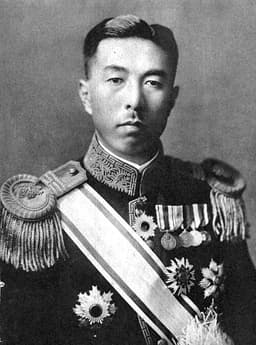
Saionji Kinmochi
Politician · Modern
51.3Total
Basic Information
Born
1950
1849
Died
—
1940
Era
Modern
Modern
Nationality
India
Japan
Occupation
Politician
Politician
Civilization
Indian
Eastern
Score Comparison
Military (10%)
16.3
13.9
Political (20%)
53.8
55.0
Influence (20%)
51.8
57.2
Legacy (20%)
45.8
52.0
Leadership (15%)
78.0
72.0
Strategy (15%)
42.1
35.2
TOTAL
50.0
51.3
Neiphiu Rio — Complete Timeline
2003 AD
Became Chief Minister of NagalandPolitical Action◆ Major
Neiphiu Rio was sworn in as Chief Minister of Nagaland for the first time, leading a Democratic Alliance of Nagaland (DAN) government. He succeeded S. C. Jamir.
Chief MinisterNagalandDAN
Impact: regionalconstructive
Advocated for Naga political solutionPolitical Action
Rio consistently pushed for a peaceful resolution to the Naga insurgency, engaging with the central government and Naga groups. His efforts contributed to the ongoing peace process.
Peace ProcessNagalandInsurgency
Impact: regionalconstructive
2017 AD
Formed Nationalist Democratic Progressive PartyPolitical Action◆ Major
Rio founded the Nationalist Democratic Progressive Party (NDPP) after a split from the Naga People's Front. The party later allied with the BJP to form the government in Nagaland.
NDPPNagalandPolitical Party
Impact: regionalconstructive
2018 AD
Won 2018 Nagaland Assembly electionPolitical Action◆ Major
Rio led the NDPP-BJP alliance to victory in the Nagaland assembly election, winning 30 of 60 seats. He became chief minister for a fourth term, continuing his long tenure.
ElectionNagalandNDPP
Impact: regionalconstructive
Saionji Kinmochi — Complete Timeline
1905 AD
Opposition to the Russo-Japanese War expansionPolitical Action
Saionji Kinmochi opposed the military's desire to continue the Russo-Japanese War beyond the Treaty of Portsmouth. He advocated for peace, arguing that Japan lacked resources for further conflict, and supported the treaty's acceptance.
Peace advocacyForeign policy
Impact: nationalconstructive
1906 AD
Service as Prime MinisterPolitical Action◆ Major
Saionji Kinmochi served as Prime Minister of Japan from 1906 to 1908 and again from 1911 to 1912. He pursued moderate policies, including fiscal restraint and diplomatic cooperation with Western powers.
GovernmentModerate policy
Impact: national
1912 AD
Role as the last genroPolitical Action◆ Major
Saionji Kinmochi became the last surviving genro (elder statesman) after the deaths of other Meiji leaders. He advised successive emperors and tried to restrain the military's political influence, though with limited success.
Elder statesmanPolitical influence
Impact: nationalconstructive
1931 AD
Attempt to restrain militarism in the 1930sPolitical Action◆ Major
Saionji Kinmochi, as the last genro, tried to prevent the military from taking control of the government during the Manchurian Incident and subsequent crises. He recommended moderate politicians as prime ministers, but his influence waned as militarism grew.
MilitarismPolitical resistance
Impact: nationalconstructive
This comparison has not been analyzed yet.
One-time AI generation (~1 minute). Scores and timeline are already available below.
Rankings
🥇
Saionji KinmochiLeader
Mil: 13.9Pol: 55.0Inf: 57.2
51.3
🥈
Neiphiu Rio
Mil: 16.3Pol: 53.8Inf: 51.8
50.0
+1.3 behind
How This Comparison Works
Algorithm
Each figure is scored on 6 dimensions (0—100 scale) based on structured historical data: Military (10%), Political (20%), Influence (20%), Legacy (20%), Leadership (15%), Strategy (15%). The weighted total produces the final ranking.
Data Sources
Scores are computed from structured sub-indicators in the database. Scale factors adjust for era (Ancient ×0.85, Modern ×1.0) and civilization size (Eastern ×1.05, Other ×0.80) to account for differences in population and military scale.
Maximum 3 Figures
Comparisons are limited to 2—3 figures to ensure readability and statistical meaningfulness.
Error Margins
±5 points per dimension — Sub-scores are derived from historical records with inherent uncertainty. Two figures within 5 points on a dimension should be considered roughly equivalent in that area.
Total Score Accuracy
±3 points overall — The weighted combination of 6 dimensions produces a total score with approximately ±3 points of uncertainty. Differences of less than 3 points are not statistically significant— the figures are effectively tied.
Known Limitations
- Historical records are incomplete and uneven across civilizations
- Figures from oral-tradition societies may be underrepresented
- Occupation labels can misclassify multi-role figures
- Scores measure capability and impact, not moral character
- Quantitative scoring is a comparison tool, not absolute truth
Capability Radar
Military (10%) — Battles & Warfare
Battles
21
15
Win Rate
27
19
Expansion
29
18
Political (20%) — Governance & Reform
Reform
55
65
Diplomacy
70
75
Economy
50
60
Influence (20%) — Cultural & Global Reach
Cultural
30
40
Global
20
45
Legacy (20%) — Historical Impact
Historical
35
60
Longevity
40
50
Leadership (15%) — Power & Stability
Tenure
85
70
Stability
60
55
Strategy (15%) — Tactics & Innovation
Strategy
29
23
Tactics
36
28
Reform
37
27
Similar Comparisons
Comments & Discussion
No comments yet. Be the first to share your thoughts!