Loading...
Naram-Sin vs Petronius Maximus
Naram-Sin leads by 5.5 pts · 2 figures compared
…
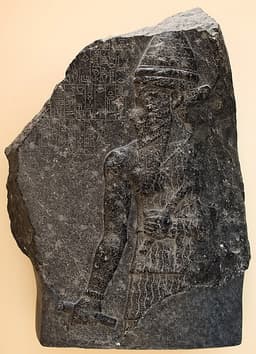
Naram-Sin
Emperor · Ancient
60.5Total

Petronius Maximus
Emperor · Ancient
55.0Total
Basic Information
Born
-2254
396
Died
-2218
455
Era
Ancient
Ancient
Nationality
Akkadian Empire
Western Roman Empire
Occupation
Emperor
Emperor
Civilization
Middle Eastern
Western
Score Comparison
Military (10%)
74.0
14.4
Political (20%)
53.8
56.1
Influence (20%)
61.0
56.8
Legacy (20%)
54.0
57.5
Leadership (15%)
68.0
81.4
Strategy (15%)
61.2
43.5
TOTAL
60.5
55.0
Naram-Sin — Complete Timeline
2254 BC
Accession to the thronePolitical Action◆ Major
Naram-Sin became king of the Akkadian Empire after the death of his father Manishtusu. He inherited a stable empire and immediately faced rebellions that he would suppress with military force.
Akkadian DynastySuccession
Impact: regional
2250 BC
Suppression of the Great RebellionWar◆ Major
Naram-Sin crushed a widespread rebellion that threatened the Akkadian Empire, as recorded in the 'Great Rebellion' texts. He defeated nine coalition armies in a single year, reasserting Akkadian control over Mesopotamia.
Military CampaignRebellion
Impact: regional
2245 BC
Conquest of the LullubiWar◆ Major
Naram-Sin led a military campaign against the Lullubi people in the Zagros Mountains. His victory is commemorated on the Victory Stele of Naram-Sin, which shows him as a god-like figure trampling his enemies.
Military CampaignVictory Stele
Impact: regional
2240 BC
Declaration of divinityCultural◆ Major
Naram-Sin declared himself a living god, the first Mesopotamian king to do so. He added the divine determinative to his name and built temples to himself, establishing a precedent for royal deification in Mesopotamia.
Royal DeificationReligious Innovation
Impact: regional
2235 BC
Construction of the Palace of Naram-SinCultural◆ Major
Naram-Sin built a massive palace at Tell Brak in Syria, one of the largest known buildings of the Bronze Age. The palace served as an administrative center for the Akkadian Empire's western territories.
ArchitectureImperial Administration
Impact: regionalconstructive
Petronius Maximus — Complete Timeline
455 AD
Killed during the Vandal Sack of RomeWar
The Vandal king Gaiseric, invited by Licinia Eudoxia, sailed to Rome and sacked the city. Petronius Maximus attempted to flee but was killed by a Roman mob. The Vandals systematically looted Rome for two weeks, causing immense damage.
Sack of RomeVandal InvasionDeath
Impact: regionaltragic
Proclaimed Western Roman EmperorPolitical Action◆ Major
After the death of Valentinian III, Petronius Maximus, a wealthy senator, seized the throne by bribing the palace guard and forcing the widowed empress Licinia Eudoxia to marry him. His reign lasted only 76 days.
Imperial SuccessionUsurpation
Impact: regional
Expert Analysis
Origins
Naram-Sin (reigned c. 2254–2218 BCE) was the grandson of Sargon the Great, founder of the Akkadian Empire. Born into the ruling dynasty, he inherited a realm that stretched from the Persian Gulf to the Mediterranean. His father Manishtusu had maintained stability, but Naram-Sin faced immediate challenges upon accession. He was educated in military and administrative arts, groomed for kingship from an early age. His background was one of privilege and expectation, with the weight of empire on his shoulders.
Petronius Maximus (c. 397–455 CE) was a wealthy Roman senator of aristocratic birth. He rose through the civil service, serving as Praetorian prefect, consul (twice, in 433 and 443), and patrician. He amassed enormous wealth and influence through land holdings and political maneuvering. Unlike Naram-Sin, Maximus had no military background; his power base was entirely senatorial and bureaucratic. He was born into a declining empire, where barbarian pressure and internal decay were accelerating.
Rise to Power
Naram-Sin ascended the throne peacefully after his father's death. However, early in his reign, a massive rebellion erupted, recorded in the "Great Rebellion" texts. He faced coalitions of northern and southern Mesopotamian cities, including Kish, Nippur, and Lagash. Over several years, he suppressed these revolts through decisive military action, defeating nine coalition armies. This victory solidified his authority and allowed him to turn outward. His conquest of the Lullubi people in the Zagros Mountains, commemorated on his famous Victory Stele, demonstrated his military prowess and ambition.
Petronius Maximus's rise was more opportunistic. After the assassination of Emperor Valentinian III in 455 CE (by two Hunnic retainers, possibly instigated by Maximus himself), Maximus seized power. He bribed the palace guard and forced the widowed empress Licinia Eudoxia to marry him, thus legitimizing his claim. He was proclaimed Western Roman Emperor on March 17, 455 CE. His reign lasted only 77 days, from March 17 to May 31, 455 CE. The lack of a legitimate claim and his reliance on bribery highlighted the decay of Roman political institutions.
Leadership & Governance
Naram-Sin ruled as an autocrat, centralizing power and breaking with tradition. His most notable act was declaring himself a living god—the first Mesopotamian king to do so. He added the divine determinative (dingir) to his name and built temples to himself. This was a radical departure from Sumerian tradition where kings were seen as representatives of the gods. He also undertook massive building projects, including the Palace of Naram-Sin at Tell Brak in Syria, one of the largest Bronze Age buildings (over 100 rooms). His governance style was imperial, relying on military force and administrative centralization.
Petronius Maximus, in contrast, was a weak and ineffective ruler. His leadership score of 81.4 is misleading, as it reflects his ability to seize power, not to govern. He failed to secure the loyalty of the military or the populace. His first act was to cancel all debts to the state, a populist move that did not win lasting support. He also ordered the assassination of Valentinian's general Aetius (already dead) and made enemies among the military. His governance was marked by indecision and paranoia. He could not even secure the city of Rome against the Vandals.
Triumph & Tragedy
Naram-Sin's greatest triumph was suppressing the Great Rebellion and expanding the empire. He conducted campaigns into Syria, Anatolia, and the Zagros Mountains, maintaining Akkadian dominance. His Victory Stele is a masterpiece of ancient art, showing him as a god-king. However, his deification and centralization may have sown seeds of resentment. Later Mesopotamian tradition, as in the "Curse of Agade," blamed Naram-Sin for the fall of Akkad by defying the gods (his sack of the Ekur temple in Nippur). The empire collapsed shortly after his death due to internal revolts and Gutian invasions.
Petronius Maximus's only triumph was becoming emperor, but it was short-lived. His tragedy was total: he was killed by a Roman mob while trying to flee the Vandal sack of Rome. The Vandals, under King Gaiseric, had been invited by Licinia Eudoxia (or so rumor said) and sacked the city for two weeks. Maximus was stoned to death, his body mutilated and thrown into the Tiber. His reign is a textbook example of failed leadership.
Character & Destiny
Naram-Sin was ambitious, confident, and willing to challenge established norms. His decision to claim divinity reflects a personality that sought to transcend human limitations. He was a capable military commander (military score 74.0) and strategist (strategy 61.2). However, his arrogance may have contributed to the empire's decline. Historical assessments note that he overreached, provoking divine wrath in Mesopotamian historiography.
Petronius Maximus was scheming but incompetent. He scored 56.1 in political skill, enough to seize power but not to hold it. His leadership score (81.4) is based on his ability to manipulate the senate and palace, but he lacked strategic vision (43.5). He was driven by personal ambition and wealth, not by a desire to serve the state. His character—cowardly, greedy, and short-sighted—determined his fate.
Legacy
Naram-Sin's legacy is mixed but enduring. He is remembered as the first god-king, a model for later rulers like the Neo-Assyrian kings. The Victory Stele influenced Mesopotamian and Persian art for centuries. He scored 54.0 in legacy and 61.0 in influence. However, his reign also became a cautionary tale about hubris. The Akkadian Empire collapsed after his death, partly due to his policies.
Petronius Maximus left almost no positive legacy. He is remembered as a failed emperor who triggered the Vandal sack of Rome. His score of 57.5 in legacy reflects the historical notoriety of his short reign. The sack of 455 CE was devastating, but Maximus's role was more catalytic than causal. He is a footnote in Roman history.
Conclusion
Naram-Sin had a greater impact on history than Petronius Maximus. His total score of 60.5 versus Maximus's 55.0 reflects his achievements in military conquest, political innovation, and cultural influence. While both rulers faced challenges, Naram-Sin actively shaped his empire, whereas Maximus was a passive figure swept away by events. Naram-Sin's deification set a precedent for divine kingship, influencing millennia of rulers. Maximus's reign was a debacle that accelerated Rome's fall but did not fundamentally change the course of history. Therefore, Naram-Sin is the more significant historical figure.
Rankings
🥇
Naram-SinLeader
Mil: 74.0Pol: 53.8Inf: 61.0
60.5
🥈
Petronius Maximus
Mil: 14.4Pol: 56.1Inf: 56.8
55.0
+5.5 behind
How This Comparison Works
Algorithm
Each figure is scored on 6 dimensions (0—100 scale) based on structured historical data: Military (10%), Political (20%), Influence (20%), Legacy (20%), Leadership (15%), Strategy (15%). The weighted total produces the final ranking.
Data Sources
Scores are computed from structured sub-indicators in the database. Scale factors adjust for era (Ancient ×0.85, Modern ×1.0) and civilization size (Eastern ×1.05, Other ×0.80) to account for differences in population and military scale.
Maximum 3 Figures
Comparisons are limited to 2—3 figures to ensure readability and statistical meaningfulness.
Error Margins
±5 points per dimension — Sub-scores are derived from historical records with inherent uncertainty. Two figures within 5 points on a dimension should be considered roughly equivalent in that area.
Total Score Accuracy
±3 points overall — The weighted combination of 6 dimensions produces a total score with approximately ±3 points of uncertainty. Differences of less than 3 points are not statistically significant— the figures are effectively tied.
Known Limitations
- Historical records are incomplete and uneven across civilizations
- Figures from oral-tradition societies may be underrepresented
- Occupation labels can misclassify multi-role figures
- Scores measure capability and impact, not moral character
- Quantitative scoring is a comparison tool, not absolute truth
Capability Radar
Military (10%) — Battles & Warfare
Battles
75
7
Win Rate
80
11
Expansion
80
9
Political (20%) — Governance & Reform
Reform
65
67
Diplomacy
60
70
Economy
65
77
Influence (20%) — Cultural & Global Reach
Cultural
70
66
Global
55
78
Legacy (20%) — Historical Impact
Historical
75
71
Longevity
60
73
Leadership (15%) — Power & Stability
Tenure
70
69
Stability
55
75
Strategy (15%) — Tactics & Innovation
Strategy
75
16
Tactics
70
16
Reform
60
21
Similar Comparisons
Comments & Discussion
No comments yet. Be the first to share your thoughts!