Loading...
Naram-Sin vs Yazdegerd I
Naram-Sin leads by 11.0 pts · 2 figures compared
…
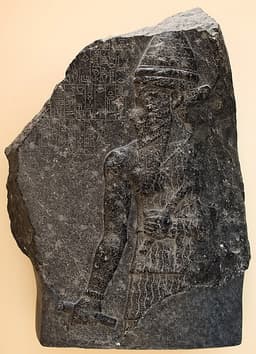
Naram-Sin
Emperor · Ancient
60.5Total

Yazdegerd I
Emperor · Ancient
49.5Total
Basic Information
Born
-2254
370
Died
-2218
421
Era
Ancient
Ancient
Nationality
Akkadian Empire
Sassanid Empire
Occupation
Emperor
Emperor
Civilization
Middle Eastern
Middle Eastern
Score Comparison
Military (10%)
74.0
38.3
Political (20%)
53.8
60.0
Influence (20%)
61.0
57.2
Legacy (20%)
54.0
47.5
Leadership (15%)
68.0
40.0
Strategy (15%)
61.2
45.0
TOTAL
60.5
49.5
Naram-Sin — Complete Timeline
2254 BC
Accession to the thronePolitical Action◆ Major
Naram-Sin became king of the Akkadian Empire after the death of his father Manishtusu. He inherited a stable empire and immediately faced rebellions that he would suppress with military force.
Akkadian DynastySuccession
Impact: regional
2250 BC
Suppression of the Great RebellionWar◆ Major
Naram-Sin crushed a widespread rebellion that threatened the Akkadian Empire, as recorded in the 'Great Rebellion' texts. He defeated nine coalition armies in a single year, reasserting Akkadian control over Mesopotamia.
Military CampaignRebellion
Impact: regional
2245 BC
Conquest of the LullubiWar◆ Major
Naram-Sin led a military campaign against the Lullubi people in the Zagros Mountains. His victory is commemorated on the Victory Stele of Naram-Sin, which shows him as a god-like figure trampling his enemies.
Military CampaignVictory Stele
Impact: regional
2240 BC
Declaration of divinityCultural◆ Major
Naram-Sin declared himself a living god, the first Mesopotamian king to do so. He added the divine determinative to his name and built temples to himself, establishing a precedent for royal deification in Mesopotamia.
Royal DeificationReligious Innovation
Impact: regional
2235 BC
Construction of the Palace of Naram-SinCultural◆ Major
Naram-Sin built a massive palace at Tell Brak in Syria, one of the largest known buildings of the Bronze Age. The palace served as an administrative center for the Akkadian Empire's western territories.
ArchitectureImperial Administration
Impact: regionalconstructive
Yazdegerd I — Complete Timeline
408 AD
Peace with the Roman EmpirePolitical Action◆ Major
Yazdegerd I negotiated a peace treaty with the Roman Empire, ending decades of conflict. The treaty established friendly relations between the two empires, with Yazdegerd even acting as a guardian for the young Roman emperor Theodosius II. This peace lasted for most of his reign.
Sassanid EmpireRoman EmpireTreaty
Impact: regionalconstructive
409 AD
Edict of toleration for ChristiansPolitical Action◆ Major
Yazdegerd I issued an edict allowing Christians in the Sassanid Empire to worship freely and rebuild their churches. This policy of religious tolerance was a departure from the persecution under his predecessors and was intended to stabilize the empire and improve relations with Rome.
Sassanid EmpireReligious ToleranceChristianity
Impact: regionalprogressive
410 AD
Conflict with the nobilityPolitical Action
Yazdegerd I faced opposition from the Zoroastrian nobility and clergy, who resented his pro-Christian policies and his attempts to centralize power. The nobility accused him of being a tyrant and plotted against him. This internal conflict weakened his authority and led to instability.
Sassanid EmpireNobilityConflict
Impact: nationaldestructive
421 AD
Death under mysterious circumstancesPolitical Action◆ Major
Yazdegerd I died suddenly, possibly assassinated by the nobility. His death led to a power struggle and a brief persecution of Christians under his successor Bahram V. His reign was later remembered as a period of peace and tolerance, but his legacy was controversial among the Zoroastrian elite.
DeathSassanid EmpireAssassination
Impact: nationaltragic
Expert Analysis
Origins
Naram-Sin (c. 2254–2218 BCE) was the grandson of Sargon of Akkad, born into the ruling dynasty of the Akkadian Empire. His father, Manishtusu, succeeded Sargon, and Naram-Sin inherited a stable but restive empire. Little is known of his early life, but he was trained in military and administrative arts. In contrast, Yazdegerd I (399–420 CE) was a son of Shahanshah Shapur III of the Sassanid Empire. He ascended the throne after a period of internal strife and faced a powerful Zoroastrian clergy and nobility. His upbringing likely involved court intrigue and religious education, shaping his later policies of tolerance.
Rise to Power
Naram-Sin became king after his father's death, but immediately faced a massive rebellion known as the 'Great Rebellion,' recorded in cuneiform texts. He suppressed a coalition of nine rebel kings, securing his throne. His military success allowed him to consolidate power and later declare himself a god. Yazdegerd I rose to power after the assassination of his predecessor, Bahram IV. He inherited a war with the Roman Empire and internal conflicts with the nobility. His early reign focused on ending the Roman conflict, which he achieved through a peace treaty in 401 CE, establishing friendly relations that lasted for decades.
Leadership & Governance
Naram-Sin ruled as an autocratic god-king, centralizing authority under his divine persona. He built the Palace of Naram-Sin at Tell Brak, a massive administrative center, and conducted campaigns against the Lullubi and other mountain peoples, commemorated on the Victory Stele. His governance emphasized military strength and personal cult. Yazdegerd I, by contrast, pursued a policy of religious tolerance, issuing an edict allowing Christians to worship freely and rebuild churches. He also curbed the power of the Zoroastrian nobility, attempting to centralize authority. While Naram-Sin's leadership scored 68.0, Yazdegerd's was lower at 40.0, reflecting his reliance on diplomacy over force.
Triumph & Tragedy
Naram-Sin's greatest triumph was the suppression of the Great Rebellion, which preserved the Akkadian Empire. His military campaigns expanded its borders, and his deification elevated his status. However, his arrogance and divine claims may have contributed to later instability; the empire declined after his death. His total score of 60.5 reflects a mixed legacy. Yazdegerd's triumph was the peace with Rome and his tolerance edict, which improved Christian relations and reduced conflict. His tragedy was his mysterious death, likely by assassination, which led to a brief persecution of Christians under his successor. His total score of 49.5 indicates less overall impact.
Character & Destiny
Naram-Sin was ambitious and self-aggrandizing, the first to claim divinity in Mesopotamia. His decision-making prioritized expansion and personal authority, leading to military successes but also alienating traditional elites. Historical assessments note his hubris as a factor in the empire's eventual collapse. Yazdegerd I was pragmatic and tolerant, seeking stability through diplomacy. His character earned him the epithet 'the Sinner' from Zoroastrian sources but 'the Good' from Christians. His destiny was shaped by his conflict with the nobility, who likely orchestrated his death.
Legacy
Naram-Sin's legacy includes the Victory Stele, a masterpiece of ancient art, and the precedent of divine kingship in Mesopotamia. His palace at Tell Brak influenced later architecture. However, his empire fragmented after his death, limiting long-term impact. His legacy score is 54.0. Yazdegerd I's legacy lies in his policy of religious tolerance, which set a precedent for later Sassanid rulers and influenced Christian communities in Persia. His peace with Rome provided decades of stability. He is remembered more positively in Christian sources than Zoroastrian ones. His legacy score is 47.5.
Conclusion
Naram-Sin had a greater impact than Yazdegerd I, as reflected in his higher total score of 60.5 versus 49.5. His military achievements (74.0) and leadership (68.0) surpass Yazdegerd's (38.3 and 40.0). While Yazdegerd's tolerance was notable, Naram-Sin's deification and consolidation of the Akkadian Empire set a precedent for imperial rule that influenced later civilizations. Yazdegerd's peace and tolerance were significant but less transformative. Thus, Naram-Sin emerges as the more influential figure.
Rankings
🥇
Naram-SinLeader
Mil: 74.0Pol: 53.8Inf: 61.0
60.5
🥈
Yazdegerd I
Mil: 38.3Pol: 60.0Inf: 57.2
49.5
+11.0 behind
How This Comparison Works
Algorithm
Each figure is scored on 6 dimensions (0—100 scale) based on structured historical data: Military (10%), Political (20%), Influence (20%), Legacy (20%), Leadership (15%), Strategy (15%). The weighted total produces the final ranking.
Data Sources
Scores are computed from structured sub-indicators in the database. Scale factors adjust for era (Ancient ×0.85, Modern ×1.0) and civilization size (Eastern ×1.05, Other ×0.80) to account for differences in population and military scale.
Maximum 3 Figures
Comparisons are limited to 2—3 figures to ensure readability and statistical meaningfulness.
Error Margins
±5 points per dimension — Sub-scores are derived from historical records with inherent uncertainty. Two figures within 5 points on a dimension should be considered roughly equivalent in that area.
Total Score Accuracy
±3 points overall — The weighted combination of 6 dimensions produces a total score with approximately ±3 points of uncertainty. Differences of less than 3 points are not statistically significant— the figures are effectively tied.
Known Limitations
- Historical records are incomplete and uneven across civilizations
- Figures from oral-tradition societies may be underrepresented
- Occupation labels can misclassify multi-role figures
- Scores measure capability and impact, not moral character
- Quantitative scoring is a comparison tool, not absolute truth
Capability Radar
Military (10%) — Battles & Warfare
Battles
75
30
Win Rate
80
40
Expansion
80
20
Political (20%) — Governance & Reform
Reform
65
70
Diplomacy
60
75
Economy
65
65
Influence (20%) — Cultural & Global Reach
Cultural
70
60
Global
55
45
Legacy (20%) — Historical Impact
Historical
75
55
Longevity
60
50
Leadership (15%) — Power & Stability
Tenure
70
60
Stability
55
55
Strategy (15%) — Tactics & Innovation
Strategy
75
30
Tactics
70
35
Reform
60
25
Similar Comparisons
Comments & Discussion
No comments yet. Be the first to share your thoughts!