Loading...
Murong Chui vs Theodosius II
Theodosius II leads by 0.2 pts · 2 figures compared
…
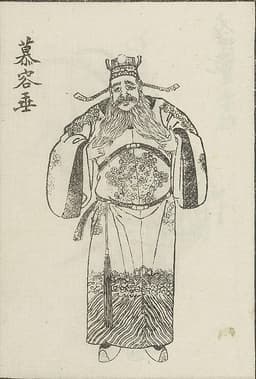
Murong Chui
Emperor · Ancient
58.2Total
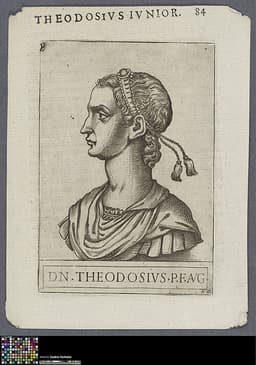
Theodosius II
Emperor · Ancient
58.4Total
Basic Information
Born
326
401
Died
396
450
Era
Ancient
Ancient
Nationality
China
Byzantine Empire
Occupation
Emperor
Emperor
Civilization
Eastern
Western
Score Comparison
Military (10%)
65.0
47.5
Political (20%)
45.0
68.0
Influence (20%)
58.0
59.0
Legacy (20%)
50.0
58.0
Leadership (15%)
72.0
66.0
Strategy (15%)
72.0
43.3
TOTAL
58.2
58.4
Murong Chui — Complete Timeline
384 AD
Founded the Later Yan dynastyPolitical Action◆ Major
Murong Chui declared himself Prince of Yan, founding the Later Yan dynasty after breaking away from the Former Qin. He established his capital at Zhongshan (modern Dingzhou, Hebei) and began consolidating power in northern China.
Dynasty FoundingXianbeiNorthern China
Impact: regionalconstructive
395 AD
Battle of Canhe SlopeWar◆ Major
Murong Chui led a campaign against the Northern Wei dynasty. His forces were defeated at Canhe Slope by the Wei army under Tuoba Gui, a major setback that weakened Later Yan and led to its decline.
BattleDefeatNorthern Wei
Impact: regionaldestructive
396 AD
Death from illnessOther◆ Major
Murong Chui died of illness while on campaign against Northern Wei. His death left the Later Yan dynasty in a weakened state, and it soon collapsed under pressure from the Northern Wei.
DeathDynastic Decline
Impact: regionaltragic
Theodosius II — Complete Timeline
413 AD
Construction of the Theodosian WallsOther◆ Major
Theodosius II ordered the construction of the Theodosian Walls, a massive triple fortification system that protected Constantinople. The walls were built under the direction of the praetorian prefect Anthemius. They successfully defended the city from numerous sieges for over a thousand years.
FortificationsConstantinopleDefense
Impact: globalconstructive
425 AD
Foundation of the University of ConstantinopleCultural◆ Major
Theodosius II founded the Pandidakterion, a state-sponsored university in Constantinople. The institution had 31 chairs for Greek and Latin grammar, rhetoric, philosophy, and law. It became a major center of learning and preserved classical knowledge during the early Middle Ages.
EducationUniversityCulture
Impact: globalconstructive
438 AD
Publication of the Theodosian CodeReform◆ Major
Theodosius II oversaw the compilation of the Theodosian Code, a collection of Roman laws since the reign of Constantine I. The code was published in the Eastern and Western Roman Empires, standardizing legal practices and influencing later legal systems, including the Justinian Code.
LawCodeLegal Reform
Impact: globalconstructive
441 AD
Reign during the Hunnic ThreatWar◆ Major
Theodosius II's reign faced repeated invasions by the Huns under Attila. The Huns ravaged the Balkans and forced the Eastern Roman Empire to pay heavy tribute. Theodosius's policy of appeasement and payment of tribute was criticized but bought time for the empire.
HunsAttilaTribute
Impact: regional
Expert Analysis
Origins
Murong Chui was born in 326 AD into the Murong clan of the Xianbei people, a nomadic confederation in northeastern China. His father, Murong Huang, was a prominent chieftain who founded the Former Yan dynasty. Chui grew up in a warrior culture, learning horsemanship and archery from a young age. He distinguished himself early in battles against rival tribes and the Jin dynasty. His education was practical, focused on military tactics and clan leadership.
Theodosius II was born in 401 AD in Constantinople to Emperor Arcadius and Empress Aelia Eudoxia. He was the only son and heir to the Eastern Roman throne. His early life was sheltered within the palace, under the tutelage of the praetorian prefect Anthemius and his sister Pulcheria. He received a classical education in Greek and Latin rhetoric, philosophy, and law, preparing him for a life of governance rather than combat.
Rise to Power
Murong Chui rose to prominence as a general under the Former Qin dynasty after his own clan's state, Former Yan, was conquered. He proved indispensable in Qin campaigns, notably defeating the Jin at the Battle of Fei River in 383 AD. However, after the Qin empire fragmented, he declared independence in 384 AD, founding the Later Yan dynasty. He quickly expanded his territory through a series of campaigns against other rebel states and the remnants of Former Qin.
Theodosius II became emperor at age seven upon his father's death in 408 AD. Real power initially rested with the regent Anthemius, who successfully negotiated peace with the Sassanids and repelled Hunnic raids. In 414 AD, his older sister Pulcheria took control as Augusta, overseeing his education and administration. Theodosius gradually assumed authority, but he was never a strong military leader, relying on generals like Aspar for defense.
Leadership & Governance
Murong Chui ruled as a military autocrat, personally leading campaigns and rewarding loyal generals. He established a bureaucracy modeled on Chinese dynasties but struggled to integrate diverse populations. His governance was focused on expansion and consolidation through force. For example, he executed rival chieftains and resettled conquered peoples under direct control. However, his reliance on military force alienated local elites, leading to rebellions.
Theodosius II governed through a complex bureaucracy, guided by his sister Pulcheria and later his wife Athenais (Eudocia). He oversaw the compilation of the Theodosian Code (438 AD), a comprehensive legal code that systematized Roman law since Constantine I. He also founded the University of Constantinople (425 AD), promoting higher education. His leadership was passive in military matters, preferring diplomacy and tribute to war. The Theodosian Walls (built 413-439 AD) exemplified his defensive strategy, making Constantinople impregnable for centuries.
Triumph & Tragedy
Murong Chui's greatest triumph was founding the Later Yan dynasty and expanding it to control much of northern China. His military prowess scored 65.0 in military metrics, with notable victories against the Western Yan and Eastern Jin. However, his tragedy came at the Battle of Canhe Slope in 395 AD, where his forces were routed by the Northern Wei under Tuoba Gui, losing tens of thousands of troops. This defeat shattered his reputation and weakened the dynasty. He died of illness in 396 AD while on campaign, leaving a fragile state that collapsed within a decade.
Theodosius II's greatest achievements were the Theodosian Walls, which protected Constantinople from Attila's Huns and later invaders, and the Theodosian Code, which influenced medieval law. His political score of 68.0 reflects his administrative successes. His tragedy was the humiliating tribute paid to the Huns—over 2,100 pounds of gold annually—which drained imperial resources. He also failed to prevent the loss of Carthage to the Vandals in 439 AD, a major blow to Roman power.
Character & Destiny
Murong Chui was a bold and energetic leader, known for his personal bravery and tactical acumen. He scored 72.0 in both leadership and strategy. However, his arrogance and harsh treatment of subordinates bred resentment. His decision to attack Northern Wei despite warnings led to his downfall. His fate was typical of Xianbei warlords: rise through conquest, fall through overreach.
Theodosius II was scholarly and pious, but indecisive and easily influenced by his courtiers. His leadership score of 66.0 reflects his administrative skills but lack of military initiative. He preferred study and building to warfare. His destiny was to preside over a period of cultural and legal consolidation rather than expansion. The Hunnic threat exposed his weakness, but the Walls and Code ensured his legacy.
Legacy
Murong Chui's legacy is limited. The Later Yan dynasty collapsed shortly after his death, and his achievements were overshadowed by the eventual unification of China under the Sui and Tang. He scored 50.0 in legacy. However, his military campaigns contributed to the fragmentation of northern China and the rise of the Xianbei states. He is remembered as a capable general but a failed state-builder.
Theodosius II's legacy is far more enduring. The Theodosian Walls protected Constantinople for over a thousand years, until 1453. The Theodosian Code became a foundational text for Byzantine and Western law. The University of Constantinople preserved classical learning. His legacy score of 58.0 reflects these tangible contributions. He is remembered as a builder and lawgiver, not a warrior.
Conclusion
While Murong Chui scored 58.2 total versus Theodosius II's 58.4, the gap is narrow but significant. Theodosius II's impact is more lasting and widespread: his walls and code shaped Byzantine and European civilization for centuries. Murong Chui's military brilliance (scoring 65.0) was impressive but fleeting. Theodosius II's political and institutional achievements (scoring 68.0) had greater historical weight. Therefore, Theodosius II had a greater impact on world history.
Rankings
🥇
Theodosius IILeader
Mil: 47.5Pol: 68.0Inf: 59.0
58.4
🥈
Murong Chui
Mil: 65.0Pol: 45.0Inf: 58.0
58.2
+0.2 behind
How This Comparison Works
Algorithm
Each figure is scored on 6 dimensions (0—100 scale) based on structured historical data: Military (10%), Political (20%), Influence (20%), Legacy (20%), Leadership (15%), Strategy (15%). The weighted total produces the final ranking.
Data Sources
Scores are computed from structured sub-indicators in the database. Scale factors adjust for era (Ancient ×0.85, Modern ×1.0) and civilization size (Eastern ×1.05, Other ×0.80) to account for differences in population and military scale.
Maximum 3 Figures
Comparisons are limited to 2—3 figures to ensure readability and statistical meaningfulness.
Error Margins
±5 points per dimension — Sub-scores are derived from historical records with inherent uncertainty. Two figures within 5 points on a dimension should be considered roughly equivalent in that area.
Total Score Accuracy
±3 points overall — The weighted combination of 6 dimensions produces a total score with approximately ±3 points of uncertainty. Differences of less than 3 points are not statistically significant— the figures are effectively tied.
Known Limitations
- Historical records are incomplete and uneven across civilizations
- Figures from oral-tradition societies may be underrepresented
- Occupation labels can misclassify multi-role figures
- Scores measure capability and impact, not moral character
- Quantitative scoring is a comparison tool, not absolute truth
Capability Radar
Military (10%) — Battles & Warfare
Battles
85
20
Win Rate
90
25
Expansion
85
15
Political (20%) — Governance & Reform
Reform
65
60
Diplomacy
70
55
Economy
60
50
Influence (20%) — Cultural & Global Reach
Cultural
50
55
Global
40
60
Legacy (20%) — Historical Impact
Historical
65
70
Longevity
45
75
Leadership (15%) — Power & Stability
Tenure
75
70
Stability
55
65
Strategy (15%) — Tactics & Innovation
Strategy
88
35
Tactics
92
30
Reform
70
40
Similar Comparisons
Comments & Discussion
No comments yet. Be the first to share your thoughts!