Loading...
Liu Xiu vs Murong Chui
Liu Xiu leads by 8.3 pts · 2 figures compared
…
Liu Xiu
Emperor · Ancient
66.5Total
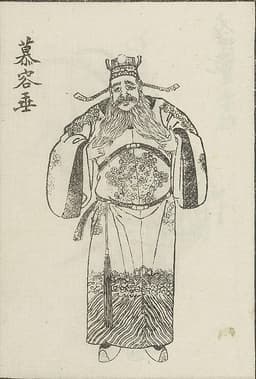
Murong Chui
Emperor · Ancient
58.2Total
Basic Information
Born
-5
326
Died
57
396
Era
Ancient
Ancient
Nationality
China
China
Occupation
Emperor
Emperor
Civilization
Eastern
Eastern
Score Comparison
Military (10%)
65.0
65.0
Political (20%)
79.2
45.0
Influence (20%)
56.7
58.0
Legacy (20%)
55.0
50.0
Leadership (15%)
80.0
72.0
Strategy (15%)
82.0
72.0
TOTAL
66.5
58.2
Liu Xiu — Complete Timeline
23 AD
Battle of KunyangWar
Liu Xiu led a small force of 3,000 men to relieve the siege of Kunyang against a much larger Xin army. His tactical brilliance and a timely sandstorm led to a decisive victory, breaking the back of Wang Mang's forces and paving the way for the restoration of Han.
Han DynastyBattleRestoration
Impact: national
25 AD
Proclaimed Emperor Guangwu of HanPolitical Action
Liu Xiu declared himself emperor in Luoyang, restoring the Han dynasty after the fall of Wang Mang's Xin dynasty. He took the reign name Guangwu and began the Eastern Han period, reunifying China under Han rule.
Han DynastyRestorationEmperor
Impact: globalconstructive
Established the Eastern Han Capital at LuoyangPolitical Action◆ Major
Emperor Guangwu moved the capital from Chang'an to Luoyang, marking the beginning of the Eastern Han dynasty. This shift was strategic, as Luoyang was more defensible and centrally located for controlling the empire.
Han DynastyCapitalEastern Han
Impact: nationalconstructive
27 AD
Conquest of the Red EyebrowsWar◆ Major
Emperor Guangwu defeated the Red Eyebrows rebel army, one of the major peasant forces that had risen after Wang Mang's fall. The victory eliminated a key rival and consolidated his control over the central plains.
Han DynastyRebellionConquest
Impact: national
30 AD
Implemented the 'Reduction of Taxes and Corvée' PolicyReform◆ Major
Emperor Guangwu reduced taxes and forced labor requirements to alleviate the suffering of peasants after decades of war. This policy helped restore agricultural production and stabilize the economy, earning him popular support.
Han DynastyEconomic ReformTaxation
Impact: nationalconstructive
36 AD
Reunification of ChinaWar
Emperor Guangwu completed the reunification of China by defeating the last independent warlord, Gongsun Shu, in Sichuan. This ended the civil wars that followed Wang Mang's usurpation and restored Han authority over all of China.
Han DynastyUnificationCivil War
Impact: globalconstructive
Murong Chui — Complete Timeline
384 AD
Founded the Later Yan dynastyPolitical Action◆ Major
Murong Chui declared himself Prince of Yan, founding the Later Yan dynasty after breaking away from the Former Qin. He established his capital at Zhongshan (modern Dingzhou, Hebei) and began consolidating power in northern China.
Dynasty FoundingXianbeiNorthern China
Impact: regionalconstructive
395 AD
Battle of Canhe SlopeWar◆ Major
Murong Chui led a campaign against the Northern Wei dynasty. His forces were defeated at Canhe Slope by the Wei army under Tuoba Gui, a major setback that weakened Later Yan and led to its decline.
BattleDefeatNorthern Wei
Impact: regionaldestructive
396 AD
Death from illnessOther◆ Major
Murong Chui died of illness while on campaign against Northern Wei. His death left the Later Yan dynasty in a weakened state, and it soon collapsed under pressure from the Northern Wei.
DeathDynastic Decline
Impact: regionaltragic
Expert Analysis
Origins
Liu Xiu (5 BCE – 57 CE) was born into the Han imperial family, a descendant of Emperor Jing. His father was a magistrate, but Liu Xiu grew up as a farmer in Nandun. He studied at the Imperial Academy in Chang'an, gaining a classical education. In contrast, Murong Chui (326–396 CE) was a member of the Xianbei Murong tribe, the son of Murong Huang, prince of Former Yan. From youth, he was trained as a warrior and participated in tribal campaigns. His early life was marked by the rise of the Murong clan in northeastern China.
Rise to Power
Liu Xiu rose during the chaos after Wang Mang's Xin dynasty fell. In 22 CE, he joined his brother Liu Yan in rebellion. His pivotal moment came at the Battle of Kunyang (23 CE), where he led 3,000 men to relieve a siege against a 420,000-strong Xin army. A sudden sandstorm aided his victory, boosting his reputation. By 25 CE, he proclaimed himself Emperor Guangwu of Han, establishing his capital in Luoyang. Murong Chui's rise was more turbulent. He served Former Yan as a general, but after its fall to Former Qin in 370, he became a general under Fu Jian. At the Battle of Fei River (383), Fu Jian's defeat allowed Murong Chui to break away. In 384, he declared himself Prince of Yan, founding Later Yan. His military prowess earned him the title 'Commander of the Army' among the Xianbei.
Leadership & Governance
Liu Xiu's leadership was measured and inclusive. He implemented the 'Reduction of Taxes and Corvée' policy, lowering tax rates from 10% to 3% and reducing forced labor. He established a centralized bureaucracy and promoted Confucian scholars. His political score of 79.2 reflects his ability to stabilize and reunify China. Murong Chui, with a political score of 45.0, was less adept at governance. He relied on tribal alliances and military force. He established a dual administrative system, but his rule was marked by constant warfare. He failed to secure loyalty from his subordinates, leading to defections.
Triumph & Tragedy
Liu Xiu's greatest triumph was reunifying China by 36 CE after defeating the last warlord, Gongsun Shu. He also crushed the Red Eyebrows rebellion in 27 CE. His tragedies include the death of his brother Liu Yan, executed by the Gengshi Emperor, and his later years marred by succession disputes. Murong Chui's triumph was founding Later Yan and expanding its territory. He scored 65.0 in military, but his tragedy was the Battle of Canhe Slope (395 CE), where his son Murong Bao was defeated by Northern Wei. The loss devastated his army. Murong Chui died of illness the next year, and Later Yan collapsed within a decade.
Character & Destiny
Liu Xiu was cautious and strategic, known for his patience and ability to win over opponents. His leadership score of 80.0 reflects his capacity to inspire loyalty. He was decisive in battle but merciful in victory. Murong Chui was bold and impulsive, earning a leadership score of 72.0. He was a brilliant field commander but struggled with long-term planning. His decision to attack Northern Wei despite his son's defeat led to his final campaign and death. His character was shaped by the tribal ethos of honor and revenge.
Legacy
Liu Xiu's legacy is the restored Han dynasty, which lasted another two centuries. His policies of tax reduction and land reform set a precedent for later dynasties. He is remembered as a wise and capable emperor, though his legacy score of 55.0 is modest compared to other Han rulers. Murong Chui's legacy is the Later Yan, but it was short-lived. He is remembered as a great Xianbei general, but his dynasty failed to endure. His legacy score of 50.0 reflects his limited long-term impact.
Conclusion
Liu Xiu had the greater impact, with a total score of 66.5 compared to Murong Chui's 58.2. Liu Xiu restored a dynasty that shaped Chinese civilization for centuries, while Murong Chui's dynasty was ephemeral. Liu Xiu's political and strategic abilities (79.2 and 82.0) outclass Murong Chui's (45.0 and 72.0). Although both were skilled generals, Liu Xiu's governance and lasting reunification give him a clear edge. Murong Chui was a formidable warrior but lacked the political acumen to build a durable state.
Rankings
🥇
Liu XiuLeader
Mil: 65.0Pol: 79.2Inf: 56.7
66.5
🥈
Murong Chui
Mil: 65.0Pol: 45.0Inf: 58.0
58.2
+8.3 behind
How This Comparison Works
Algorithm
Each figure is scored on 6 dimensions (0—100 scale) based on structured historical data: Military (10%), Political (20%), Influence (20%), Legacy (20%), Leadership (15%), Strategy (15%). The weighted total produces the final ranking.
Data Sources
Scores are computed from structured sub-indicators in the database. Scale factors adjust for era (Ancient ×0.85, Modern ×1.0) and civilization size (Eastern ×1.05, Other ×0.80) to account for differences in population and military scale.
Maximum 3 Figures
Comparisons are limited to 2—3 figures to ensure readability and statistical meaningfulness.
Error Margins
±5 points per dimension — Sub-scores are derived from historical records with inherent uncertainty. Two figures within 5 points on a dimension should be considered roughly equivalent in that area.
Total Score Accuracy
±3 points overall — The weighted combination of 6 dimensions produces a total score with approximately ±3 points of uncertainty. Differences of less than 3 points are not statistically significant— the figures are effectively tied.
Known Limitations
- Historical records are incomplete and uneven across civilizations
- Figures from oral-tradition societies may be underrepresented
- Occupation labels can misclassify multi-role figures
- Scores measure capability and impact, not moral character
- Quantitative scoring is a comparison tool, not absolute truth
Capability Radar
Military (10%) — Battles & Warfare
Battles
85
85
Win Rate
90
90
Expansion
85
85
Political (20%) — Governance & Reform
Reform
90
65
Diplomacy
85
70
Economy
88
60
Influence (20%) — Cultural & Global Reach
Cultural
75
50
Global
70
40
Legacy (20%) — Historical Impact
Historical
85
65
Longevity
80
45
Leadership (15%) — Power & Stability
Tenure
85
75
Stability
90
55
Strategy (15%) — Tactics & Innovation
Strategy
92
88
Tactics
88
92
Reform
80
70
Similar Comparisons
Comments & Discussion
No comments yet. Be the first to share your thoughts!