Loading...
This comparison has not been analyzed yet.
One-time AI generation (~1 minute). Scores and timeline are already available below.
Muhammad Quli Qutb Shah vs Sarsa Dengel
Muhammad Quli Qutb Shah leads by 0.7 pts · 2 figures compared
…
Muhammad Quli Qutb Shah
Emperor · Modern
60.5Total

Sarsa Dengel
Emperor · Modern
59.8Total
Basic Information
Born
1580
1550
Died
1611
1597
Era
Modern
Modern
Nationality
India
Ethiopia
Occupation
Emperor
Emperor
Civilization
Indian
Other
Score Comparison
Military (10%)
45.0
65.0
Political (20%)
72.0
68.0
Influence (20%)
65.0
54.9
Legacy (20%)
55.0
50.0
Leadership (15%)
72.0
72.0
Strategy (15%)
43.7
60.7
TOTAL
60.5
59.8
Muhammad Quli Qutb Shah — Complete Timeline
1591 AD
Foundation of Hyderabad cityCultural
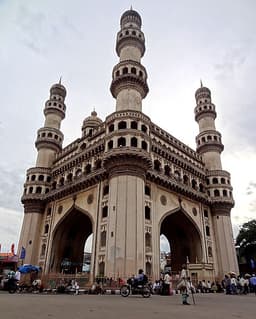
Muhammad Quli Qutb Shah founded the city of Hyderabad on the banks of the Musi River, moving the capital from Golconda. He designed the city with a grid layout and built the Charminar as its centerpiece.
Urban PlanningFoundingArchitecture
Impact: regionalconstructive
Construction of the CharminarCultural◆ Major
Muhammad Quli Qutb Shah built the Charminar, a monumental arch with four minarets, in the center of Hyderabad. The structure became a symbol of the city and a center for trade and public gatherings.
ArchitectureMonument
Impact: regionalconstructive
1595 AD
Patronage of Dakhni Urdu literatureCultural◆ Major
Muhammad Quli Qutb Shah was a poet and patron of Dakhni Urdu literature. He composed a divan (collection of poems) and encouraged other poets to write in the vernacular language.
LiteraturePoetryLanguage
Impact: regionalconstructive
1605 AD
War against the Mughal EmpireWar◆ Major
Muhammad Quli Qutb Shah fought a war against the Mughal Empire under Emperor Jahangir, defending Golconda's independence. The conflict ended with a treaty that maintained the status quo.
WarMughalDefense
Impact: regional
1610 AD
Construction of the Mecca MasjidCultural
Muhammad Quli Qutb Shah began construction of the Mecca Masjid in Hyderabad, one of the largest mosques in India. The mosque was built with bricks brought from Mecca, giving it its name.
ArchitectureReligion
constructive
Sarsa Dengel — Complete Timeline
1570 AD
Defeat of the OromoWar◆ Major
Sarsa Dengel led a series of military campaigns against the Oromo people, who were expanding into Ethiopian territory. His victories temporarily halted Oromo migrations and preserved the empire's territorial integrity.
Military CampaignOromoTerritorial Defense
Impact: regional
1575 AD
Reorganization of the Imperial ArmyReform
Sarsa Dengel reorganized the Ethiopian imperial army, incorporating new tactics and weaponry to counter the Oromo and Ottoman threats. These reforms improved the military's effectiveness and extended the emperor's control over peripheral regions.
Military ReformArmyTactics
Impact: nationalconstructive
1580 AD
Campaign against the Ottoman-backed AdalWar◆ Major
Sarsa Dengel fought against the Sultanate of Adal, which was receiving support from the Ottoman Empire. He successfully repelled Ottoman-backed incursions, maintaining Ethiopian independence from foreign domination.
Military CampaignAdalOttoman Empire
Impact: regional
This comparison has not been analyzed yet.
One-time AI generation (~1 minute). Scores and timeline are already available below.
Rankings
🥇
Muhammad Quli Qutb ShahLeader
Mil: 45.0Pol: 72.0Inf: 65.0
60.5
🥈
Sarsa Dengel
Mil: 65.0Pol: 68.0Inf: 54.9
59.8
+0.7 behind
How This Comparison Works
Algorithm
Each figure is scored on 6 dimensions (0—100 scale) based on structured historical data: Military (10%), Political (20%), Influence (20%), Legacy (20%), Leadership (15%), Strategy (15%). The weighted total produces the final ranking.
Data Sources
Scores are computed from structured sub-indicators in the database. Scale factors adjust for era (Ancient ×0.85, Modern ×1.0) and civilization size (Eastern ×1.05, Other ×0.80) to account for differences in population and military scale.
Maximum 3 Figures
Comparisons are limited to 2—3 figures to ensure readability and statistical meaningfulness.
Error Margins
±5 points per dimension — Sub-scores are derived from historical records with inherent uncertainty. Two figures within 5 points on a dimension should be considered roughly equivalent in that area.
Total Score Accuracy
±3 points overall — The weighted combination of 6 dimensions produces a total score with approximately ±3 points of uncertainty. Differences of less than 3 points are not statistically significant— the figures are effectively tied.
Known Limitations
- Historical records are incomplete and uneven across civilizations
- Figures from oral-tradition societies may be underrepresented
- Occupation labels can misclassify multi-role figures
- Scores measure capability and impact, not moral character
- Quantitative scoring is a comparison tool, not absolute truth
Capability Radar
Military (10%) — Battles & Warfare
Battles
30
65
Win Rate
35
70
Expansion
30
60
Political (20%) — Governance & Reform
Reform
65
55
Diplomacy
55
50
Economy
70
45
Influence (20%) — Cultural & Global Reach
Cultural
70
40
Global
50
30
Legacy (20%) — Historical Impact
Historical
65
55
Longevity
70
45
Leadership (15%) — Power & Stability
Tenure
60
70
Stability
60
50
Strategy (15%) — Tactics & Innovation
Strategy
30
65
Tactics
30
60
Reform
25
55
Similar Comparisons
Comments & Discussion
No comments yet. Be the first to share your thoughts!