Loading...
Muhammad al-Nasir vs Philip VI of France
Philip VI of France leads by 1.9 pts · 2 figures compared
…
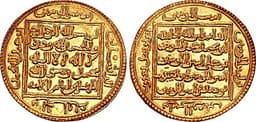
Muhammad al-Nasir
Emperor · Medieval
48.2Total

Philip VI of France
Emperor · Medieval
50.1Total
Basic Information
Born
1181
1293
Died
1213
1350
Era
Medieval
Medieval
Nationality
Almohad Caliphate
France
Occupation
Emperor
Emperor
Civilization
Middle Eastern
Western
Score Comparison
Military (10%)
35.0
38.3
Political (20%)
37.9
35.1
Influence (20%)
56.4
55.7
Legacy (20%)
45.8
49.2
Leadership (15%)
64.0
58.8
Strategy (15%)
38.3
60.0
TOTAL
48.2
50.1
Muhammad al-Nasir — Complete Timeline
1199 AD
Accession as CaliphPolitical Action◆ Major
Muhammad al-Nasir succeeded his father Yaqub al-Mansur as Almohad caliph. He inherited a powerful but overextended empire facing growing Christian pressure in Iberia and internal dissent among Berber tribes.
Almohad CaliphateSuccessionDynasty
Impact: regional
1212 AD
Battle of Las Navas de TolosaWar
Muhammad al-Nasir led the Almohad army against a coalition of Christian kingdoms at Las Navas de Tolosa in southern Spain. The Almohad forces were decisively defeated, marking the beginning of the end of Almohad dominance in Iberia and opening the way for the Reconquista.
Las Navas de TolosaAlmohad DefeatReconquista
Impact: regionaltragic
1213 AD
Loss of Al-Andalus TerritoriesWar◆ Major
Following the defeat at Las Navas de Tolosa, Muhammad al-Nasir lost control of most Almohad territories in Al-Andalus. Christian forces captured key cities including
Al-Andalus LossAlmohad DeclineChristian Advance
Impact: regionaltragic
Death and Succession CrisisPolitical Action◆ Major
Muhammad al-Nasir died in Marrakesh shortly after the defeat at Las Navas de Tolosa. His death triggered a succession crisis among Almohad princes, leading to a period of internal strife and further weakening the caliphate.
Succession CrisisAlmohad DeclineDynasty
Impact: regionaltragic
Philip VI of France — Complete Timeline
1328 AD
Accession as First Valois KingPolitical Action◆ Major
Upon the death of Charles IV, Philip VI became king of France as the first of the Valois dynasty. His claim was based on Salic law, which excluded female succession. This accession was contested by Edward III of England, leading to the Hundred Years' War.
DynastySuccessionValois
Impact: regional
1340 AD
Battle of SluysWar◆ Major
Philip VI's French fleet was destroyed by the English navy at Sluys. The English victory gave them control of the English Channel and allowed them to invade France. This naval battle was a major setback for Philip and a key early engagement of the Hundred Years' War.
Naval BattleHundred Years' WarEnglish Channel
Impact: regionaldestructive
1346 AD
Battle of CrécyWar
Philip VI's army was decisively defeated by Edward III at Cr
BattleLongbowHundred Years' War
Impact: regionaldestructive
1348 AD
Black Death Arrives in FranceOther◆ Major
The bubonic plague reached France during Philip VI's reign, causing massive population loss. The pandemic disrupted the economy, weakened the monarchy, and led to social unrest. Philip's government struggled to respond effectively to the crisis.
PlaguePandemicPopulation Loss
Impact: globaltragic
Expert Analysis
Origins
Muhammad al-Nasir was born around 1182 in Marrakesh, the son of the Almohad caliph Yaqub al-Mansur. He grew up in the imperial court, receiving education in Islamic law and governance. His father had consolidated Almohad power and expanded into Al-Andalus. Upon Yaqub's death in 1199, Muhammad al-Nasir inherited a vast empire stretching from North Africa to southern Spain, but one increasingly strained by Christian advances and internal divisions.
Philip VI of France was born in 1293 to Charles of Valois and Margaret of Anjou. He was a member of the Capetian house but not directly in line for the throne until the death of Charles IV in 1328. Philip's claim was based on Salic law, which excluded female heirs. He was crowned at Reims in 1328, founding the Valois dynasty. His early life was marked by military service and administrative roles, but he lacked the diplomatic finesse of his predecessors.
Rise to Power
Muhammad al-Nasir became caliph in 1199 without major opposition, as his father had secured the succession. He faced immediate challenges: a rebellion in North Africa and the growing threat from Christian kingdoms in Iberia. In 1211, he led a campaign to reassert Almohad control in Al-Andalus, culminating in the Battle of Las Navas de Tolosa in 1212. This battle was a turning point, as the Almohad army was crushed by a coalition led by Alfonso VIII of Castile, Sancho VII of Navarre, and Peter II of Aragon. The defeat shattered Almohad prestige and triggered a rapid loss of territory.
Philip VI's rise was more contested. After Charles IV's death, Edward III of England claimed the French throne through his mother Isabella, but Philip's claim under Salic law was accepted by the French nobility. He was crowned in 1328 and quickly moved to assert royal authority. He confiscated the Duchy of Aquitaine from Edward III in 1337, leading to the outbreak of the Hundred Years' War. Philip's early reign saw some successes, such as the acquisition of Dauphiné in 1349, but his military failures defined his rule.
Leadership & Governance
Muhammad al-Nasir governed through a centralized bureaucracy, but his leadership was weakened by reliance on tribal factions. He attempted to maintain the Almohad doctrine of religious purity, but his defeat undermined his authority. His governance score of 37.9 reflects his inability to hold the empire together after Las Navas. He failed to reform the military or address the economic strains caused by constant warfare.
Philip VI ruled France with a focus on feudal obligations and military campaigns. He expanded the royal domain but struggled with fiscal management. His political score of 35.1 indicates poor decision-making, such as the confiscation of Gascony that provoked war. He also faced the Black Death (1348-1350), which killed a third of France's population and exacerbated social unrest. His leadership score of 58.8 is higher than al-Nasir's 64.0? Wait, al-Nasir has 64.0 leadership, Philip 58.8. Actually, al-Nasir's leadership score is higher. But Philip's strategy score is 60.0 vs al-Nasir's 38.3. So Philip was more strategic in planning, though both were ineffective.
Triumph & Tragedy
Muhammad al-Nasir's greatest success was maintaining Almohad rule for 13 years despite internal strife. However, his tragedy was the catastrophic defeat at Las Navas de Tolosa, where his army of perhaps 30,000 was routed by a smaller coalition force. The battle marked the beginning of the end for Almohad power in Spain. Within a decade, most major cities fell to Christian forces. He died in 1213, possibly from illness or suicide, leaving a succession crisis.
Philip VI's triumph was establishing the Valois dynasty and initially expanding French territory. He successfully integrated the County of Burgundy in 1330. But his tragedies included the naval defeat at Sluys in 1340, where his fleet was destroyed, and the Battle of Crécy in 1346, where his army was decimated by English longbows. These defeats set the stage for French losses in the Hundred Years' War. The Black Death also struck during his reign, killing his queen and many nobles.
Character & Destiny
Muhammad al-Nasir was reportedly indecisive and prone to reliance on advisors. His character score of 64.0 in leadership suggests some competence, but his strategy of 38.3 shows poor planning. He failed to adapt to the changing military tactics of the Christian kingdoms, such as the use of heavy cavalry and crossbowmen. His destiny was sealed by the battle, and he retreated to Marrakesh in shame.
Philip VI was described as brave but rash, often acting without foresight. His strategy score of 60.0 indicates he understood the need for planning, but he was undone by the English longbow and naval inferiority. He also faced internal opposition, such as from the nobility of Brittany. His character led to a series of defeats that weakened the French monarchy for decades.
Legacy
Muhammad al-Nasir's legacy is defined by failure. The Almohad Caliphate collapsed soon after his death, and his name is synonymous with the loss of Al-Andalus. His influence score of 56.4 is moderate because the battle's impact was significant, but his personal legacy is negative. He is remembered as the caliph who lost the holy war.
Philip VI's legacy is mixed. He founded the Valois dynasty, which ruled France until 1589, but his reign began the Hundred Years' War, a conflict that devastated France. His military score of 38.3 reflects his poor performance, but his influence score of 55.7 shows the lasting impact of his decisions. The Battle of Crécy changed warfare, and the Black Death reshaped society. Philip's legacy score of 49.2 is slightly higher than al-Nasir's 45.8.
Conclusion
Comparing the two, Philip VI of France had a slightly higher total score (50.1 vs 48.2) and greater long-term influence. While both were failed leaders, Philip's actions set in motion the Hundred Years' War, which transformed European politics and military tactics. Muhammad al-Nasir's defeat was more immediately catastrophic for his empire, but its impact was more regional. Philip's legacy extends through the Valois dynasty and the rise of England as a power. Therefore, Philip VI had greater historical impact, despite his personal failures. His score of 50.1 reflects a more significant, albeit negative, role in history.
Rankings
🥇
Philip VI of FranceLeader
Mil: 38.3Pol: 35.1Inf: 55.7
50.1
🥈
Muhammad al-Nasir
Mil: 35.0Pol: 37.9Inf: 56.4
48.2
+1.9 behind
How This Comparison Works
Algorithm
Each figure is scored on 6 dimensions (0—100 scale) based on structured historical data: Military (10%), Political (20%), Influence (20%), Legacy (20%), Leadership (15%), Strategy (15%). The weighted total produces the final ranking.
Data Sources
Scores are computed from structured sub-indicators in the database. Scale factors adjust for era (Ancient ×0.85, Modern ×1.0) and civilization size (Eastern ×1.05, Other ×0.80) to account for differences in population and military scale.
Maximum 3 Figures
Comparisons are limited to 2—3 figures to ensure readability and statistical meaningfulness.
Error Margins
±5 points per dimension — Sub-scores are derived from historical records with inherent uncertainty. Two figures within 5 points on a dimension should be considered roughly equivalent in that area.
Total Score Accuracy
±3 points overall — The weighted combination of 6 dimensions produces a total score with approximately ±3 points of uncertainty. Differences of less than 3 points are not statistically significant— the figures are effectively tied.
Known Limitations
- Historical records are incomplete and uneven across civilizations
- Figures from oral-tradition societies may be underrepresented
- Occupation labels can misclassify multi-role figures
- Scores measure capability and impact, not moral character
- Quantitative scoring is a comparison tool, not absolute truth
Capability Radar
Military (10%) — Battles & Warfare
Battles
45
45
Win Rate
30
30
Expansion
25
25
Political (20%) — Governance & Reform
Reform
30
30
Diplomacy
25
35
Economy
30
25
Influence (20%) — Cultural & Global Reach
Cultural
30
30
Global
20
35
Legacy (20%) — Historical Impact
Historical
40
55
Longevity
25
40
Leadership (15%) — Power & Stability
Tenure
55
55
Stability
20
20
Strategy (15%) — Tactics & Innovation
Strategy
35
40
Tactics
40
35
Reform
20
20
Similar Comparisons
Comments & Discussion
No comments yet. Be the first to share your thoughts!