Loading...
Morarji Desai vs Paavo Lipponen
Morarji Desai leads by 4.8 pts · 2 figures compared
…

Morarji Desai
Politician · Modern
56.0Total
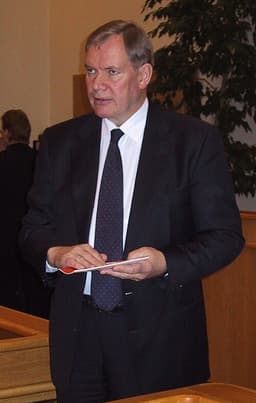
Paavo Lipponen
Politician · Modern
51.2Total
Basic Information
Born
1896
1941
Died
1995
—
Era
Modern
Modern
Nationality
India
Finland
Occupation
Politician
Politician
Civilization
Indian
Western
Score Comparison
Military (10%)
31.0
21.2
Political (20%)
72.0
60.0
Influence (20%)
56.4
56.4
Legacy (20%)
45.0
45.0
Leadership (15%)
72.0
72.0
Strategy (15%)
60.0
38.9
TOTAL
56.0
51.2
Morarji Desai — Complete Timeline
1977 AD
Implemented Prohibition PolicyReform
Desai's government enforced a nationwide prohibition policy, banning alcohol consumption and sale. The policy was based on his personal Gandhian beliefs but faced widespread non-compliance and was largely ineffective.
ProhibitionSocial ReformGandhian Policy
Impact: national
Appointed Prime Minister of IndiaPolitical Action◆ Major
Morarji Desai became the first non-Congress Prime Minister of India, leading the Janata Party coalition government after the Emergency. His appointment marked the first time the Indian National Congress lost power at the national level.
Indian PoliticsCoalition GovernmentPost-Emergency
Impact: nationalconstructive
1979 AD
Resigned as Prime MinisterPolitical Action◆ Major
Desai resigned as Prime Minister after losing majority support in the Lok Sabha due to defections and internal conflicts within the Janata Party. His resignation led to the fall of the first non-Congress government.
Indian PoliticsGovernment CollapseCoalition
Impact: nationaldestructive
1991 AD
Awarded Bharat RatnaCultural
Morarji Desai was awarded the Bharat Ratna, India's highest civilian award, for his contributions to public service. The award recognized his long political career and role as a non-Congress Prime Minister.
AwardRecognitionCivilian Honor
Impact: nationalconstructive
Paavo Lipponen — Complete Timeline
1995 AD
Election as Prime Minister of FinlandPolitical Action◆ Major
Paavo Lipponen became Prime Minister of Finland, leading a broad coalition government of Social Democrats, Conservatives, and others. His tenure focused on economic recovery, EU integration, and welfare state reforms.
Finnish PoliticsSocial Democratic PartyCoalition Government
Impact: nationalconstructive
1999 AD
Finland's EU PresidencyPolitical Action◆ Major
Finland held its first rotating presidency of the Council of the European Union under Lipponen's leadership. The presidency focused on EU enlargement, the Helsinki Summit, and the development of the EU's security and defence policy.
European UnionFinnish Presidency
Impact: regionalconstructive
2002 AD
Introduction of the Euro in FinlandPolitical Action◆ Major
Under Lipponen's government, Finland adopted the euro as its official currency, replacing the Finnish markka. This was a key step in Finland's deeper integration into the European Union.
Euro AdoptionFinnish EconomyEU Integration
Impact: nationalconstructive
2003 AD
Resignation as Prime MinisterPolitical Action◆ Major
Lipponen resigned as Prime Minister after the Social Democrats lost seats in the general election. He was succeeded by Anneli J
Finnish PoliticsResignation
Impact: national
Expert Analysis
Origins
Morarji Desai was born on February 29, 1896, in Bhadeli, Gujarat, into a middle-class Brahmin family. His father was a schoolteacher. Desai studied at the University of Bombay but left before completing his degree to join the Indian independence movement. He was deeply influenced by Mahatma Gandhi's philosophy of non-violence and simplicity.
Paavo Lipponen was born on April 23, 1941, in Turtola, Finland, to a farming family. He studied sociology and political science at the University of Helsinki and later at Dartmouth College in the US. His early career included journalism and trade union activism, which shaped his social democratic ideals.
Rise to Power
Desai's political career began in the 1930s as a Congress party member. He held various ministerial positions in independent India, including Chief Minister of Bombay State (1952-1956) and Finance Minister (1958-1963). He was a key figure in the Congress party but fell out with Indira Gandhi. After the Emergency (1975-1977), he led the Janata Party coalition to victory in 1977, becoming Prime Minister on March 24, 1977, at age 81.
Lipponen entered parliament in 1983 as a Social Democrat. He became party chairman in 1993 and led his party to victory in the 1995 elections. He formed a broad coalition government on April 13, 1995, becoming Prime Minister of Finland. His rise was marked by his ability to unite disparate parties.
Leadership & Governance
Desai's leadership was characterized by his Gandhian principles. He implemented a nationwide prohibition policy in 1977, banning alcohol, which was controversial and largely ineffective. His government focused on restoring civil liberties after the Emergency, but his rigid style led to internal conflicts. He scored 72.0 in political leadership, reflecting his ability to lead a coalition, but his strategy score of 60.0 indicates limited long-term planning.
Lipponen's governance was pragmatic and consensus-oriented. He led Finland into the Eurozone in 1999 and held the EU presidency in 1999, focusing on enlargement. His coalition government managed economic reforms that reduced unemployment from 18% to 9%. His leadership score of 72.0 matches Desai's, but his strategy score of 38.9 is lower, reflecting a reactive approach.
Triumph & Tragedy
Desai's greatest triumph was becoming the first non-Congress Prime Minister, ending Congress's dominance. He restored democratic norms after the Emergency. His tragedy was his inability to manage his coalition; internal defections forced his resignation on July 28, 1979, after just 28 months. His prohibition policy failed, and his tenure is seen as a missed opportunity.
Lipponen's triumphs include successful EU integration and economic recovery. He served two full terms (1995-2003), the longest for a Finnish PM since independence. His tragedy was the loss of the 2003 election, partly due to public fatigue with his coalition. His influence score of 56.4 reflects significant but not transformative impact.
Character & Destiny
Desai was known for his austerity and stubbornness. He fasted frequently for political causes and insisted on wearing khadi. His rigid adherence to principles alienated allies. He scored 72.0 in leadership but his legacy score of 45.0 indicates limited enduring impact. His character shaped his fate as a transitional figure.
Lipponen was a skilled negotiator and intellectual. He wrote poetry and was a keen sportsman. His calm demeanor helped him manage coalitions, but his lack of bold vision limited his strategic impact. His destiny was to be a competent manager during Finland's EU integration.
Legacy
Desai's legacy is mixed. He is remembered as a symbol of anti-Congress sentiment and for his role in ending the Emergency. However, his prohibition policy and short tenure mean his legacy score is 45.0. He received the Bharat Ratna in 1991.
Lipponen's legacy is tied to Finland's EU membership and euro adoption. He is considered a successful PM who stabilized the economy. His legacy score is also 45.0, reflecting a solid but not extraordinary impact.
Conclusion
Morarji Desai had a higher total score (56.0 vs 51.2) and greater political impact by breaking Congress's monopoly. Despite a shorter tenure, his role in restoring democracy after the Emergency was crucial. Lipponen's achievements were more incremental. Therefore, Desai had greater overall impact.
Rankings
🥇
Morarji DesaiLeader
Mil: 31.0Pol: 72.0Inf: 56.4
56.0
🥈
Paavo Lipponen
Mil: 21.2Pol: 60.0Inf: 56.4
51.2
+4.8 behind
How This Comparison Works
Algorithm
Each figure is scored on 6 dimensions (0—100 scale) based on structured historical data: Military (10%), Political (20%), Influence (20%), Legacy (20%), Leadership (15%), Strategy (15%). The weighted total produces the final ranking.
Data Sources
Scores are computed from structured sub-indicators in the database. Scale factors adjust for era (Ancient ×0.85, Modern ×1.0) and civilization size (Eastern ×1.05, Other ×0.80) to account for differences in population and military scale.
Maximum 3 Figures
Comparisons are limited to 2—3 figures to ensure readability and statistical meaningfulness.
Error Margins
±5 points per dimension — Sub-scores are derived from historical records with inherent uncertainty. Two figures within 5 points on a dimension should be considered roughly equivalent in that area.
Total Score Accuracy
±3 points overall — The weighted combination of 6 dimensions produces a total score with approximately ±3 points of uncertainty. Differences of less than 3 points are not statistically significant— the figures are effectively tied.
Known Limitations
- Historical records are incomplete and uneven across civilizations
- Figures from oral-tradition societies may be underrepresented
- Occupation labels can misclassify multi-role figures
- Scores measure capability and impact, not moral character
- Quantitative scoring is a comparison tool, not absolute truth
Capability Radar
Military (10%) — Battles & Warfare
Battles
43
24
Win Rate
49
28
Expansion
51
28
Political (20%) — Governance & Reform
Reform
65
60
Diplomacy
70
70
Economy
55
65
Influence (20%) — Cultural & Global Reach
Cultural
30
30
Global
40
50
Legacy (20%) — Historical Impact
Historical
40
40
Longevity
30
30
Leadership (15%) — Power & Stability
Tenure
60
65
Stability
50
60
Strategy (15%) — Tactics & Innovation
Strategy
53
30
Tactics
57
35
Reform
58
40
Similar Comparisons
Comments & Discussion
No comments yet. Be the first to share your thoughts!