Loading...
Charles De Geer vs Morarji Desai
Morarji Desai leads by 4.4 pts · 2 figures compared
…
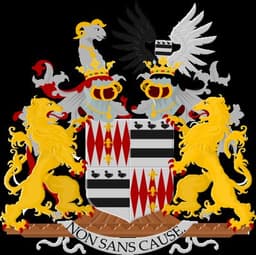
Charles De Geer
Politician · Modern
51.6Total

Morarji Desai
Politician · Modern
56.0Total
Basic Information
Born
1720
1896
Died
1778
1995
Era
Modern
Modern
Nationality
Sweden
India
Occupation
Politician
Politician
Civilization
Western
Indian
Score Comparison
Military (10%)
49.0
31.0
Political (20%)
53.8
72.0
Influence (20%)
51.8
56.4
Legacy (20%)
45.0
45.0
Leadership (15%)
68.0
72.0
Strategy (15%)
42.6
60.0
TOTAL
51.6
56.0
Charles De Geer — Complete Timeline
1738 AD
Leader of the Hat PartyPolitical Action◆ Major
Charles De Geer became the leader of the Hat Party in the Swedish Riksdag, advocating for a more aggressive foreign policy against Russia and closer ties with France. His leadership shaped Swedish politics during the Age of Liberty.
Swedish PoliticsHat PartyAge of Liberty
Impact: national
1740 AD
Industrial Expansion in SwedenReform◆ Major
De Geer expanded his family's ironworks and textile mills, becoming one of Sweden's leading industrialists. His enterprises boosted Swedish exports and economic growth during the 18th century.
IndustryEconomySwedish History
Impact: nationalconstructive
1741 AD
Hat Party's War PolicyPolitical Action◆ Major
De Geer supported the Hat Party's decision to declare war on Russia in 1741, known as the Hats' Russian War. The war ended in Swedish defeat and territorial losses, damaging the party's reputation.
WarHat PartyForeign Policy
Impact: nationaldestructive
Morarji Desai — Complete Timeline
1977 AD
Implemented Prohibition PolicyReform
Desai's government enforced a nationwide prohibition policy, banning alcohol consumption and sale. The policy was based on his personal Gandhian beliefs but faced widespread non-compliance and was largely ineffective.
ProhibitionSocial ReformGandhian Policy
Impact: national
Appointed Prime Minister of IndiaPolitical Action◆ Major
Morarji Desai became the first non-Congress Prime Minister of India, leading the Janata Party coalition government after the Emergency. His appointment marked the first time the Indian National Congress lost power at the national level.
Indian PoliticsCoalition GovernmentPost-Emergency
Impact: nationalconstructive
1979 AD
Resigned as Prime MinisterPolitical Action◆ Major
Desai resigned as Prime Minister after losing majority support in the Lok Sabha due to defections and internal conflicts within the Janata Party. His resignation led to the fall of the first non-Congress government.
Indian PoliticsGovernment CollapseCoalition
Impact: nationaldestructive
1991 AD
Awarded Bharat RatnaCultural
Morarji Desai was awarded the Bharat Ratna, India's highest civilian award, for his contributions to public service. The award recognized his long political career and role as a non-Congress Prime Minister.
AwardRecognitionCivilian Honor
Impact: nationalconstructive
Expert Analysis
Origins
Charles De Geer was born in 1720 into a wealthy Swedish industrialist family of Dutch origin. His father, also named Charles De Geer, was a prominent ironmaster and entomologist. The younger De Geer inherited vast estates and ironworks, receiving an education in commerce and mining. He expanded his family's enterprises in iron and textiles, becoming one of Sweden's leading industrialists by mid-century.
Morarji Desai was born on February 29, 1896, in Bhadeli, Gujarat, into a lower-middle-class Brahmin family. His father was a schoolteacher. Desai studied at the University of Bombay but left without a degree to join the civil service. He served as a deputy collector in the Bombay Presidency before resigning in 1930 to join Mahatma Gandhi's civil disobedience movement. His early career was shaped by Gandhian principles and administrative experience.
Rise to Power
Charles De Geer entered politics as a member of the Swedish Riksdag, aligning with the Hat Party which advocated for a more aggressive foreign policy against Russia and closer ties with France. By the 1740s, he became the leader of the Hat Party, leveraging his industrial wealth and influence to dominate Swedish politics. His rise was marked by support for the Hats' Russian War (1741-1743), which ended in Swedish defeat and territorial losses. Despite this, he remained a key figure until his death in 1778.
Morarji Desai rose through the Indian National Congress, holding ministerial positions in Bombay state and later in the central government. He served as Chief Minister of Bombay (1952-1956) and held key portfolios like Finance and Home Affairs under Prime Ministers Nehru, Shastri, and Indira Gandhi. His political acumen and administrative skills led to his appointment as Deputy Prime Minister in 1967. After the Emergency (1975-1977), he became the leader of the Janata Party and was elected Prime Minister in 1977, becoming the first non-Congress PM of India.
Leadership & Governance
Charles De Geer's leadership was characterized by his dual role as industrialist and politician. He used his economic power to influence policy, particularly in trade and foreign affairs. His governance style was pragmatic, focusing on expanding Sweden's exports and strengthening the economy. However, his support for the Hats' Russian War reflected a risky foreign policy that backfired. He scored 68.0 in leadership, indicating competent but not exceptional direction.
Morarji Desai's governance was rooted in Gandhian values, emphasizing prohibition, decentralization, and rural development. As PM, he pursued a policy of non-alignment and improved relations with neighbors. His leadership score of 72.0 reflects his ability to unite a diverse coalition, but his rigid adherence to prohibition and handling of internal party conflicts led to inefficiencies. He implemented a nationwide alcohol ban, which was widely flouted and economically damaging.
Triumph & Tragedy
Charles De Geer's greatest success was his industrial expansion, which boosted Sweden's iron and textile exports, contributing to economic growth. He also successfully navigated Swedish politics for decades. His greatest failure was advocating for the disastrous Hats' Russian War (1741-1743), which resulted in Sweden losing territories and weakening its position. His political influence declined after the war, though he remained active.
Morarji Desai's triumph was becoming the first non-Congress PM, ending decades of Congress dominance. He also received the Bharat Ratna in 1991. His tragedy was the collapse of his government in 1979 due to internal defections and his inability to manage coalition dynamics. His prohibition policy also failed, causing widespread black market activity and revenue loss.
Character & Destiny
Charles De Geer was a pragmatic industrialist-politician, combining business acumen with political ambition. His character was shaped by a desire to expand Swedish influence and his own economic interests. His destiny was tied to the Hat Party's fortunes; his support for war led to his political decline. He is remembered more as an industrialist than a political leader.
Morarji Desai was a disciplined, austere figure, deeply influenced by Gandhi. His stubbornness and moral rigidity, while admirable in principle, often led to political isolation. His destiny was to be a transitional figure, ending Congress's monopoly but unable to consolidate his coalition. His character brought him to the pinnacle but also contributed to his fall.
Legacy
Charles De Geer's legacy lies in his industrial contributions to Sweden's economy. His ironworks and textile mills laid foundations for later industrialization. Politically, he is a footnote in Swedish history, remembered for his role in the Hat Party and the failed Russian War. His overall score of 51.6 reflects moderate impact.
Morarji Desai's legacy is more significant: he demonstrated that India could have a non-Congress government, strengthening democracy. His prohibition policy, though failed, highlighted the challenges of moral legislation. He is honored with the Bharat Ratna. His total score of 56.0 indicates a greater impact than De Geer, especially in political leadership and influence.
Conclusion
Morarji Desai had a greater impact than Charles De Geer. Desai's role in breaking Congress's dominance in India was a pivotal democratic moment, while De Geer's political influence was limited to Sweden and ended in failure. Desai's political score of 72.0 and leadership score of 72.0 outweigh De Geer's 53.8 and 68.0. Although both had mixed legacies, Desai's actions affected a larger population and set a precedent for coalition politics in the world's largest democracy. Charles De Geer, despite his industrial success, left a less enduring political footprint.
Rankings
🥇
Morarji DesaiLeader
Mil: 31.0Pol: 72.0Inf: 56.4
56.0
🥈
Charles De Geer
Mil: 49.0Pol: 53.8Inf: 51.8
51.6
+4.4 behind
How This Comparison Works
Algorithm
Each figure is scored on 6 dimensions (0—100 scale) based on structured historical data: Military (10%), Political (20%), Influence (20%), Legacy (20%), Leadership (15%), Strategy (15%). The weighted total produces the final ranking.
Data Sources
Scores are computed from structured sub-indicators in the database. Scale factors adjust for era (Ancient ×0.85, Modern ×1.0) and civilization size (Eastern ×1.05, Other ×0.80) to account for differences in population and military scale.
Maximum 3 Figures
Comparisons are limited to 2—3 figures to ensure readability and statistical meaningfulness.
Error Margins
±5 points per dimension — Sub-scores are derived from historical records with inherent uncertainty. Two figures within 5 points on a dimension should be considered roughly equivalent in that area.
Total Score Accuracy
±3 points overall — The weighted combination of 6 dimensions produces a total score with approximately ±3 points of uncertainty. Differences of less than 3 points are not statistically significant— the figures are effectively tied.
Known Limitations
- Historical records are incomplete and uneven across civilizations
- Figures from oral-tradition societies may be underrepresented
- Occupation labels can misclassify multi-role figures
- Scores measure capability and impact, not moral character
- Quantitative scoring is a comparison tool, not absolute truth
Capability Radar
Military (10%) — Battles & Warfare
Battles
29
43
Win Rate
35
49
Expansion
33
51
Political (20%) — Governance & Reform
Reform
55
65
Diplomacy
50
70
Economy
70
55
Influence (20%) — Cultural & Global Reach
Cultural
30
30
Global
20
40
Legacy (20%) — Historical Impact
Historical
40
40
Longevity
30
30
Leadership (15%) — Power & Stability
Tenure
60
60
Stability
45
50
Strategy (15%) — Tactics & Innovation
Strategy
38
53
Tactics
40
57
Reform
45
58
Similar Comparisons
Comments & Discussion
No comments yet. Be the first to share your thoughts!