Loading...
This comparison has not been analyzed yet.
One-time AI generation (~1 minute). Scores and timeline are already available below.
Mohammad Nadir Shah vs Sultan Qaboos
Sultan Qaboos leads by 13.6 pts · 2 figures compared
…

Mohammad Nadir Shah
Emperor · Modern
45.1Total
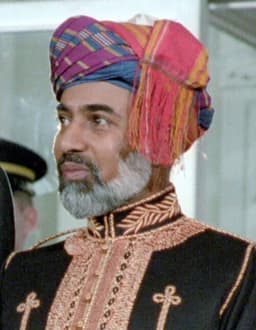
Sultan Qaboos
Emperor · Modern
58.7Total
Basic Information
Born
1883
1940
Died
1933
—
Era
Modern
Modern
Nationality
Afghanistan
Oman
Occupation
Emperor
Emperor
Civilization
Middle Eastern
Middle Eastern
Score Comparison
Military (10%)
47.5
14.9
Political (20%)
42.3
82.0
Influence (20%)
47.9
61.0
Legacy (20%)
37.5
52.0
Leadership (15%)
55.3
78.0
Strategy (15%)
43.3
50.0
TOTAL
45.1
58.7
Mohammad Nadir Shah — Complete Timeline
1929 AD
Accession to the throne of AfghanistanPolitical Action◆ Major
Mohammad Nadir Shah seized the throne after the fall of Habibullah Kalakani. He led forces from the Eastern Province to capture Kabul, ending the nine-month rule of the bandit king and restoring the Musahiban branch of the Barakzai dynasty to power.
AfghanistanDynastic ChangeCivil War
Impact: national
1930 AD
Suppression of the Khost rebellionWar
Nadir Shah's forces crushed a rebellion in the Khost province led by loyalists of the deposed Amanullah Khan. The rebellion was defeated after several months of fighting, consolidating Nadir Shah's control over the country and eliminating a major challenge to his rule.
AfghanistanRebellionCivil War
Impact: nationaldestructive
1931 AD
Promulgation of the 1931 ConstitutionReform◆ Major
Nadir Shah introduced a new constitution for Afghanistan, establishing a constitutional monarchy with a parliament. The constitution granted limited civil liberties and established a bicameral legislature, though real power remained with the king. It replaced the 1923 constitution of Amanullah Khan.
AfghanistanConstitutionPolitical Reform
Impact: nationalconstructive
1933 AD
Assassination by a studentPolitical Action◆ Major
Mohammad Nadir Shah was shot and killed by Abdul Khaliq Hazara, a student at a Kabul school, during a prize distribution ceremony. The assassination was motivated by personal grievances and political tensions, leading to the accession of his son Mohammad Zahir Shah.
AssassinationAfghanistanPolitical Violence
Impact: nationaltragic
Sultan Qaboos — Complete Timeline
1970 AD
Accession as Sultan of OmanPolitical Action
Qaboos bin Said overthrew his father, Sultan Said bin Taimur, in a palace coup. He assumed power and immediately began modernizing Oman, ending decades of isolation and initiating a rapid transformation of the country's infrastructure, education, and healthcare.
CoupModernizationOman
Impact: nationalconstructive
1975 AD
End of the Dhofar RebellionWar◆ Major
Qaboos led the Omani military, with support from British, Iranian, and Jordanian forces, to defeat the Marxist Dhofar Rebellion. The victory consolidated his rule and secured Oman's borders, allowing him to focus on development.
Civil WarDhofarVictory
Impact: regional
1996 AD
Establishment of the Basic Statute of the StateReform◆ Major
Qaboos promulgated Oman's first written constitution, the Basic Statute, which defined the powers of the sultan, established a bicameral advisory council, and guaranteed basic rights. It was a step toward limited political participation without full democracy.
ConstitutionReformOman
Impact: nationalconstructive
2015 AD
Mediation of the Iran Nuclear Deal FrameworkPolitical Action◆ Major
Qaboos facilitated secret talks between the United States and Iran that led to the framework for the Joint Comprehensive Plan of Action (JCPOA). His mediation showcased Oman's role as a neutral diplomatic broker in the Middle East.
DiplomacyIranNuclear Deal
Impact: globalconstructive
This comparison has not been analyzed yet.
One-time AI generation (~1 minute). Scores and timeline are already available below.
Rankings
🥇
Sultan QaboosLeader
Mil: 14.9Pol: 82.0Inf: 61.0
58.7
🥈
Mohammad Nadir Shah
Mil: 47.5Pol: 42.3Inf: 47.9
45.1
+13.6 behind
How This Comparison Works
Algorithm
Each figure is scored on 6 dimensions (0—100 scale) based on structured historical data: Military (10%), Political (20%), Influence (20%), Legacy (20%), Leadership (15%), Strategy (15%). The weighted total produces the final ranking.
Data Sources
Scores are computed from structured sub-indicators in the database. Scale factors adjust for era (Ancient ×0.85, Modern ×1.0) and civilization size (Eastern ×1.05, Other ×0.80) to account for differences in population and military scale.
Maximum 3 Figures
Comparisons are limited to 2—3 figures to ensure readability and statistical meaningfulness.
Error Margins
±5 points per dimension — Sub-scores are derived from historical records with inherent uncertainty. Two figures within 5 points on a dimension should be considered roughly equivalent in that area.
Total Score Accuracy
±3 points overall — The weighted combination of 6 dimensions produces a total score with approximately ±3 points of uncertainty. Differences of less than 3 points are not statistically significant— the figures are effectively tied.
Known Limitations
- Historical records are incomplete and uneven across civilizations
- Figures from oral-tradition societies may be underrepresented
- Occupation labels can misclassify multi-role figures
- Scores measure capability and impact, not moral character
- Quantitative scoring is a comparison tool, not absolute truth
Capability Radar
Military (10%) — Battles & Warfare
Battles
30
5
Win Rate
40
5
Expansion
10
10
Political (20%) — Governance & Reform
Reform
40
90
Diplomacy
35
80
Economy
25
85
Influence (20%) — Cultural & Global Reach
Cultural
15
55
Global
10
50
Legacy (20%) — Historical Impact
Historical
25
60
Longevity
10
50
Leadership (15%) — Power & Stability
Tenure
30
85
Stability
20
75
Strategy (15%) — Tactics & Innovation
Strategy
40
15
Tactics
35
10
Reform
20
60
Similar Comparisons
Comments & Discussion
No comments yet. Be the first to share your thoughts!