Loading...
Miriam Defensor Santiago vs Vittorio Orlando
Vittorio Orlando leads by 2.0 pts · 2 figures compared
…

Miriam Defensor Santiago
Politician · Modern
49.5Total
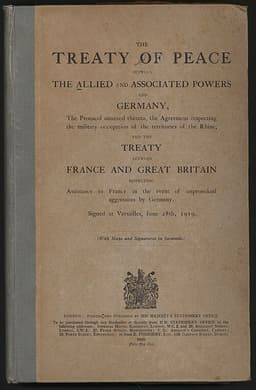
Vittorio Orlando
Politician · Modern
51.5Total
Basic Information
Born
1945
1860
Died
—
1952
Era
Modern
Modern
Nationality
Philippines
Italy
Occupation
Politician
Politician
Civilization
Eastern
Western
Score Comparison
Military (10%)
14.2
48.4
Political (20%)
53.8
46.6
Influence (20%)
62.0
54.9
Legacy (20%)
46.7
47.5
Leadership (15%)
65.7
65.7
Strategy (15%)
30.0
42.0
TOTAL
49.5
51.5
Miriam Defensor Santiago — Complete Timeline
1988 AD
Won the Ramon Magsaysay AwardCultural
Santiago received the Ramon Magsaysay Award for Government Service. The award recognized her work as a judge and her efforts to reform the Philippine legal system, including her campaign against graft and corruption in the judiciary.
AwardJudiciaryReform
Impact: nationalconstructive
1995 AD
Authored the Anti-Sexual Harassment ActReform◆ Major
As a senator, Santiago authored Republic Act 7877, the Anti-Sexual Harassment Act. The law defined sexual harassment in workplaces and educational institutions and established penalties. It was a landmark piece of legislation for women's rights in the Philippines.
Women's RightsLegislationWorkplace
Impact: nationalprogressive
2012 AD
Elected to the International Criminal CourtPolitical Action◆ Major
Santiago was elected as a judge of the International Criminal Court in The Hague. She was the first Filipino and first Asian woman to hold the position. She served until 2014, when she resigned due to health reasons.
ICCInternational LawJudiciary
Impact: globalconstructive
2016 AD
Ran for President of the PhilippinesPolitical Action◆ Major
Santiago ran for president under the People's Reform Party. She campaigned on anti-corruption and good governance but finished 6th out of 5 candidates (one withdrew). Her campaign was hampered by her battle with lung cancer.
ElectionPresidencyCampaign
Impact: national
Vittorio Orlando — Complete Timeline
1919 AD
Paris Peace ConferencePolitical Action◆ Major
Orlando represented Italy at the Paris Peace Conference as prime minister. He demanded the fulfillment of the Treaty of London, including Fiume and Dalmatia. President Wilson opposed these claims, leading to Orlando's walkout and eventual resignation in June 1919.
World War ITreatyDiplomacy
Impact: global
Treaty of Saint-Germain-en-LayePolitical Action◆ Major
Orlando's successor signed the treaty that formally ended WWI with Austria. Italy gained Trentino, South Tyrol, and Istria, but not Fiume or Dalmatia. The perceived 'mutilated victory' fueled nationalist resentment and contributed to the rise of Fascism.
TreatyNationalismFiume
Impact: regionaldestructive
Expert Analysis
Origins
Miriam Defensor Santiago was born on June 15, 1945, in Iloilo City, Philippines. She earned a Bachelor of Arts in Political Science from the University of the Philippines, then a Bachelor of Laws from the same university, and later a Master of Laws and a Doctor of Juridical Science from the University of Michigan. Her early career included working as a judge and a law professor.
Vittorio Orlando was born on May 19, 1860, in Palermo, Italy. He studied law at the University of Palermo and became a professor of constitutional law. His academic background shaped his political career, focusing on legal and constitutional reforms.
Rise to Power
Santiago rose to prominence as a judge who prosecuted corruption cases. She became the first Filipino and first Asian woman elected as a judge of the International Criminal Court in 2012. She also ran for President of the Philippines in 1998, finishing 6th out of 5 candidates (she was 6th due to a technicality), but gained national fame for her anti-corruption stance.
Orlando rose to power as a member of the Italian Chamber of Deputies and served as Minister of Public Works and later Minister of the Interior. He became Prime Minister of Italy in 1917, leading the country through the final year of World War I and representing Italy at the Paris Peace Conference in 1919.
Leadership & Governance
Santiago's leadership style was confrontational and principled. As a senator, she authored the Anti-Sexual Harassment Act (Republic Act 7877) and championed anti-corruption measures. She scored 65.7 in leadership, reflecting her strong moral authority but limited executive power. Her political score of 53.8 shows moderate effectiveness in passing legislation.
Orlando's leadership was more pragmatic. He navigated Italy's post-war demands at the Paris Peace Conference, but his failure to secure Fiume and Dalmatia led to his resignation. His leadership score of 65.7 matches Santiago's, but his strategic score of 42.0 indicates weaker negotiation tactics.
Triumph & Tragedy
Santiago's greatest triumph was her election to the International Criminal Court and her role in drafting anti-sexual harassment laws. Her tragedy was her failed presidential run and her battle with lung cancer, which limited her influence. She scored 46.7 in legacy, reflecting her impact on Philippine law but limited global reach.
Orlando's triumph was leading Italy to victory in WWI and participating in the Paris Peace Conference. His tragedy was the 'Mutilated Victory'—Italy's failure to gain all territories promised, which fueled nationalist discontent. His legacy score of 47.5 slightly edges Santiago's.
Character & Destiny
Santiago was known for her sharp tongue and uncompromising ethics. Her character made her a crusader against corruption but also a polarizing figure. Her destiny was cut short by illness, preventing higher office.
Orlando was a skilled constitutionalist but lacked the political ruthlessness needed at Versailles. His character led to his downfall when he walked out of the conference in protest, only to return without gains.
Legacy
Santiago's legacy is enshrined in Philippine law, particularly the Anti-Sexual Harassment Act. She also inspired women in politics globally. However, her influence score of 62.0 is tempered by her lack of executive power.
Orlando's legacy is tied to Italy's post-WWI disillusionment. The failure at Versailles contributed to the rise of fascism. His political influence (54.9) is comparable to Santiago's (62.0), but his impact on world history is larger due to the consequences of the peace.
Conclusion
Vittorio Orlando had greater impact on world history due to his role at the Paris Peace Conference, which shaped the 20th century. While Santiago's domestic reforms were significant, Orlando's decisions affected international relations and the rise of fascism. His total score of 51.5 vs. Santiago's 49.5 reflects this edge. However, Santiago's moral courage and legislative achievements remain notable within the Philippines.
Rankings
🥇
Vittorio OrlandoLeader
Mil: 48.4Pol: 46.6Inf: 54.9
51.5
🥈
Miriam Defensor Santiago
Mil: 14.2Pol: 53.8Inf: 62.0
49.5
+2.0 behind
How This Comparison Works
Algorithm
Each figure is scored on 6 dimensions (0—100 scale) based on structured historical data: Military (10%), Political (20%), Influence (20%), Legacy (20%), Leadership (15%), Strategy (15%). The weighted total produces the final ranking.
Data Sources
Scores are computed from structured sub-indicators in the database. Scale factors adjust for era (Ancient ×0.85, Modern ×1.0) and civilization size (Eastern ×1.05, Other ×0.80) to account for differences in population and military scale.
Maximum 3 Figures
Comparisons are limited to 2—3 figures to ensure readability and statistical meaningfulness.
Error Margins
±5 points per dimension — Sub-scores are derived from historical records with inherent uncertainty. Two figures within 5 points on a dimension should be considered roughly equivalent in that area.
Total Score Accuracy
±3 points overall — The weighted combination of 6 dimensions produces a total score with approximately ±3 points of uncertainty. Differences of less than 3 points are not statistically significant— the figures are effectively tied.
Known Limitations
- Historical records are incomplete and uneven across civilizations
- Figures from oral-tradition societies may be underrepresented
- Occupation labels can misclassify multi-role figures
- Scores measure capability and impact, not moral character
- Quantitative scoring is a comparison tool, not absolute truth
Capability Radar
Military (10%) — Battles & Warfare
Battles
16
31
Win Rate
17
34
Expansion
18
33
Political (20%) — Governance & Reform
Reform
70
30
Diplomacy
65
55
Economy
40
30
Influence (20%) — Cultural & Global Reach
Cultural
55
20
Global
45
40
Legacy (20%) — Historical Impact
Historical
50
45
Longevity
30
30
Leadership (15%) — Power & Stability
Tenure
30
40
Stability
35
25
Strategy (15%) — Tactics & Innovation
Strategy
23
39
Tactics
25
41
Reform
32
42
Similar Comparisons
Comments & Discussion
No comments yet. Be the first to share your thoughts!