Loading...
Isaias Afwerki vs Vittorio Orlando
Vittorio Orlando leads by 6.7 pts · 2 figures compared
…

Isaias Afwerki
Politician · Modern
44.8Total
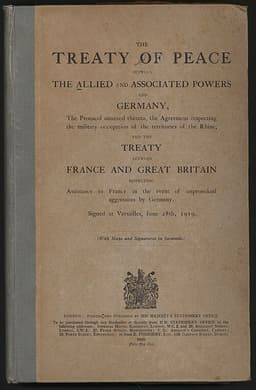
Vittorio Orlando
Politician · Modern
51.5Total
Basic Information
Born
1946
1860
Died
—
1952
Era
Modern
Modern
Nationality
Eritrea
Italy
Occupation
Politician
Politician
Civilization
Other
Western
Score Comparison
Military (10%)
10.0
48.4
Political (20%)
30.8
46.6
Influence (20%)
52.5
54.9
Legacy (20%)
45.8
47.5
Leadership (15%)
74.0
65.7
Strategy (15%)
35.0
42.0
TOTAL
44.8
51.5
Isaias Afwerki — Complete Timeline
1993 AD
Elected First President of EritreaPolitical Action
Isaias Afwerki was elected as the first president of independent Eritrea in May 1993 after a UN-supervised referendum. He has remained in power without subsequent elections, establishing a one-party state.
Eritrean IndependenceState BuildingAuthoritarianism
Impact: regionalconstructive
1998 AD
Eritrean-Ethiopian WarWar◆ Major
Isaias Afwerki led Eritrea into a border war with Ethiopia from 1998 to 2000. The conflict resulted in tens of thousands of deaths and ended with the Algiers Agreement, leaving the border dispute unresolved.
Border WarHorn of AfricaConflict
Impact: regionaldestructive
2002 AD
Implemented Indefinite National ServiceReform◆ Major
Isaias Afwerki's government implemented indefinite national service, requiring all Eritreans to serve in the military or national development programs. This policy led to mass emigration and human rights abuses.
National ServiceHuman RightsAuthoritarianism
Impact: nationaldestructive
2018 AD
Signed Peace Deal with EthiopiaPolitical Action◆ Major
Isaias Afwerki signed a peace agreement with Ethiopian Prime Minister Abiy Ahmed in July 2018, ending the state of war between the two countries. The deal led to the reopening of borders and diplomatic relations.
Peace AgreementEthiopiaDiplomacy
Impact: regionalconstructive
Vittorio Orlando — Complete Timeline
1919 AD
Paris Peace ConferencePolitical Action◆ Major
Orlando represented Italy at the Paris Peace Conference as prime minister. He demanded the fulfillment of the Treaty of London, including Fiume and Dalmatia. President Wilson opposed these claims, leading to Orlando's walkout and eventual resignation in June 1919.
World War ITreatyDiplomacy
Impact: global
Treaty of Saint-Germain-en-LayePolitical Action◆ Major
Orlando's successor signed the treaty that formally ended WWI with Austria. Italy gained Trentino, South Tyrol, and Istria, but not Fiume or Dalmatia. The perceived 'mutilated victory' fueled nationalist resentment and contributed to the rise of Fascism.
TreatyNationalismFiume
Impact: regionaldestructive
Expert Analysis
Origins
Isaias Afwerki was born on February 2, 1946, in Asmara, Eritrea, then under British administration. He studied engineering at Haile Selassie University in Ethiopia but left in 1965 to join the Eritrean Liberation Front (ELF). His early life was shaped by the struggle for Eritrean independence from Ethiopia. In 1970, he co-founded the Eritrean People's Liberation Front (EPLF), a more disciplined and Marxist-leaning faction. Vittorio Orlando was born on May 19, 1860, in Palermo, Italy, into a wealthy family. He earned a law degree and became a professor of constitutional law. Orlando entered politics in 1897 as a deputy, serving in various ministerial roles. His background was academic and legal, contrasting sharply with Afwerki's revolutionary path.
Rise to Power
Afwerki rose through the ranks of the EPLF during the Eritrean War of Independence (1961–1991). He became the EPLF's leader in 1987, guiding the movement to a decisive victory over Ethiopia in 1991. In April 1993, a UN-supervised referendum resulted in a 99.8% vote for independence, and Afwerki was elected president on May 22, 1993. He has held power without elections since. Orlando became Prime Minister of Italy on October 30, 1917, during World War I, after the Italian defeat at Caporetto. He strengthened the army and secured victory in 1918. His political rise was through parliamentary maneuvering, not armed struggle. At the Paris Peace Conference in 1919, he was one of the 'Big Four' leaders, but his demands for Fiume and Dalmatia were rejected, leading to his resignation in June 1919.
Leadership & Governance
Afwerki consolidated power by banning opposition parties, censoring the press, and establishing a highly militarized state. He implemented indefinite national service in 1995, requiring all citizens to serve in the military or development projects for years, often indefinitely. This policy has caused a massive exodus of refugees. His governance is autocratic, scoring 74.0 in leadership but only 30.8 in political skills due to lack of institutional development. Orlando, by contrast, operated within a constitutional monarchy. He faced a fractured parliament and was ultimately undermined by the Treaty of London's unfulfilled promises. His leadership score of 65.7 reflects his ability to navigate wartime and peace negotiations, but his political score of 46.6 shows his limited success in achieving territorial gains. Orlando's governance was more democratic but less decisive than Afwerki's iron grip.
Triumph & Tragedy
Afwerki's greatest triumph is achieving and maintaining Eritrean independence against odds. He signed a peace deal with Ethiopia in 2018, ending a 20-year conflict, earning him international praise. However, his greatest failure is the indefinite national service, which has been condemned by the UN as a form of forced labor. The 1998–2000 Eritrean-Ethiopian War, which he instigated, resulted in 80,000 deaths and economic devastation. His military score is low at 10.0, reflecting poor strategic decisions. Orlando's triumph was leading Italy to victory in WWI and representing Italy at the peace conference. His tragedy was the 'mutilated victory'—Italy gained Trentino and South Tyrol but not Fiume or Dalmatia, fueling nationalist resentment. Orlando's failure to secure these territories led to his political downfall. His military score of 48.4 reflects his wartime leadership, though he was not a military commander.
Character & Destiny
Afwerki is characterized by authoritarianism, secrecy, and distrust of external influence. He has isolated Eritrea, earning the label 'North Korea of Africa.' His character—rigid, uncompromising—shaped his destiny as a long-term dictator but also led to international sanctions and a refugee crisis. Orlando was a pragmatic diplomat, but his inability to manage nationalist expectations at home led to his resignation. He was more flexible than Afwerki, yet his destiny was to be remembered as a failed peacemaker. Historical assessments note that Orlando's focus on legalism hindered his negotiation power, while Afwerki's militarism has stunted Eritrea's development.
Legacy
Afwerki's legacy is mixed: he is the founding father of independent Eritrea, but his repressive regime has created a 'lost generation' of youth trapped in national service. His influence score of 52.5 reflects his impact on the Horn of Africa, but his legacy score of 45.8 is tarnished by human rights abuses. Orlando's legacy is tied to the Paris Peace Conference and the 'mutilated victory' narrative, which contributed to Mussolini's rise. His influence score of 54.9 is slightly higher, as his actions shaped post-war Europe. Orlando's constitutional work also left a mark, but he is often overshadowed by Wilson and Clemenceau.
Conclusion
Vittorio Orlando scored higher overall (51.5 vs. 44.8) and had greater impact on a global stage, albeit within a short period. His role at the Paris Peace Conference influenced the post-WWI order, for better or worse. Afwerki's impact is more localized and negative due to his repressive policies. While both leaders failed to achieve their full potential, Orlando's legacy in shaping modern Italy and international diplomacy outweighs Afwerki's authoritarian stagnation. The data supports Orlando as the more influential figure, despite his failures.
Rankings
🥇
Vittorio OrlandoLeader
Mil: 48.4Pol: 46.6Inf: 54.9
51.5
🥈
Isaias Afwerki
Mil: 10.0Pol: 30.8Inf: 52.5
44.8
+6.7 behind
How This Comparison Works
Algorithm
Each figure is scored on 6 dimensions (0—100 scale) based on structured historical data: Military (10%), Political (20%), Influence (20%), Legacy (20%), Leadership (15%), Strategy (15%). The weighted total produces the final ranking.
Data Sources
Scores are computed from structured sub-indicators in the database. Scale factors adjust for era (Ancient ×0.85, Modern ×1.0) and civilization size (Eastern ×1.05, Other ×0.80) to account for differences in population and military scale.
Maximum 3 Figures
Comparisons are limited to 2—3 figures to ensure readability and statistical meaningfulness.
Error Margins
±5 points per dimension — Sub-scores are derived from historical records with inherent uncertainty. Two figures within 5 points on a dimension should be considered roughly equivalent in that area.
Total Score Accuracy
±3 points overall — The weighted combination of 6 dimensions produces a total score with approximately ±3 points of uncertainty. Differences of less than 3 points are not statistically significant— the figures are effectively tied.
Known Limitations
- Historical records are incomplete and uneven across civilizations
- Figures from oral-tradition societies may be underrepresented
- Occupation labels can misclassify multi-role figures
- Scores measure capability and impact, not moral character
- Quantitative scoring is a comparison tool, not absolute truth
Capability Radar
Military (10%) — Battles & Warfare
Battles
55
31
Win Rate
60
34
Expansion
35
33
Political (20%) — Governance & Reform
Reform
20
30
Diplomacy
25
55
Economy
15
30
Influence (20%) — Cultural & Global Reach
Cultural
30
20
Global
25
40
Legacy (20%) — Historical Impact
Historical
35
45
Longevity
40
30
Leadership (15%) — Power & Stability
Tenure
75
40
Stability
10
25
Strategy (15%) — Tactics & Innovation
Strategy
55
39
Tactics
50
41
Reform
40
42
Similar Comparisons
Comments & Discussion
No comments yet. Be the first to share your thoughts!