Loading...
Mengistu Haile Mariam vs Pyotr Bagration
Pyotr Bagration leads by 7.5 pts · 2 figures compared
…
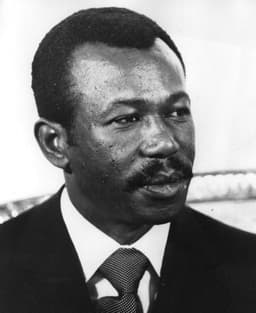
Mengistu Haile Mariam
General · Modern
45.4Total
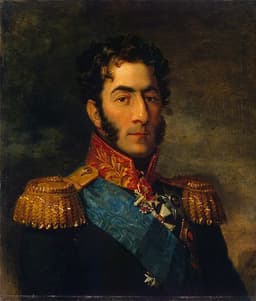
Pyotr Bagration
General · Modern
52.9Total
Basic Information
Born
1937
1765
Died
—
1812
Era
Modern
Modern
Nationality
Ethiopia
Russia
Occupation
General
General
Civilization
Other
Western
Score Comparison
Military (10%)
50.0
65.0
Political (20%)
26.4
32.2
Influence (20%)
51.0
62.0
Legacy (20%)
40.8
58.0
Leadership (15%)
61.1
40.4
Strategy (15%)
43.7
55.0
TOTAL
45.4
52.9
Mengistu Haile Mariam — Complete Timeline
1974 AD
Derg seizure of powerPolitical Action◆ Major
Mengistu Haile Mariam, as a member of the Derg military committee, participated in the coup that overthrew Emperor Haile Selassie. The Derg abolished the monarchy and established a Marxist-Leninist military government, with Mengistu emerging as its chairman by 1977.
CoupEthiopian RevolutionDerg
Impact: nationaldestructive
1977 AD
Ogaden WarWar◆ Major
Mengistu led Ethiopia in a war against Somalia over the Ogaden region. With massive military aid from the Soviet Union and Cuba, Ethiopian forces repelled the Somali invasion by March 1978, securing the disputed territory.
Ethio-Somali WarCold WarTerritorial Conflict
Impact: regional
Red Terror campaignPolitical Action◆ Major
Mengistu ordered a violent crackdown against political opponents, primarily the Ethiopian People's Revolutionary Party (EPRP). Thousands were killed, tortured, or imprisoned in Addis Ababa and other cities, consolidating Mengistu's absolute control over Ethiopia.
Political RepressionCivil WarHuman Rights
Impact: nationaldestructive
1984 AD
1984-1985 famine responsePolitical Action◆ Major
During a severe famine that killed an estimated 1 million Ethiopians, Mengistu's government was criticized for prioritizing military spending and forced resettlement programs over relief. The regime's response was widely condemned internationally.
FamineHumanitarian CrisisResettlement
Impact: nationaltragic
1991 AD
Fall of the Derg regimePolitical Action◆ Major
After years of civil war, rebel forces led by the Ethiopian People's Revolutionary Democratic Front (EPRDF) captured Addis Ababa. Mengistu fled to Zimbabwe, ending 17 years of his dictatorship and leading to the establishment of a transitional government.
Civil WarRegime ChangeExile
Impact: national
Pyotr Bagration — Complete Timeline
1805 AD
Battle of AusterlitzWar◆ Major
Bagration commanded the Russian rear guard during the Battle of Austerlitz. His forces covered the retreat of the Russian army after the defeat by Napoleon, preventing a complete rout and preserving a portion of the army.
Napoleonic WarsRetreatRear Guard
Impact: regional
Battle of SchöngrabernWar◆ Major
Bagration commanded a Russian rearguard action at Sch
Napoleonic WarsRear GuardRetreat
Impact: regionalconstructive
1807 AD
Battle of FriedlandWar◆ Major
Bagration commanded a corps at the Battle of Friedland, a decisive French victory. His forces fought on the left flank and were forced to retreat across the Alle River under heavy fire, suffering significant losses.
Napoleonic WarsDefeatRetreat
Impact: regionaldestructive
1812 AD
Battle of BorodinoWar
Bagration commanded the left flank of the Russian army at the Battle of Borodino. He was mortally wounded by a cannonball fragment while leading a counterattack against French forces. His wounding demoralized his troops and contributed to the Russian defensive failure.
Napoleonic WarsMortal WoundBattle
Impact: nationaltragic
Expert Analysis
Origins
**Mengistu Haile Mariam** was born in 1937 in Jimma, Ethiopia, into a modest family. His father was a former slave who became a soldier, and his mother was a priest's daughter. He joined the Ethiopian military academy in Harar, graduating in 1959. His early career was unremarkable, serving in the Imperial Bodyguard under Emperor Haile Selassie. The feudal structure of Ethiopia and the emperor's autocratic rule shaped Mengistu's worldview, but his rise was more opportunistic than ideological.
**Pyotr Bagration** was born in 1765 into the royal Bagrationi dynasty of Georgia, a noble lineage that traced back to the 6th century. His family fled to Russia after the Ottoman invasion of Georgia. He entered the Russian army in 1783 as a sergeant, participating in the Russo-Turkish War. His aristocratic background and military tradition set him on a path of service to the Russian Empire, contrasting sharply with Mengistu's humble origins.
Rise to Power
**Mengistu** rose through the Derg, a military committee that seized power in the 1974 Ethiopian Revolution. On September 12, 1974, the Derg overthrew Emperor Haile Selassie. Mengistu initially served as first vice-chairman. He outmaneuvered rivals, including chairman Aman Andom, who was killed in a shootout in November 1974. By February 1977, after a series of purges, Mengistu became the head of state. His rise was marked by violence and betrayal, scoring 26.4 in political acumen.
**Bagration** rose through merit in the Russian army. His first major command came in 1798 as colonel of the 7th Chasseur Regiment. He distinguished himself in the Italian and Swiss campaigns under Alexander Suvorov (1799), earning promotion to major general. His reputation grew during the War of the Third Coalition, where he commanded the rear guard at Austerlitz (1805) and Schöngrabern (1805). His political score of 32.2 reflects his lack of court intrigue.
Leadership & Governance
**Mengistu** ruled Ethiopia with a Marxist-Leninist dictatorship. He implemented a Soviet-style command economy, collectivized agriculture, and forced resettlement programs. His governance was brutal: the Red Terror (1977-1978) killed an estimated 500,000 people. He prioritized military spending over famine relief, leading to the 1984-1985 famine that killed 1 million. His leadership score of 61.1 reflects his ability to maintain power through terror, but his governance was catastrophic.
**Bagration** was a combat leader, not a governor. He commanded corps and armies in battle, known for his aggressive tactics and personal bravery. At Borodino (1812), he led the left flank against Napoleon's main assault, dying from wounds. His leadership style was inspirational but lacked strategic vision; his strategy score of 55.0 is lower than his military score of 65.0. He never held political office.
Triumph & Tragedy
**Mengistu**'s greatest success was repelling the Somali invasion in the Ogaden War (1977-1978), with Soviet and Cuban aid. His forces scored a decisive victory at the Battle of Jijiga. However, his failures were immense: the famine, economic collapse, and a 17-year civil war that ended with his overthrow in 1991. He fled to Zimbabwe, where he still lives in exile.
**Bagration**'s triumph was the rearguard action at Schöngrabern (1805), where his 6,000 troops held off 30,000 French, allowing the main Russian army to escape. His tragedy was his mortal wound at Borodino (1812), dying 17 days later. He never saw the eventual defeat of Napoleon.
Character & Destiny
**Mengistu** was paranoid and ruthless, ordering the assassination of rivals and even his own family. His character was shaped by a desire for absolute control, leading to isolation and eventual downfall. Historical assessments highlight his brutality; he scored 40.8 in legacy.
**Bagration** was known for his courage and loyalty, beloved by his troops. His impetuosity led to his death—he insisted on leading from the front. His character made him a symbol of Russian resistance. He scored 58.0 in legacy.
Legacy
**Mengistu** is remembered as a tyrant who ruined Ethiopia. The Derg's policies left a legacy of poverty and instability. However, his overthrow led to the EPRDF's rule, which transformed Ethiopia's economy.
**Bagration** is a national hero in Russia and Georgia. The Bagrationovsk town and numerous monuments honor him. His tactics influenced later Russian generals.
Conclusion
Bagration had greater impact in his domain: military excellence and symbolic legacy. His total score of 52.9 vs Mengistu's 45.4 reflects this. While Mengistu's political impact was negative and large-scale, Bagration's positive influence on military history and national identity is more enduring. Bagration wins.
Rankings
🥇
Pyotr BagrationLeader
Mil: 65.0Pol: 32.2Inf: 62.0
52.9
🥈
Mengistu Haile Mariam
Mil: 50.0Pol: 26.4Inf: 51.0
45.4
+7.5 behind
How This Comparison Works
Algorithm
Each figure is scored on 6 dimensions (0—100 scale) based on structured historical data: Military (10%), Political (20%), Influence (20%), Legacy (20%), Leadership (15%), Strategy (15%). The weighted total produces the final ranking.
Data Sources
Scores are computed from structured sub-indicators in the database. Scale factors adjust for era (Ancient ×0.85, Modern ×1.0) and civilization size (Eastern ×1.05, Other ×0.80) to account for differences in population and military scale.
Maximum 3 Figures
Comparisons are limited to 2—3 figures to ensure readability and statistical meaningfulness.
Error Margins
±5 points per dimension — Sub-scores are derived from historical records with inherent uncertainty. Two figures within 5 points on a dimension should be considered roughly equivalent in that area.
Total Score Accuracy
±3 points overall — The weighted combination of 6 dimensions produces a total score with approximately ±3 points of uncertainty. Differences of less than 3 points are not statistically significant— the figures are effectively tied.
Known Limitations
- Historical records are incomplete and uneven across civilizations
- Figures from oral-tradition societies may be underrepresented
- Occupation labels can misclassify multi-role figures
- Scores measure capability and impact, not moral character
- Quantitative scoring is a comparison tool, not absolute truth
Capability Radar
Military (10%) — Battles & Warfare
Battles
20
75
Win Rate
15
70
Expansion
10
40
Political (20%) — Governance & Reform
Reform
20
10
Diplomacy
15
30
Economy
10
10
Influence (20%) — Cultural & Global Reach
Cultural
15
55
Global
20
45
Legacy (20%) — Historical Impact
Historical
25
65
Longevity
10
50
Leadership (15%) — Power & Stability
Tenure
60
20
Stability
5
15
Strategy (15%) — Tactics & Innovation
Strategy
15
75
Tactics
10
80
Reform
30
30
Similar Comparisons
Comments & Discussion
No comments yet. Be the first to share your thoughts!